Miyajima
Miyajima
Just 50 minutes from Hiroshima, Miyajima offers a floating torii gate, Mount Misen, and free-roaming deer. Our complete guide for a successful visit.
Miyajima is an essential extension to any Hiroshima trip. This destination is renowned for its Shinto sanctuary and its torii gate standing in the water. Discover this sacred island, its history, centuries-old monuments, and its population of deer.
History
Miyajima translates to "sanctuary island." Originally, the island was called Itsukushima. In 806, the monk Kukai (also known as Kobo Daishi) arrived at Miyajima and, while exploring Mount Misen, felt the spiritual energy of the place. Believing the island should be a sacred site, he founded a Hondo (main hall) in the mountains. In 1146, Taira no Kiyomori, who ruled the province of Aki, began construction of the Itsukushima Sanctuary. For a long time, access to the island was restricted to Shinto and Buddhist priests. It wasn't until the end of the Kamakura period (1185–1333) that ordinary people began to settle on Miyajima. In 1555, the Battle of Itsukushima, or "Itsukushima Gassen," became one of the three most treacherous assaults in the country's history.
The sanctuary was damaged and restored many times, particularly due to wars and natural disasters. Before the Meiji Restoration in the 19th century, according to the principle of kegare avoidance, which required the island to remain "pure," women were not permitted to give birth on Miyajima and no one was allowed to die there.
What to Do on Miyajima?
Miyajima covers 30 square kilometers and is nestled in the heart of the Seto Inland Sea. Forests cover most of the island, dominated by Mount Misen, which stands 530 meters high. Miyajima is home to approximately 2,000 residents and several hundred deer that have learned to coexist harmoniously. Here are the things you can do on this island:
Visit Itsukushima-jinja and Its Torii
The Itsukushima-jinja Sanctuary, inscribed on the UNESCO World Heritage List, is famous for its floating torii and its architecture built on stilts. It is dedicated to three goddesses of Munakata: Ichikishimahime no Mikoto, Tagorihime no Mikoto, and Tagitsu-hime no Mikoto, who watch over sailors and the imperial family.
The visit is particularly fascinating at high tide, when the sanctuary appears to float on the water. At low tide, you can walk to the torii and observe this impressive structure up close.
The sanctuary also houses a Noh theater stage, where traditional performances are sometimes held. Don't miss strolling along the wooden walkways, which offer breathtaking views of the bay and surrounding mountains.
Explore Daishō-in Temple
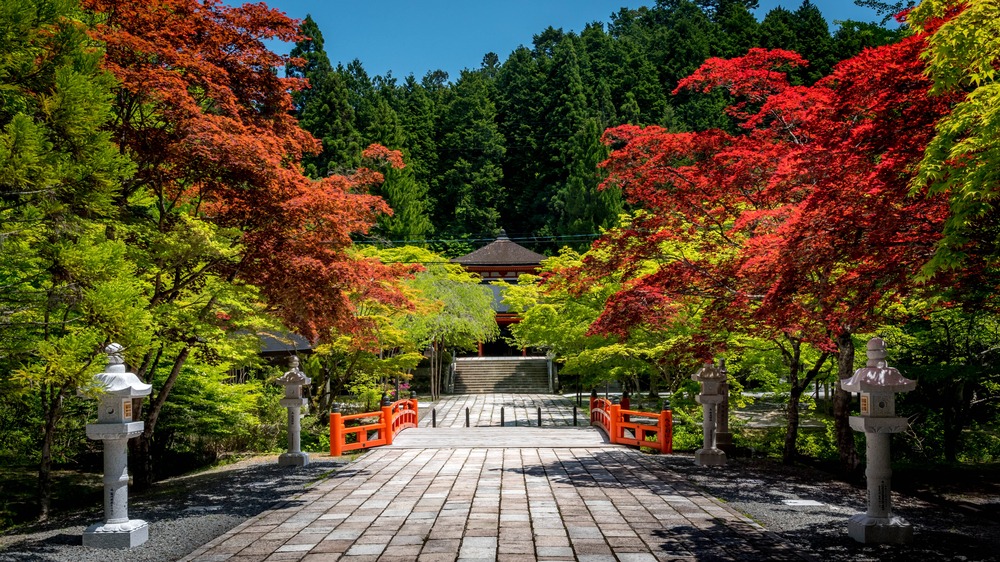
Daishō-in Temple is a serene place nestled at the foot of Mount Misen. Founded in 806 by monk Kukai, this temple is a fine example of Buddhist architecture from the Shingon sect.
As you explore the complex, you'll discover several halls and numerous Buddha statues. The buildings are beautifully decorated and offer a peaceful atmosphere conducive to meditation. Be sure to also visit the Henjyokutsu Cave, a dimly lit grotto illuminated by lanterns, which houses statues representing the 88 temples of Shikoku.
The paths around the temple will lead you through gardens and maple groves, particularly stunning in autumn.
Climb Mount Misen
The summit of Mount Misen is accessible after a hike of 1.5 to 2 hours, depending on the route. The shortest and steepest path starts from Momijidani. Other trails begin at Daishō-in Temple and Omoto.
Visitors can also use the cable car to ascend Mount Misen. The journey begins at Momijidani and takes only 20 minutes. From the mountain's summit, you can enjoy a breathtaking panorama of the Seto Inland Sea and the surrounding islands.
Discover Momijidani Park
A visit to Momijidani Park is well worth your time before tackling Mount Misen. Featuring over 200 Japanese maple trees, it is one of the finest maple parks in Japan. Its name literally means "valley of autumn leaves."
This area is frequented by shika deer, though they are more timid than those found at the island's pier. It is beautiful in all seasons, but especially so in autumn, when its tree leaves turn brilliant red.
Dining and Shopping on Miyajima
The island's restaurants will satisfy your culinary desires with a wide selection of dishes. Oysters are at the heart of local specialties. For dessert, try momiji manju, a pastry shaped like a maple leaf and filled with red bean paste. Interestingly, another local delicacy has a cheeky name: deer droppings. This is actually crunchy chocolate shaped to resemble animal excrement. Souvenir shops line the Omotesandō shopping street. You'll find a wide variety of items: rice paddles, candy boxes, miniature torii gates, and more. Along the street between the port and Momiji-dani Park, sculptors and other artisans offer their creations at reasonable prices.
Practical Information
When to Visit Miyajima?
Given the heat and humidity in summer, and the cold in winter, prefer the shoulder seasons if you plan to travel to Miyajima. Choose dates between late March and mid-May, or between late September and late November. Of course, as in many places in Japan, the island is stunning during cherry blossom season. The same applies in autumn, when maples paint the landscape in brilliant red.
First, Head to Miyajimaguchi Station
From Hiroshima Station, take a JR Sanyo Line train to reach Miyajimaguchi Station, southeast of the city. This journey takes approximately 20 minutes.
Then Proceed to the JR Miyajima Ferry Terminal
Once at Miyajimaguchi Station, walk for approximately 6 minutes to reach the JR Miyajima Ferry Terminal. The crossing takes only about 10 minutes. The entire journey is covered by the Japan Rail Pass.
As small as it is, Miyajima can easily be explored on foot. English-language signs are visible throughout the island. Taxis await visitors at the ferry terminal to take you to your hotel or residential areas, though not to tourist attractions.
Want to discover this destination?
Our local advisors design your tailor-made trip.