Nagasaki
Nagasaki
Nuclear memory, Portuguese and Dutch heritage, panoramic views from Mount Inasa: Nagasaki embodies four centuries of cultural fusion on the shores of Kyushu.
If you seek cities with captivating and complex histories, Nagasaki stands as a compelling destination in Japan. This port city carries an indelible memory of the American atomic raids in 1945, yet equally profound is its recollection of Christian persecution. Fortunately, places like Shianbashi, Chinatown, and Mount Inasa offer respite and moments of reflection. Visitors can embrace the present—cultural festivals, international cuisine, breathtaking vistas—in a city that has rebuilt itself with remarkable grace.
History
Portuguese traders founded Nagasaki in the south of Kyushu island in the 15th century. The city evolved as a trading port for commerce with Europe and China. As cultural exchanges flourished, Catholic missionaries arrived between the 15th and 16th centuries. Churches were constructed, and portions of the local population converted to Catholicism. However, in 1614, Shogun Ieyasu Tokugawa ascended to power and prohibited Christianity. Throughout the Edo period (1603–1868), Japan severely restricted foreign relations. Only Dutch merchants, who had established themselves on Dejima island, maintained external trade. It was not until the Meiji era that the country reopened to the world. Trade with the West brought prosperity to Nagasaki, which acquired Chinese temples, Confucian shrines, and numerous colonial-style residences.
The 1945 Nuclear Bombing
On August 9, 1945, at 11:02 a.m., the second American atomic bomb, Fat Man, detonated over Urakami, a suburb in the hills north of Nagasaki. The blast killed more than 60,000 people. Yet despite this trauma, much like Hiroshima, the city rebuilt itself. Memorials were erected, shipyards resumed operations, and Christians constructed new churches.
Nagasaki Today
Today, Nagasaki is a dynamic city that has risen from devastation. It has become an important academic and cultural hub, attracting students and researchers worldwide. The city also hosts modern industries, particularly in shipbuilding and electronic component manufacturing.
Nagasaki's residents actively participate in nuclear disarmament initiatives. The city is renowned for its cultural festivals, including the Lantern Festival and Dragon Dances, which draw visitors from across the globe. These events reflect the city's cultural richness and vibrant spirit.
What to Discover in Nagasaki?
Peace Park
Nagasaki's Peace Park, situated on a hillside north of the atomic explosion's hypocenter, is a place of profound emotion. It symbolizes humanity's desire for peace. Its statue, standing 9.7 meters tall and created by a native artist, embodies Nagasaki's citizens' wish for peace. The right hand, pointing skyward, recalls the nuclear threat; the left arm, extended, expresses peace. The eyes are slightly closed in prayer for those affected by the atomic bomb. Each year, a commemoration ceremony honors the bombing's victims.
The park also features the Fountain of Peace, erected in memory of a young girl who desperately sought water, and monuments gifted by nations worldwide.
Atomic Bomb Museum
The Nagasaki Atomic Bomb Museum presents a moving account of the August 9, 1945 explosion. Through its exhibitions, visitors discover the evolution of nuclear weapons and humanity's fervent hope for a world free from destructive armaments. Images of Nagasaki immediately after the bombing and today illustrate the resilience and strength of its inhabitants.
Hypocenter Park
Hypocenter Park lies at the explosion's epicenter. Despite predictions that no plants would grow there for 75 years, nature began to regenerate just one month after the tragedy. Today, the park hosts approximately 500 cherry trees and lush vegetation. It is pleasant to visit in any season.
Mount Inasa Park
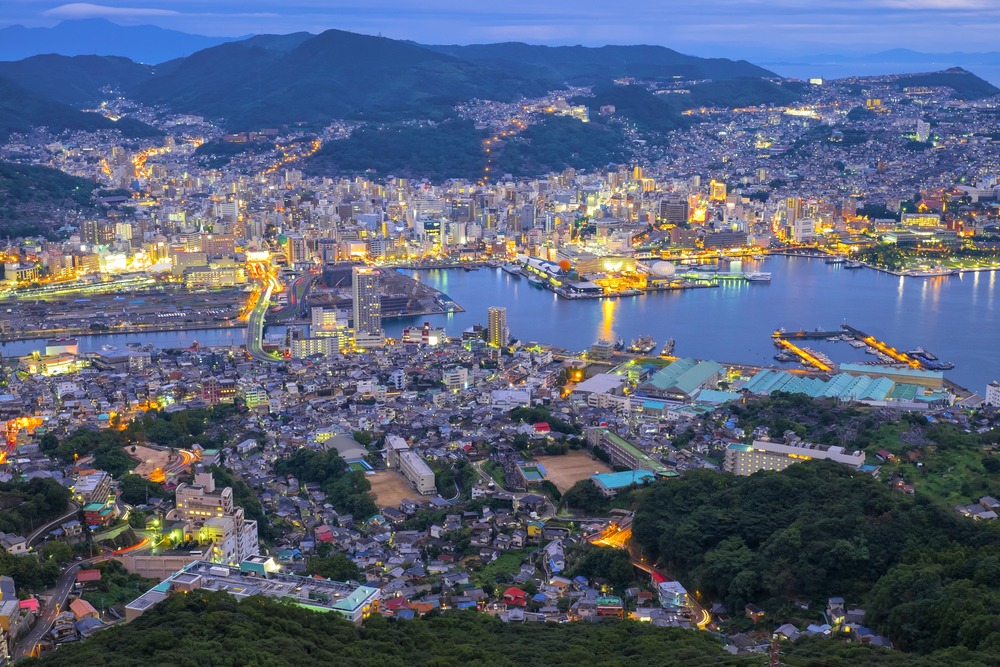
Mount Inasa Park, standing at 333 meters in central Nagasaki, is prized for its panoramic vistas and natural beauty. The summit, accessible by cable car from Fuchi Shrine, features a circular glass dome offering sweeping views of the city. Mount Unzen, the Amakusa region, and the Goto island chain are visible on clear days.
The park is also celebrated for its spring azaleas. The combination of picturesque landscapes, the vibrant city below, and coastal vistas makes it an essential destination for appreciating Nagasaki's splendor.
Dejima
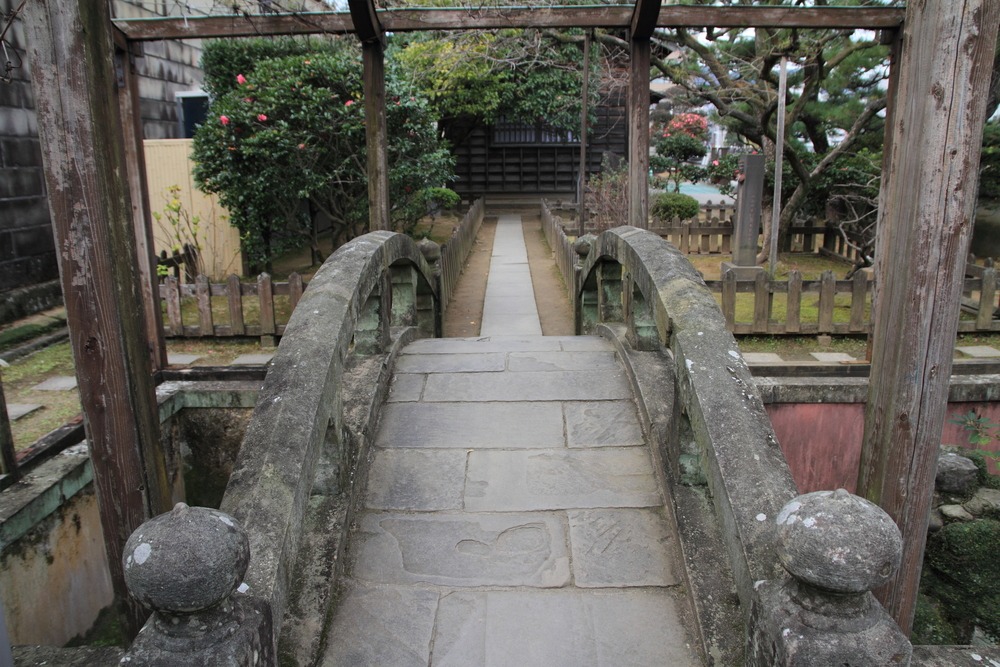
Dejima was an artificial island constructed near Nagasaki's harbor. It served as an exclusive trading post for Portuguese missionaries, then Dutch merchants, during the Edo period when Japan was closed to the outside world. Today, Dejima is no longer an island, yet it remains a fascinating historical site that recreates the atmosphere of that era, with restored buildings, museums, and exhibitions on international commerce and cultural exchange. Visitors can explore reconstructed residences, discover artifacts from the period, and learn about Japan's interactions with foreign powers.
Chinatown
Nagasaki's Chinatown, called Shinchi Chinatown, ranks among Japan's oldest, established in the 19th century as commercial exchanges with China began. This vibrant quarter is known for its animated streets, colorful shops, and diverse restaurants.
Oura Catholic Church
Built in 1864, Oura Catholic Church stands among the first Catholic churches erected in Japan after Christianity's prohibition. Its remarkable European architecture features a Gothic bell tower and stunning stained-glass windows. Inside, sacred artworks and hand-painted frescoes welcome visitors.
Shianbashi
The Shianbashi district in central Nagasaki is characterized by narrow lanes lined with traditional restaurants, welcoming bars, and historic tea houses. The atmosphere is both authentic and lively, especially in the evening when lanterns illuminate the streets. It is an ideal place to savor local specialties, such as fresh fish dishes or the famous Nagasaki ramen.
Climate in Nagasaki
Nagasaki experiences a mild winter, with average temperatures ranging from 4 to 13°C and minimal wind. In spring, when cherry blossoms bloom from late March to early April, the views are sublime. Temperatures gradually warm, peaking around 20°C in April. Summer brings oppressive heat, between 24 and 32°C, with considerable rainfall, particularly in June and July. The climate moderates in September as autumn begins. In November, vibrant autumn hues dominate the landscape.
Departing from Tokyo Haneda Airport, a flight to Nagasaki takes approximately two hours. If you prefer train travel, the journey from Tokyo Station to Nagasaki Station, with a connection at Hakata Station in Fukuoka, requires 7 hours.
If traveling from Osaka, flights to Nagasaki are available from Osaka Kansai International Airport. The flight takes approximately 1 hour 10 minutes. By train, the journey from Shin-Osaka Station to Nagasaki Station takes roughly 4 hours 30 minutes, with a connection at Hakata Station in Fukuoka.
Unless you prefer walking, the tram system is convenient for navigating central Nagasaki. With a day pass (available at stations), you can freely use the city's various tram lines. Plan for a minimum of two days to cover Nagasaki's main attractions and nearby areas.
Attractions in Nagasaki
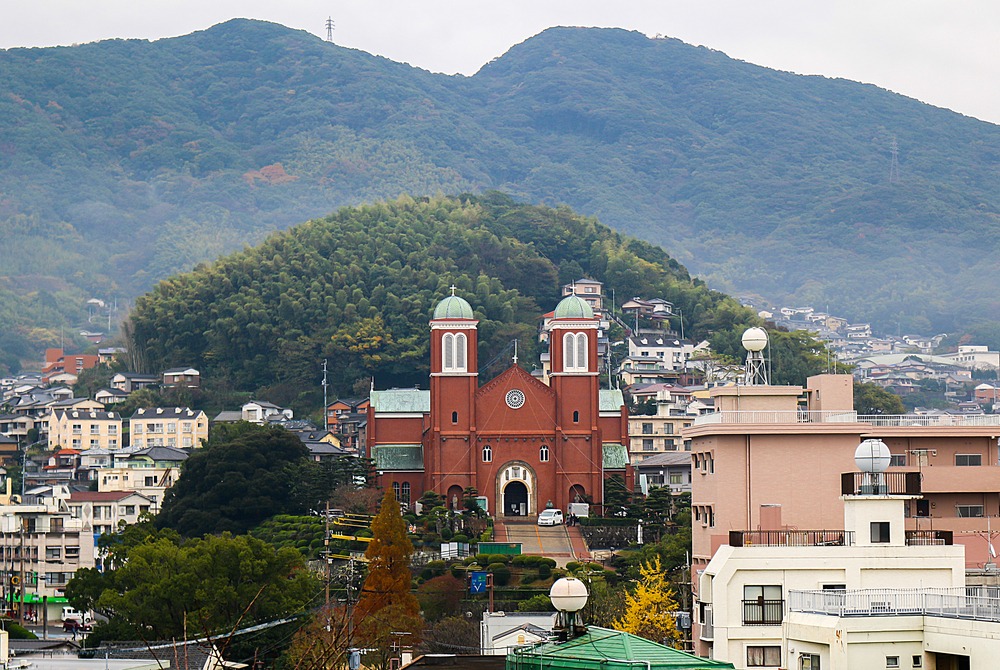
La cathédrale d'Urakami
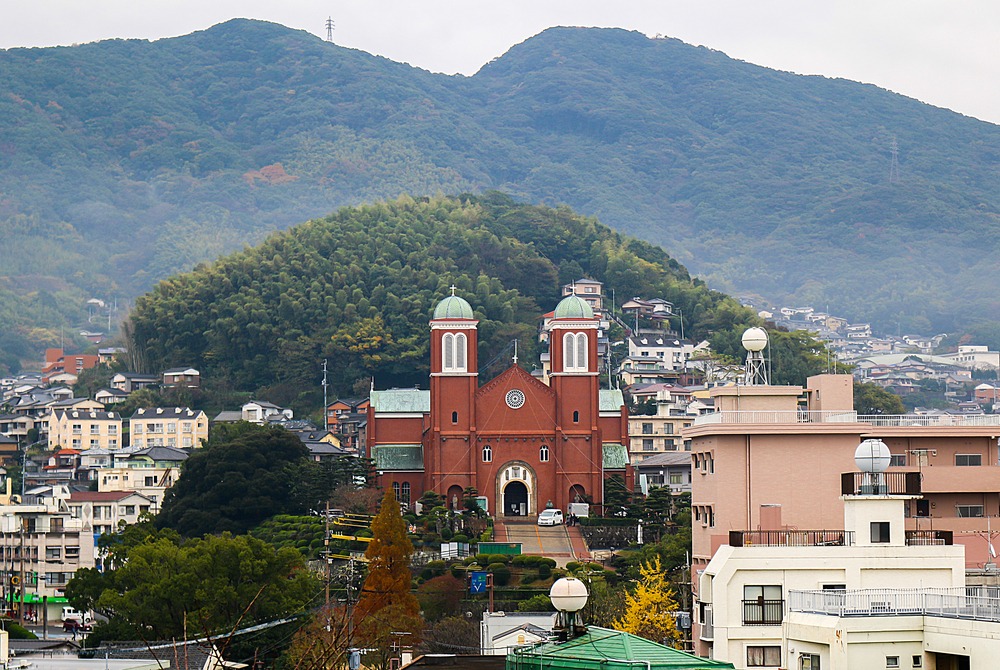
À Nagasaki, la cathédrale d'Urakami raconte 250 ans de Chrétiens cachés, le bombardement atomique de 1945 et la reconstruction d'une communauté catholique japonaise.
Ile de Dejima
Comptoir hollandais aménagé en 1636 à Nagasaki, Dejima fut l'unique fenêtre du Japon sur l'Occident pendant la période du Sakoku. Visite d'un site restauré.
Mont Inasa
À 333 m au-dessus de Nagasaki, le mont Inasa offre un panorama à 360° et l'une des trois plus belles vues nocturnes du monde, classée en 2012.
Urakami
Au nord de Nagasaki, Urakami concentre deux mémoires : celle des chrétiens cachés persécutés de 1614 à 1873, et celle du Ground Zero du 9 août 1945.
Want to discover this destination?
Our local advisors design your tailor-made trip.