Sado
Sado
UNESCO-listed gold mines, Kodo drums, Toki birds and traditional tarai bune boats: Sado is rural, unspoiled Japan, just 3 hours from Tokyo.
Historic monuments and cultural heritage enhance the charm of this island blessed with pristine natural beauty. Sado, also called Sadogashima, ranks among the trendy summer destinations in Niigata Prefecture, facing the Sea of Japan.
History
Sado served as a refuge for political exiles, including the former Emperor Juntoku, the Buddhist monk Nichiren, and Zeami Motokiyo, founder of Noh theatre. Their influence proved invaluable not only to the islanders but also in developing and sustaining Sado's rich cultural and religious heritage. Today, visitors can still find traces of these illustrious figures throughout Sado.
The discovery of gold in the island's western region in 1601, during the Edo period, marked a turning point in Sado's history. At that time, thousands of people from across Japan flocked to the island in hopes of striking it rich. The gold mines became symbols of the island's economic prosperity.
Sado Island Today
Japan's 6th largest island—after Honshu, Hokkaido, Kyushu, Shikoku and Okinawa—lies 45 km west of Niigata Prefecture, north of the Chubu region. Sado spans 857 km², with a coastline of roughly 227 km. On the eastern shore of Lake Kamo, Ryotsu is the island's only significant city, serving as Niigata's outer port and the hub for fishing and administration.
Sado thrives with rich biodiversity, its natural environment forming the Sado Yahiko Quasi-National Park. The Toki, Japan's national bird, is the island's pride. This rare species is recognized by its white crest, long narrow beak, red face, and white body measuring roughly 76 cm. Once common not only in Japan but also in Korea, China, and parts of Russia, the Toki now faces extinction due to hunting and pollution. However, a breeding program was established on Sado and is beginning to show promising results.
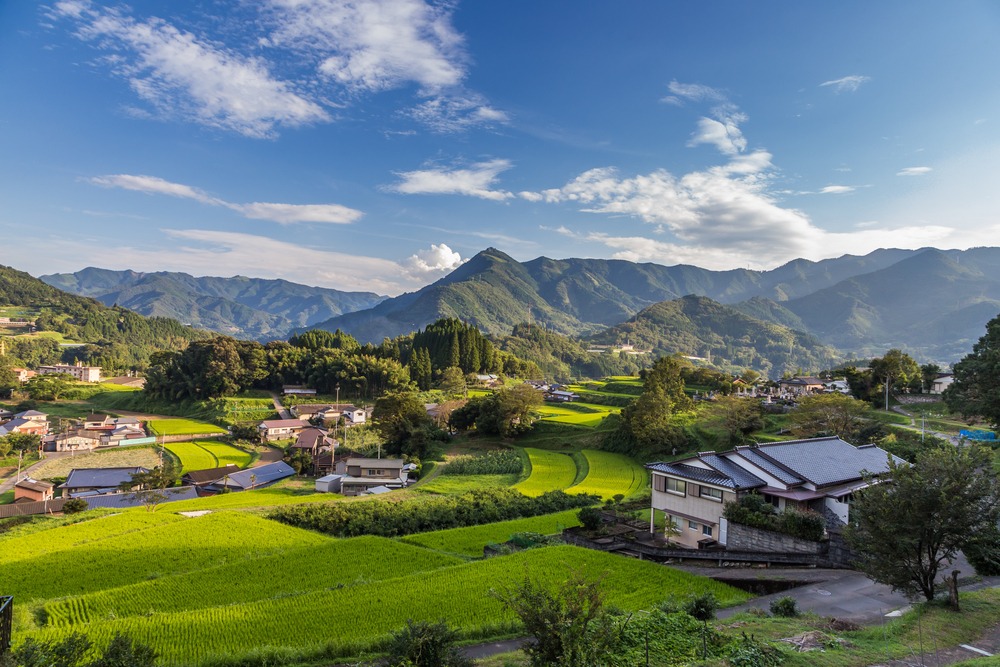
The Kuninaka plains and the parallel mountain ranges of Kimpoku and Kunimi dominate Sado's horizon. To admire sunrise or sunset from the island, numerous establishments offer accommodations and viewing spaces with panoramic vistas. Within hotels, guesthouses, private villas or inns, enjoy the spectacle in an elegant Japanese setting with warm hospitality.
Culture on Sado encompasses traditional arts and entertainment passed down through generations for centuries. While exiled populations enriched the island's cultural life from the 8th century onward, samurai and artisans brought their expertise in gold and silver extraction during the Edo period. Among traditions still observed today are Munyoi-yaki, Sado Okesa, Sado Noh and puppet theatre. The Earth Celebration stands as the island's most important annual event. This music festival takes place in August, featuring performances by the renowned local percussion group Taiko Kodo.
Sado's culinary specialties have become one of the main reasons visitors come to the island. The local cuisine stands out for the freshness and flavour of seafood used in its dishes. Add to this the quality of the rice and sake. Dishes worth trying include sembei (rice crackers), sushi, oysters and Japanese horse mackerel. In terms of execution and service, many local restaurants rival those in Tokyo.
Climate
Sado enjoys relatively mild weather, with tolerable winter temperatures and moderate summers. These climatic characteristics, distinct from other regions of Japan, make the island a year-round tourist destination, especially popular with outdoor enthusiasts enjoying skiing, snowboarding, hiking, cycling, trekking, swimming and diving.
Train
From Tokyo, it takes approximately 3 hours to reach Sado Island. The journey from the capital to Niigata railway station via the JR Joetsu Shinkansen line takes 2 hours. The jetfoil crossing to Ryotsu port takes about one hour.
Plane
Operated by New Japan Airlines, the main international access point to Sado by air is via Niigata. Each day, 3 to 4 flights from Niigata serve Sado Airport (SDO), located near Ryotsu. The journey to the airport takes approximately 15 minutes by bus.
Ferry
Available at Niigata city's ferry terminal, two boats provide service to Ryotsu on Sadogashima. Operated by Sado Kisen, the high-speed jetfoil also serves the island, though at considerably higher cost.
Car Rental
For optimal freedom of movement on the island, rent a car, motorcycle or bicycle in Ryotsu, Ogi, Aikawa or Akadomari.
Bus
More than 16 bus lines serve Sado Island. With the exception of the Honsen line between Ryotsu and Sawata, there are no fixed stops; passengers can board and alight anywhere according to their destination.
Taxi
For small groups of tourists, Sado's taxi operators offer guided tours.
What to Do on Sado Island?
- Observe Toki birds in the Sado Forest Park
- Visit the historic gold mines to learn more about the island's glorious past
- Discover local legends at the Sado Historical and Traditional Museum
- Taste fresh seafood from the Sea of Japan, and more
Want to discover this destination?
Our local advisors design your tailor-made trip.