The Sanctuary of Fushimi Inari
The Sanctuary of Fushimi Inari
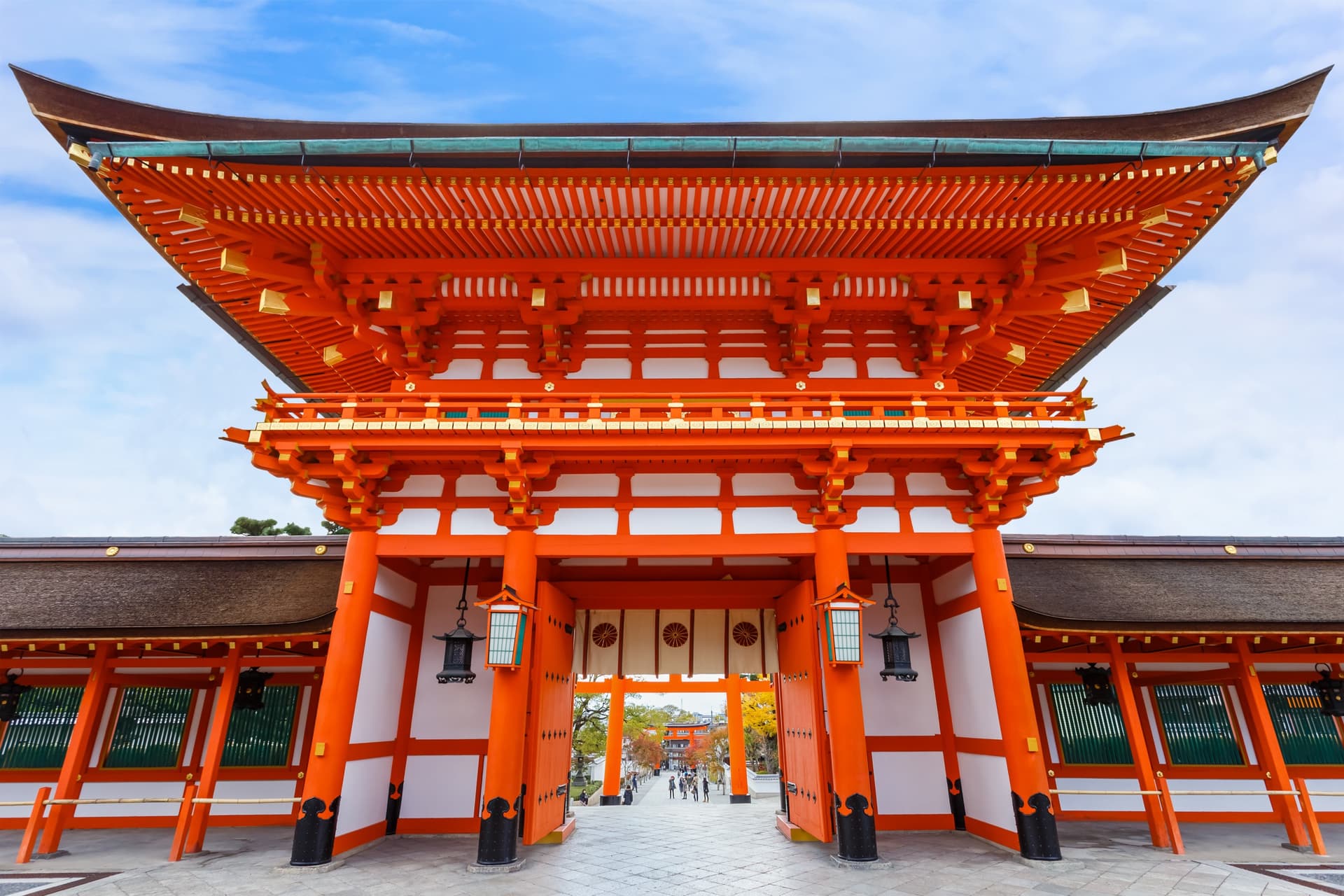
Nicknamed the sanctuary of ten thousand torii, Fushimi Inari-taisha lines its vermillion gates along the forested slope southeast of Kyoto.
Nicknamed the "sanctuary of ten thousand torii," Fushimi Inari-taisha stretches across the flank of Mount Inari, southeast of Kyoto. The principal sanctuary dedicated to Inari, a Shinto deity associated with rice, fertility, and prosperity, it lines thousands of vermillion gates along pathways that climb to the summit at 233 meters elevation.
Why Visit Fushimi Inari
The site combines several rare attractions in one location. You'll encounter the most emblematic Shinto sanctuary dedicated to Inari, you'll walk through the main avenue of the Senbon torii ("thousand gates"), and you can extend your visit with a roughly 4-kilometer loop hike through the forest of Mount Inari. Access is free and the site remains open continuously, allowing you to choose a less crowded time. For travelers interested in history, religion, and Japanese traditions, this is one of the most compelling sites in the Kansai region.
History and Legend
The sanctuary was founded in 711 by Hata-no-Iroko, a member of a clan of continental origin settled in the Kyoto region. A legend attributes the choice of location to an omen: an arrow shot by Hata-no-Iroko supposedly transformed a bowl of rice into a white heron, which landed atop the hill. Rice, central to this episode, remained the major symbol of Inari.
The structure was destroyed in 1468 during the Ōnin War, which ravaged Kyoto, then rebuilt in 1499. During the Meiji era, in 1871, it received the title of kanpei-taisha, placing it among the first-rank shrines under imperial protection. Its main hall was designated a national treasure in 1909. The site celebrated its 1300th anniversary in 2011.
What to See
The Senbon Torii Avenue
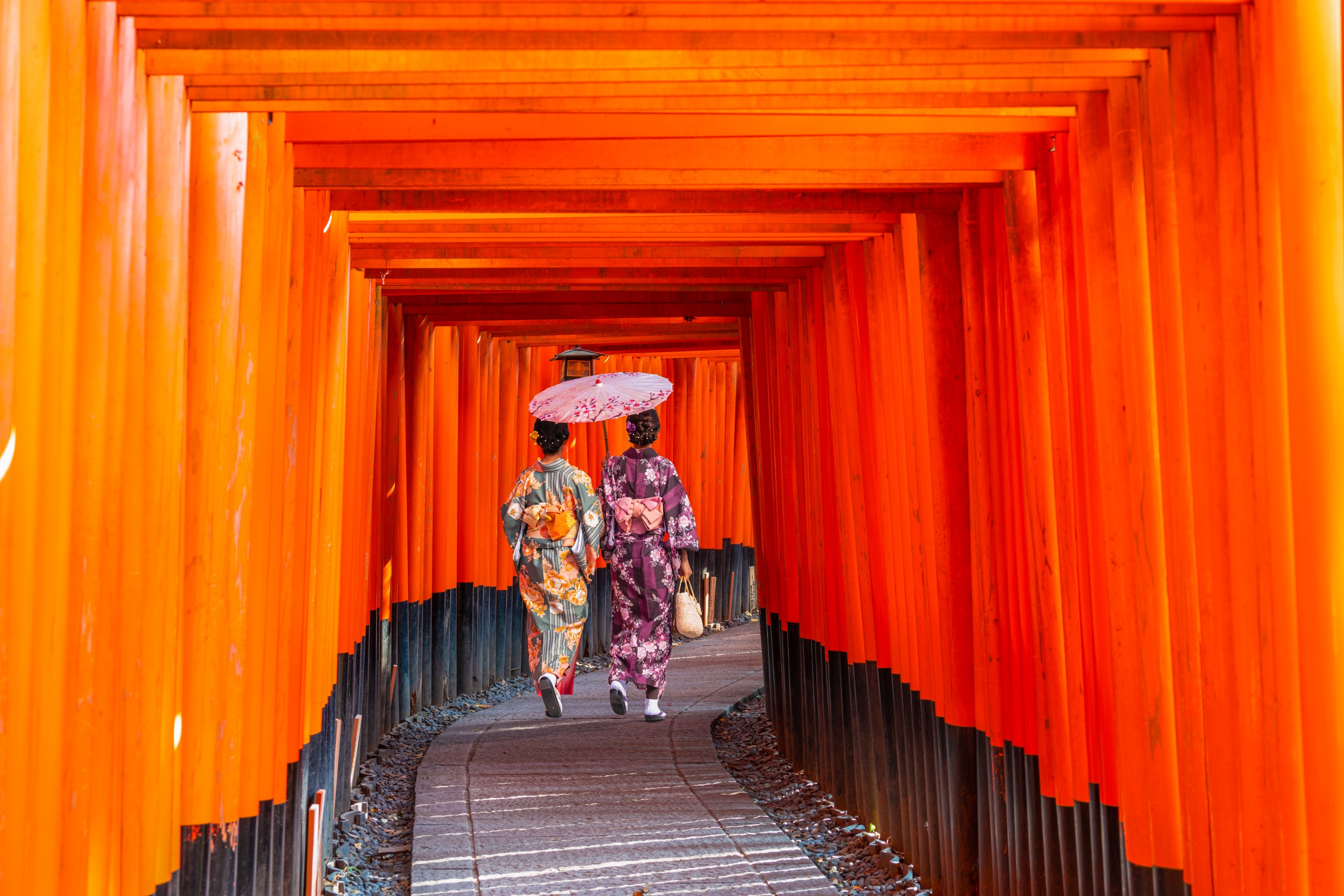
The shrine's renown rests on its colonnade of gates, called the Senbon torii. Across the entire grounds, there are approximately ten thousand of them—a largely symbolic figure that expresses abundance rather than an exact count. The custom of erecting these vermillion gates dates back to the Edo period (1603-1868). Each torii is funded by an individual, company, or group as thanks for a wish granted or to make a new wish. The donor's name and date are inscribed on the back of the gate. Acquiring a torii represents a substantial investment, varying by size, and typically requires several years of waiting.
The Kitsune Statues
Foxes (kitsune), considered messengers of Inari, are omnipresent throughout the site. Often placed in pairs at pavilion entrances, they hold in their mouths a sheaf of rice or a key—symbols respectively of agricultural fertility and access to granaries. Worshippers offer them red bibs, called yodarekake, and sometimes leave rice or sake at their feet. Fried tofu is traditionally associated with the fox; you'll find restaurants near the sanctuary serving kitsune udon, noodle soup topped with this tofu.
Ascending Mount Inari
The route extends beyond the main avenue. A roughly 4-kilometer loop trail climbs to the summit of Mount Inari (233 m), through forest dotted with smaller secondary shrines (otsuka), ritual waterfalls, and torii sometimes covered in moss. Halfway up, the Yotsutsuji overlook offers a clear view of Kyoto. The trail is marked but includes steps: wear good shoes and bring water.
Practical Information
- Access: free and open 24/7.
- Office hours: the amulet shop and reception staff are present during daytime only; the surroundings remain accessible outside these hours.
- Visit duration: allow 1 to 1.5 hours for the Senbon torii and main pavilion, roughly half a day if you climb to the summit.
- Equipment: hiking shoes for the ascent, warm clothing in winter, headlamp for a nighttime visit.
When to Visit
Since the site is open continuously, your choice of timing mainly affects crowd levels. Early morning (before 8 a.m.) or evening and night, the torii avenue is considerably quieter and crowd-free photographs become possible. Late afternoon light particularly enhances the red of the gates.
Seasonally, spring (cherry blossoms in April) and autumn (maples in November) are the most pleasant periods but also the busiest. Winter offers a more austere atmosphere, with fewer visitors on the Mount Inari trails. Avoid weekends and Japanese holidays, particularly New Year, when the sanctuary draws crowds for hatsumōde (the first shrine visit of the year).
How to Get There
- By train: from Kyoto Station, the JR Nara line serves JR Inari Station in about 5 minutes. The station exit opens directly onto the sanctuary's entrance torii.
- By private train: the Keihan line, Fushimi-Inari station, is a few minutes' walk from the sanctuary.
- By bus: get off at Inaritaishamae stop, then a few minutes' walk.
Nearby Attractions
Fushimi Inari fits naturally into a broader itinerary around Kyoto and the Kansai region. Nearby, the Fushimi district is known for its sake breweries. To extend the sacred mountain experience, several sites complement this visit well:
- Mount Hiei, a major center of Tendai Buddhism northeast of Kyoto.
- Mount Kōya, hub of Shingon Buddhism in Wakayama Prefecture.
- Mount Inasa, for another type of urban panorama near Nagasaki.
Frequently Asked Questions
Frequently asked questions
Admission is completely free, at any time of day or night.
Allow 1 to 1.5 hours to walk the Senbon torii and main sanctuary. To complete the trail to the Mount Inari summit, plan for roughly half a day.
Traditionally ten thousand torii are mentioned, a symbolic number. The actual total across the grounds approaches this figure when you add gates of all sizes spread along the trails.
Early morning (before 8 a.m.) or evening, to avoid crowds and enjoy favorable light. The sanctuary remains accessible at night, allowing for very peaceful visits.
Kitsune are messengers of Inari. They often hold a sheaf of rice or a key in their mouths, symbols of fertility and prosperity. The red bibs adorning them are offerings from worshippers.
Plan Your Journey
Fushimi Inari naturally fits into an itinerary centered on Kyoto and the Kansai region. To build a complete and personalized route, consult our trips to Japan.
Nearby
Interested in this visit?
We can include it in your personalised itinerary.