The Japanese Alps
Beyond the neon glow of megacities, return to nature in this stunning mountainous region! About 200 km northwest of Tokyo, on Honshu's main island, mountain streams and forests, as well as historic villages and hot spring resorts, await you in the J
Beyond the neon glow of megacities, return to nature in this stunning mountainous region! About 200 km northwest of Tokyo, on Honshu's main island, mountain streams and forests, along with historic villages and hot spring resorts, lie within reach in the Japanese Alps.
History
Credit for the name "Japanese Alps" belongs to English archaeologist William Gowland, who, while exploring the mountainous region in the late 19th century, discovered geological similarities with the European Alps. However, it was British missionary Walter Weston who popularized this designation following his travels to Japan in the 20th century.
Sacred Destinations for the Japanese
For centuries, the Japanese have believed that gods dwell in the mountains. When they climb peaks over 3,000 meters, it is not merely for leisure—it is also to undertake a pilgrimage. The Ontake and Tateyama mountains represent important centers of worship, visited since the mid-Edo period (around 1700) by both the faithful and ordinary people seeking spiritual enlightenment. These customs endure to this day.
Discovering the Japanese Alps
Pack your backpacks and gather your best mountaineering gear—adventure awaits! Comprising three mountain ranges—Hida to the north, Kiso in the center, and Akaishi to the south—the Japanese Alps bisect the island of Honshu across 200 kilometers. Mount Kita (3,193 m) is the highest peak, followed by Mount Hotaka (3,190 m). A paradise for hiking and rich with countless mountain experiences, it is a destination for adventure at the heart of wild Japan.
An Itinerary for Every Adventurer in the Japanese Alps
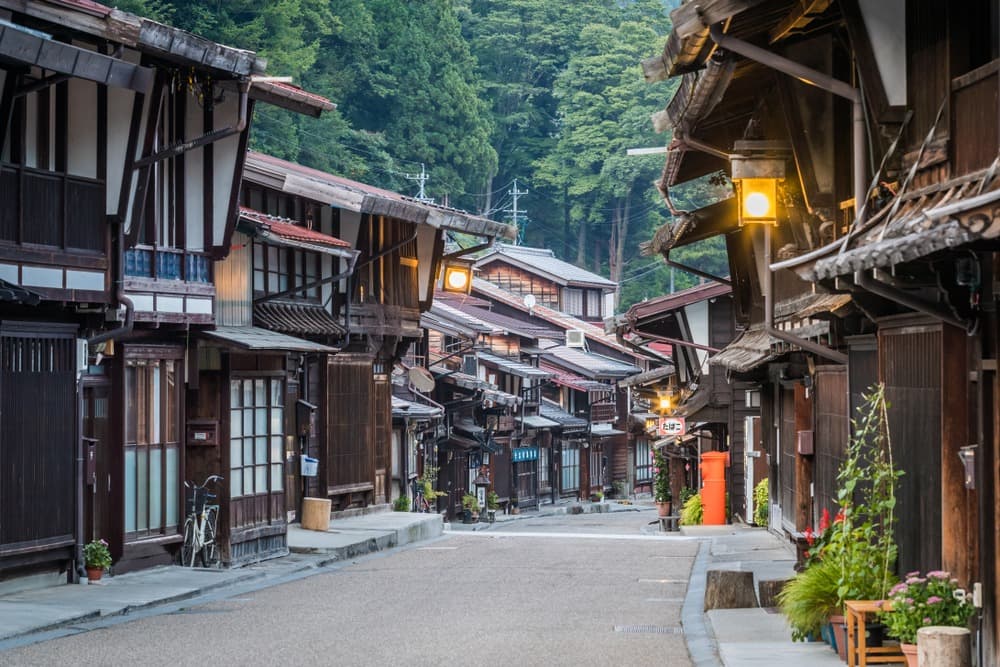
From family outings around Lake Taisho in the Kamikochi Valley to the challenge of climbing Mount Tsurugi-dake (2,999 m), the Japanese Alps offer treks for all levels. If you love long-distance trekking, embark on a traverse through the mountains of Nagano Prefecture. For alpine plant enthusiasts, head to the natural amphitheater of Senjojiki in the central Alps. The Komagatake funicular passes through this site and continues to the nation's highest station at 2,612 meters of altitude! For a step back into Japan's history, follow the Nakasendo Trail departing from Magome, one of the main routes that connected Tokyo to Kyoto during the Edo era. Stop at the village of Tsumago, which seems frozen in time amid a cypress forest. Between your adventures, you can rest at mountain lodges dotting the Alps—nearly 200 exist!
Visiting the Japanese Alps in Winter
The Japanese Alps are equally captivating during the winter season. The region hosts numerous ski resorts, particularly in Nagano Prefecture. Among the most popular are the Hakuba, Shiga Kogen, and Tateyama Sanroku stations. Don't miss the thermal villages where you can relax in the onsens: Maguse, Osawayama Onsen, Fukuchi, Hirayu, and others. Discover the mountain hot springs in the small town of Shibu. At Bessho, the baths adjoin century-old temples, while in the Jigokudani natural park, you will see monkeys warming themselves in the thermal springs.
Which Towns to Visit
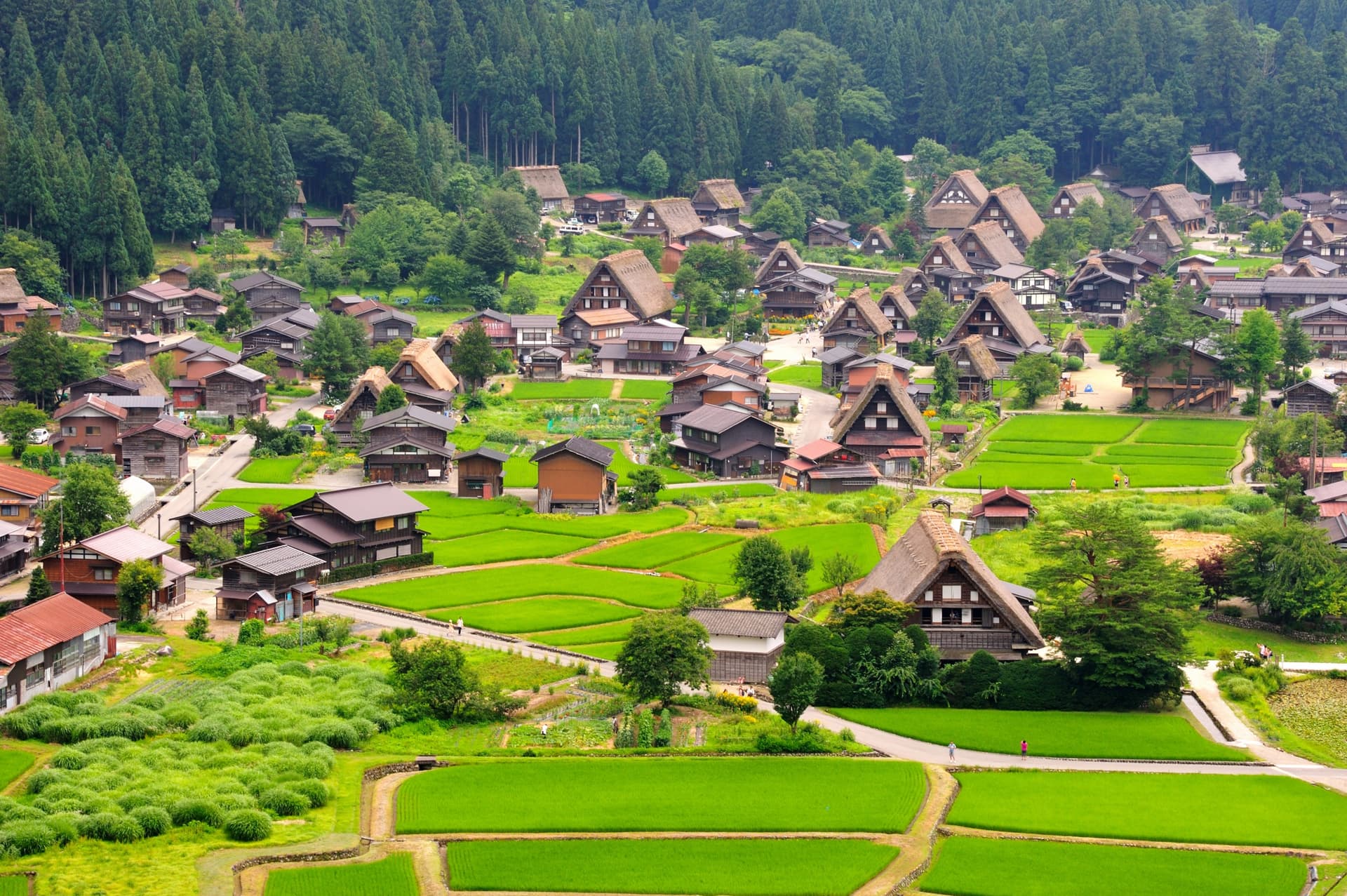
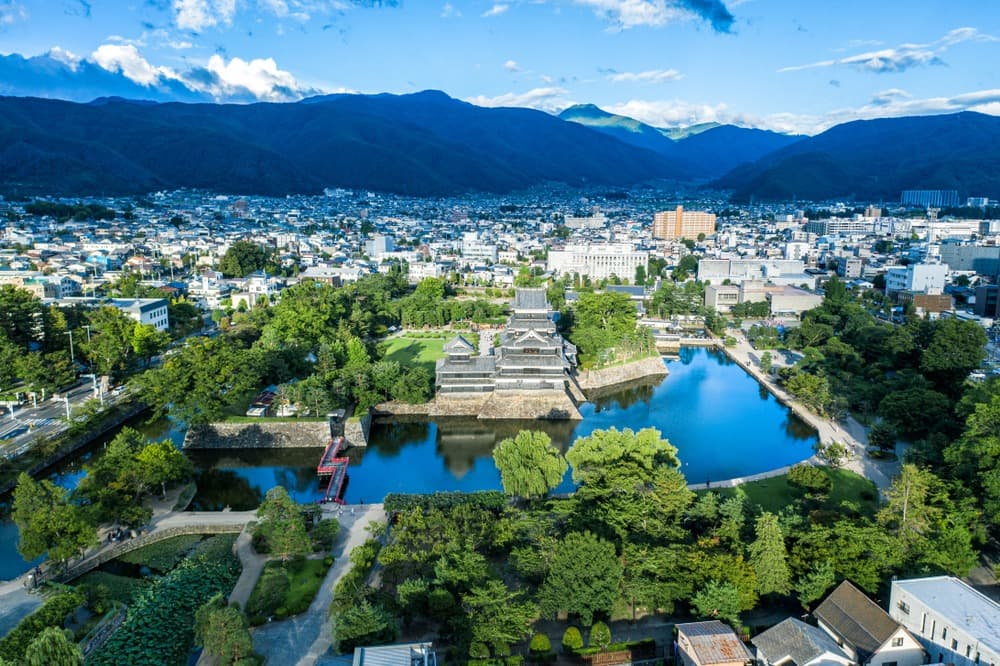
Matsumoto is the essential hub for exploring the Japanese Alps. Take advantage of your stay to visit Matsumoto-jô, the "Crow Castle." The Kaichi School-Museum, founded during the Meiji era, as well as the Naka-machi district with its kura (19th-century storehouses), are also worth exploring. Extend your stay in the charming town of Kanazawa to discover its 21st Century Museum of Art, then visit the Shirakawa-gô village to admire traditional thatched-roof constructions inscribed as a UNESCO World Heritage site. And to add a gastronomic touch to your journey through the Japanese Alps, visit Hotaka, the capital of wasabi!
You can reach the Northern Alps (Hida) fairly easily from the major cities of Honshu. Buses and trains serve most trailheads. The Tateyama-Kurobe Alpine Route is a famous mountain pass offering breathtaking views via a series of buses, trains, and cable cars. At the southern end of the Northern Alps, Kamikochi is a popular resort base, connected by bus to Takayama and Matsumoto. Access to the Southern Alps (Akaishi), however, is more challenging. Accessible by bus from Kofu Station, Hirogawara is the common starting point for travelers. To reach the Central Alps (Kiso), you can travel through Nagano.
When to Visit the Japanese Alps?
Most tourists plan their journey to the Japanese Alps between late June, at the beginning of summer, and late October during autumn. The rainy season extends from June to mid-July. This is not the most recommended period for major excursions, but a few sunny days permit shorter outings. From July to September, while summer heat weighs on the rest of the country, high-altitude areas enjoy much cooler temperatures. It can be cold at night near the peaks, even during summer.
Avoid, if possible, public holidays and dates around mid-August, when crowds of tourists flock to the Japanese Alps. During this time, transportation and accommodations can quickly become saturated. Visitors will continue to arrive until early October to witness the autumn color change. Be aware that from late summer through late October, typhoons can occur and disrupt hiking trails. The first snows arrive in November—most trails remain snowbound until late May. During this period, mountain transportation is limited, and only experienced mountaineers should venture out.