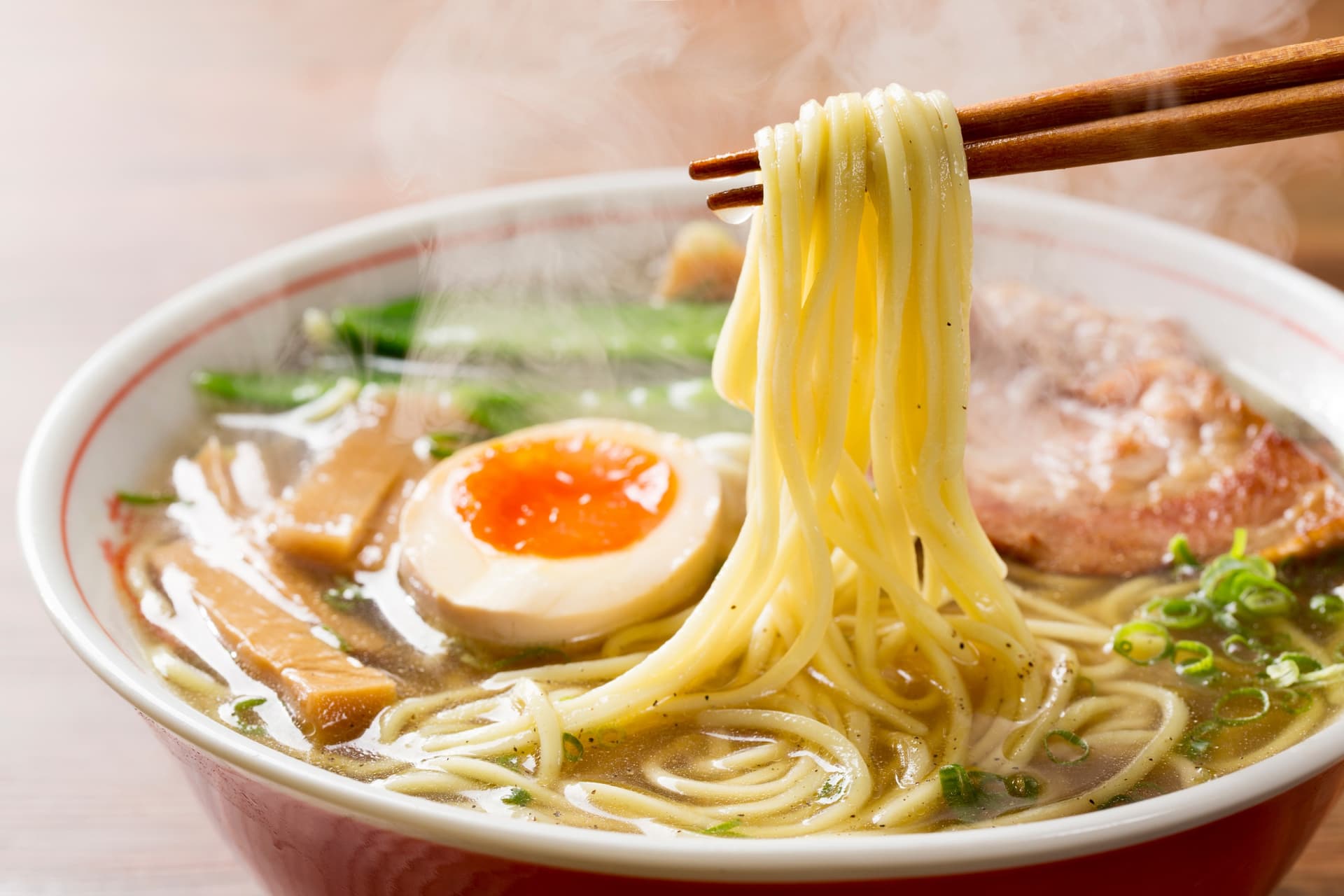
Everything You Need to Know About Ramen, Japan's Iconic Dish
Both traditional and popular, ramen is the most consumed dish in the Land of the Rising Sun. A true pop culture product and an essential recipe of Japanese gastronomy
Both traditional and popular, ramen is the most consumed dish in the Land of the Rising Sun. A true pop culture product and an essential recipe of Japanese gastronomy, this broth-based dish delights locals and food enthusiasts alike! Curious to learn more about this soup made with soft-boiled eggs? Here's the story of ramen – and why it's so beloved in Japon…
What is Ramen?
Ramen is a dish that originates from Japanese cuisine. More than just a dish, it's first and foremost a highly popular specialty! To be precise, ramen noodles originally come from Chinese fresh wheat noodles – not a complete dish in themselves.
In Chinese, rāmen means "pulled noodles" because they are hand-stretched during production. Their distinctive feature? They are made with kansui, an alkaline salt that gives them a lovely golden color (and distinguishes them from udon or soba noodles).
More commonly, ramen refers to a noodle dish that can be accompanied by various meats, seafood or fish, as well as other toppings such as vegetables or seaweed.
What is the History of Ramen?
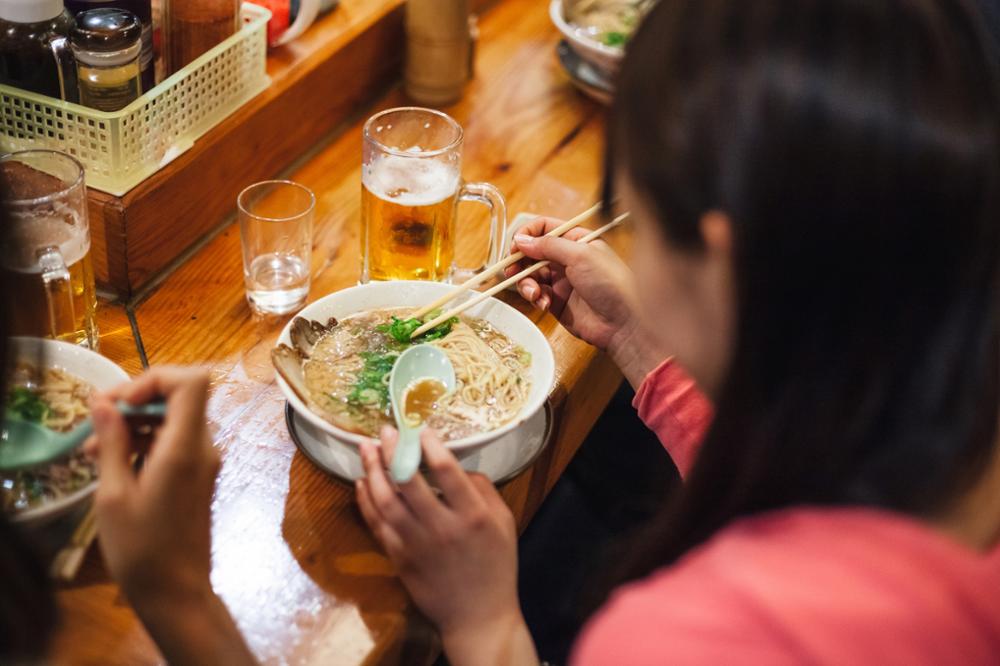
Imported from China in the late 19th century, ramen became mainstream after World War II. Why this period? Because Japon, then in ruins, faced a rice shortage. To feed themselves, they imported many foods from China – both inexpensive and, most importantly, quick to eat for workers.
In the 1950s, the first instant noodles were commercialized by Momofuku Andō, later nicknamed Mr. Noodle. Chicken Ramen (rāmen with chicken) became popular and eventually a cultural phenomenon, then an iconic pop culture product (the famous noodles from Dragon Ball Z!).
Why is Ramen so Popular in Japon?
Its popularity today stems from ramen being both a traditional dish and a flagship street food product (easy to carry). The multiplicity of recipes also means it appeals to a wider audience, as it can adapt to seasonal ingredients and individual tastes (with or without meat, etc.).
This enthusiasm gave rise to Kodawari – a concept difficult to translate, but which broadly refers to the Japanese commitment to always showcase this traditional dish with rigor and perfection.
What are the Ingredients in Japanese Ramen Soup and How is it Consumed?
The Dashi Broth
While there are countless ramen recipes, all versions are always prepared from the same base: dashi. This traditional broth (comparable to French bouillon cubes) is made from kombu seaweed, shiitake mushrooms and dried bonito (a smoked, fermented and dried variety of tuna, called katsuobushi).
The Ramen Recipe
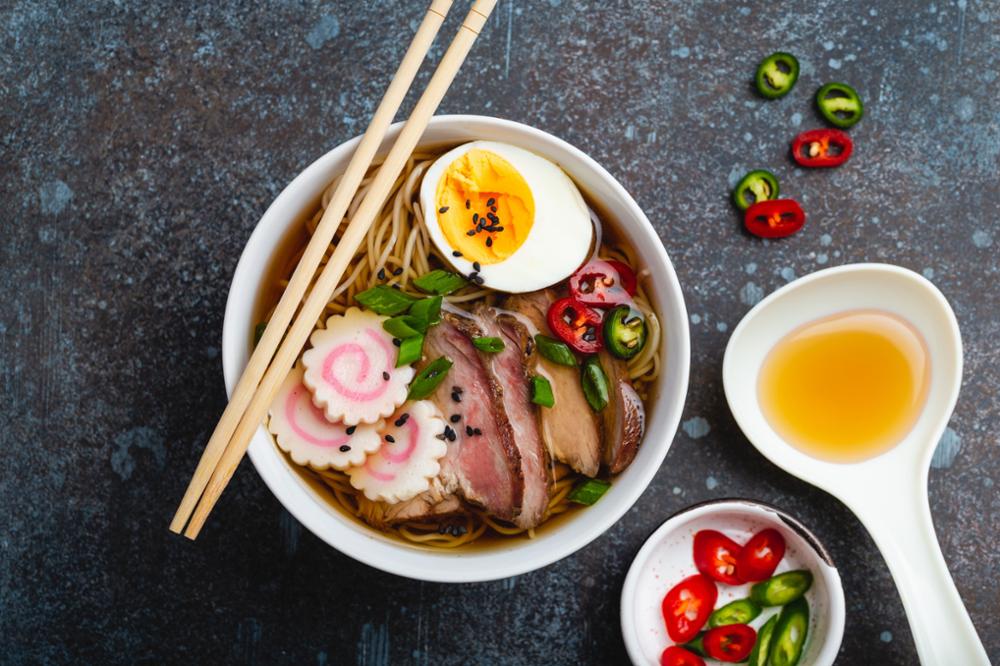
Once prepared, the broth goes through countless variations – giving the final dish different colors, texture and flavors. However, you'll almost always find a topping composed of:
Ajitsuke tamago eggs (soft-boiled eggs marinated in soy sauce and mirin);
Chashu (thin slices of roasted pork);
a slice of kamaboko or narutomaki (steamed fish cakes);
bamboo shoots;
vegetables or citrus (spinach, bok choy, lemon, etc.).
The recipe also varies by region. In the city of Tokushima, on the island of Shikoku, the dashi is for example mixed with another broth called shoyu (a soy sauce), which gives the rāmen a unique flavor.
The Tasting
As is often the case in Japon, the way you enjoy a dish is as complex as its preparation:
ramen must be eaten hot and quickly (Japanese diners consume this dish in 5 minutes!);
making noise while slurping your noodles is not impolite – it actually helps you distinguish all the broth's aromas (the slurping sound is called "Zuru zuru");
after finishing the toppings, don't hesitate to drink the broth!
Where to Enjoy the Best Ramen Restaurants in Tokyo?
If you're visiting the capital, don't miss the ramen museum (located at 2 Chome-14-21 Shinyokohama, Kohoku Ward, Yokohama, Kanagawa 222-0033). Built over two floors, this unique venue recreates the appearance of a 1958 Shitamachi neighborhood… You can taste different recipes, fabricate noodles or even cook your own ramen!
In Tokyo, there's also a dedicated street: the ramen street (located in the underground shopping area of the station). Outdoors? Take a stroll through the Shimbashi neighborhood, renowned for the quality of its restaurants!
Finally, you can also try ramen from the Ichiran chain (the most popular in Japon), where long queues always form. You'll find locations throughout the city.
Frequently asked questions
There are 4 main types of ramen in Japon: shoyu (soy sauce-based, clear brown broth), shio (salt-based, light and pale broth), miso (rich and thick broth made with fermented soy paste) and tonkotsu (creamy pork bone broth, originating from Fukuoka). Each region also has its own variants and specialties.
The price of ramen in a Japanese restaurant typically ranges from 800 to 1,500 yen (approximately 5 to 10 euros), depending on the region, type of establishment and toppings chosen. Instant ramen sold in supermarkets are available for just a few hundred yen.
Yes, although less common than in Europe, it is possible to find vegetarian or vegan ramen in Japon, especially in major cities like Tokyo, Osaka or Kyoto. Some specialized restaurants offer broths made from vegetables, miso or shiitake mushrooms, without animal products.
The Ramen Museum (Shin-Yokohama Ramen Museum) is a unique venue located in Yokohama, near Tokyo. Spread over two floors, it recreates the atmosphere of a 1950s Japanese neighborhood and houses several restaurants serving the best regional ramen recipes. You can also watch noodle-making demonstrations and even prepare your own ramen.
In most ramen restaurants in Japon, ordering is done via a vending machine at the entrance. You select your ramen type and options (broth, noodle texture, additional toppings), then hand your ticket to the cook. It's quite common to eat alone, seated at a counter, with minimal interaction with staff.