Attending a Tea Ceremony in Japan
As explained in the previous article, the Japanese tea ceremony must follow a number of protocols. More than just a tasting
As explained in the previous article, the Japanese tea ceremony must adhere to a number of protocols. More than a tasting, it is a meditative and spiritual experience whose master, the teishu, holds all its subtleties. From rituals to the various stages, we'll tell you everything you need to know before attending a tea ceremony in Japan.
Rituals to know before attending a tea ceremony
Traditionally, a tea ceremony takes place with 4 or 5 guests who each have their own title and role to play. Of course, as a tourist, it's impossible to know all the intricacies! That's why there are tea houses dedicated to foreign visitors where they will show you the standard protocol to follow in order to experience this gentle escape.
In any case, know that you must remove your shoes before entering and wait for the teishu to give you the opportunity to be seated. Similarly, wait until the tea tasting is finished before you can speak, and only discuss matters related to the ceremony (around the tea and utensils, elements of the room such as the meaning of the scrolls...). For this, you may have an interpreter or the shokyaku. When in doubt, keep silent and appreciate the purity of the moment! The idea is to say nothing and make no movement that is unnecessary and superfluous.
How does a tea ceremony unfold in Japan?
The tea ceremony can vary from one tea house, one school, one season to another, or even depending on the time of day it takes place. It exists in a long version or a short version. In the first case, participants are invited to enjoy a meal called chakaiseki and conclude with a Japanese sweet, wagashi. In the second case, only sweets accompany the tea tasting. In any case, the tea ceremony unfolds in several stages, as follows:
Step 1: Purification
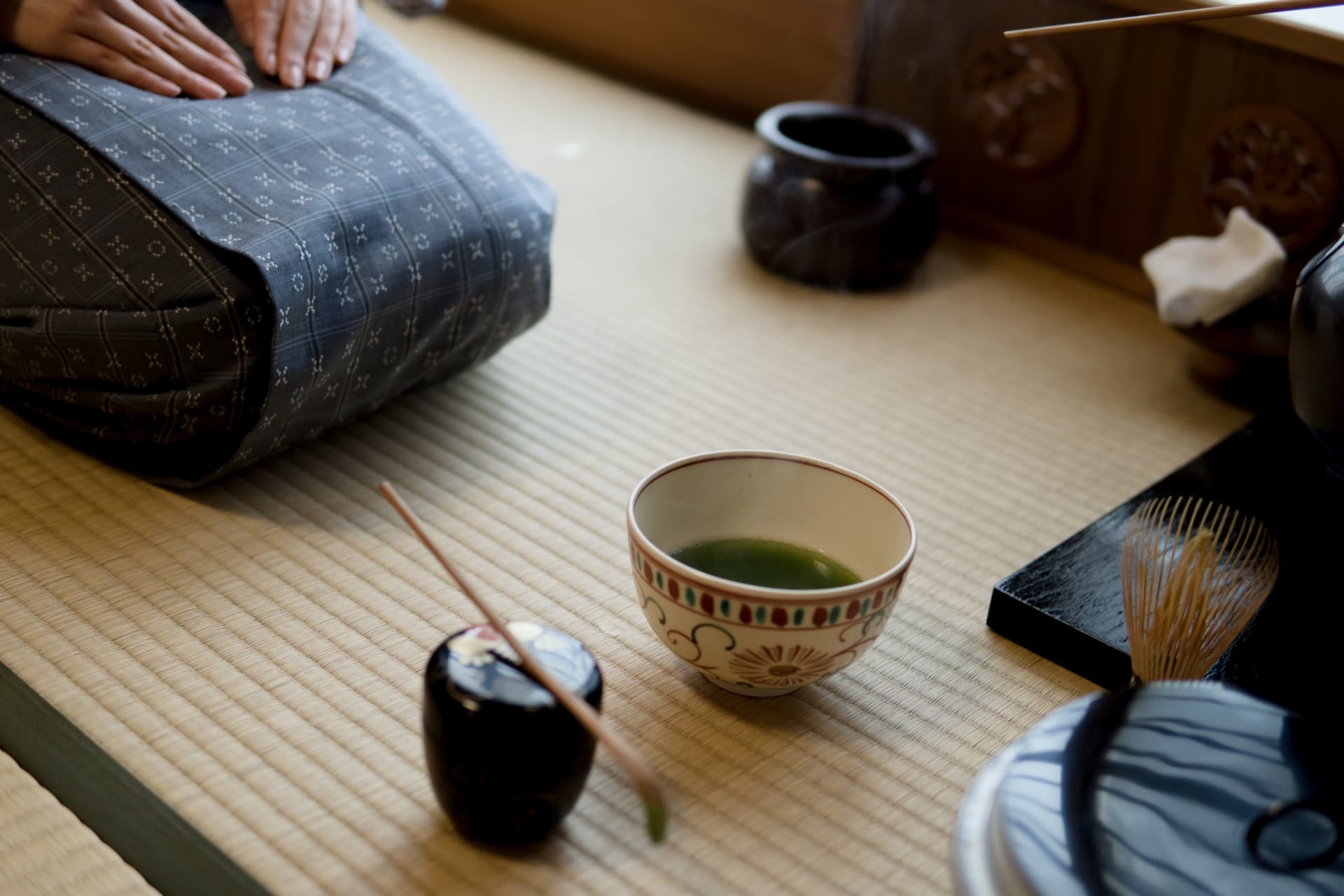
When the tea master gives the signal, guests may enter (without their shoes) the tea house by bowing as a greeting and sign of respect to the master of the house. Participants must wash their hands in order to symbolically leave impurities outside before being allowed to sit on the tatami facing the teishu. The latter will then proceed with the cleaning and purification of the utensils. The grace and concentration observed in all tea masters during this step is already the promise of a privileged moment, almost mesmerizing.
Step 2: Preparation
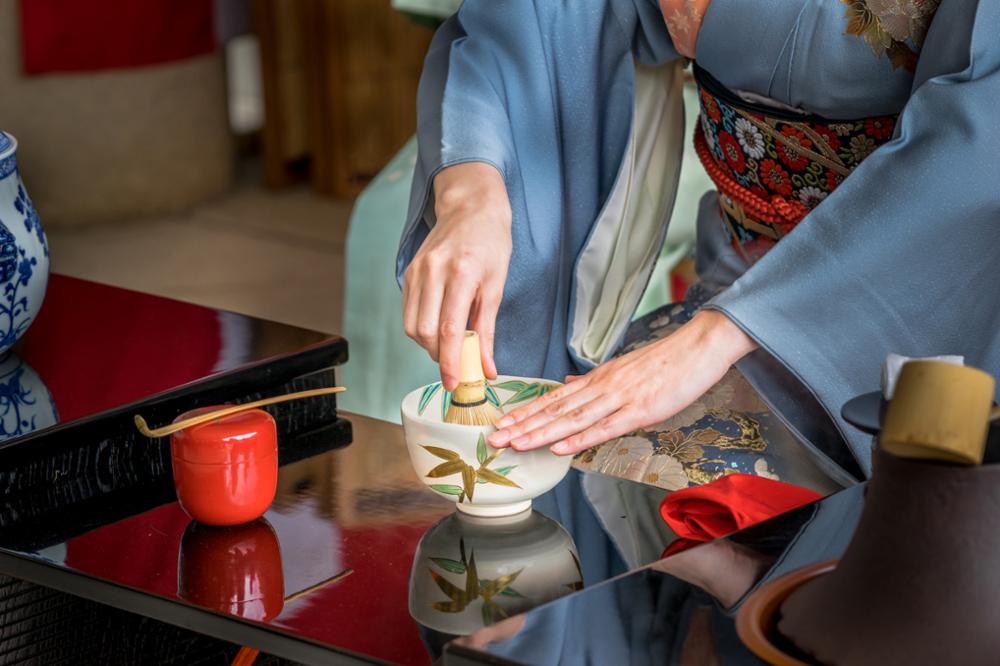
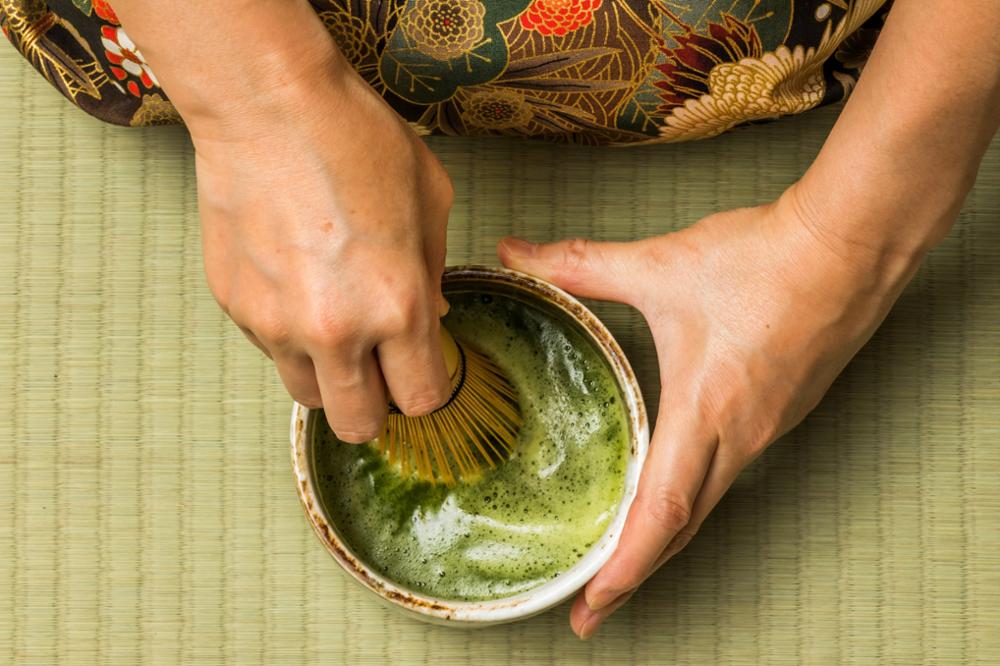
Once the utensils are ready, the tea master can proceed with the tea preparation. He then places a precise amount of matcha powder in the bowl, adds hot water, and whisks the beverage with a bamboo whisk until achieving a smooth and frothy texture on the surface.
Step 3: Tasting
The tea master then hands the bowl to the first guest (the most important in tradition) who in turn must perform a precise ritual. Indeed, he must first greet the second guest and then the teishu by raising the bowl before rotating it twice clockwise (in order not to drink from the front of the bowl). After that, he can taste the tea, and more specifically, take two and a half sips; not a single one more. The final sip must be inhaled noisily to show that the tasting is finished (like with the famous ramen!).
Depending on what was agreed beforehand, the first guest can either place the bowl on the tatami with the front facing outward and then present it to the next guest, or return the bowl to the tea master who has prepared a bowl for each guest. In any case, each guest must repeat the same gestures during the tasting.
Step 4: End of ceremony
Once all guests have tasted the tea, the teishu meticulously cleans his utensils while presenting them to the participants. Once again, his movements are codified, meticulous, and show how much care he takes of his instruments. The tea ceremony concludes with expressions of gratitude. In Japanese tradition, it is not uncommon for Japanese to send a thank-you letter to their teishu several days after the ceremony.
Frequently asked questions
The duration of a tea ceremony varies depending on the format chosen. The short version (usucha) lasts approximately 45 minutes to 1 hour, while the long version (chakai or chaji) with chakaiseki meal can last several hours. For tourists, adapted ceremonies of 30 to 45 minutes are often offered.
Kyoto is the must-visit destination for attending a tea ceremony, particularly in the Gion and Uji districts. Tokyo also offers many tea houses dedicated to foreign visitors. Temples such as Daitoku-ji in Kyoto organize ceremonies open to the public.
Yes, it is strongly recommended to book in advance, especially during peak seasons (spring for cherry blossoms, autumn for fall foliage). Some tourist tea houses accept drop-in visits, but the most authentic experiences are generally booked several days in advance.
It is advisable to wear sober and comfortable clothing. If you wish to wear a kimono, some tea houses offer rentals on site. Avoid strong perfumes that could alter the aromas of the tea, and wear clean socks as you will need to remove your shoes before entering.
The price varies depending on the type of experience. A simplified tourist ceremony typically costs between 500 and 2,000 yen (3 to 13 euros). More authentic experiences or those including a chakaiseki meal can reach 5,000 to 20,000 yen. Some temples offer ceremonies at a free or symbolic price.