Between Clichés and Truths: Uncensored Images of Japan
Despite the current enthusiasm of English-speaking audiences for Japan's traditional and popular culture, the image that people have of the archipelago remains
Despite the current enthusiasm of English-speaking audiences for Japan's traditional and popular culture, the image that people have of the archipelago remains, much like that conveyed by television documentaries or certain works of popular literature, rather caricatural. Alternately portrayed as a land of exoticism, an embodiment of the "Yellow Peril," then as an economic samurai, Japan endures in the minds of the Western public as a chimera—a crystallization of fantasies and preconceptions. While it is certainly worth debunking certain misconceptions about modern Japan, other well-worn clichés turn out to have at least some basis in reality…
Is Japan an expensive and polluted country?
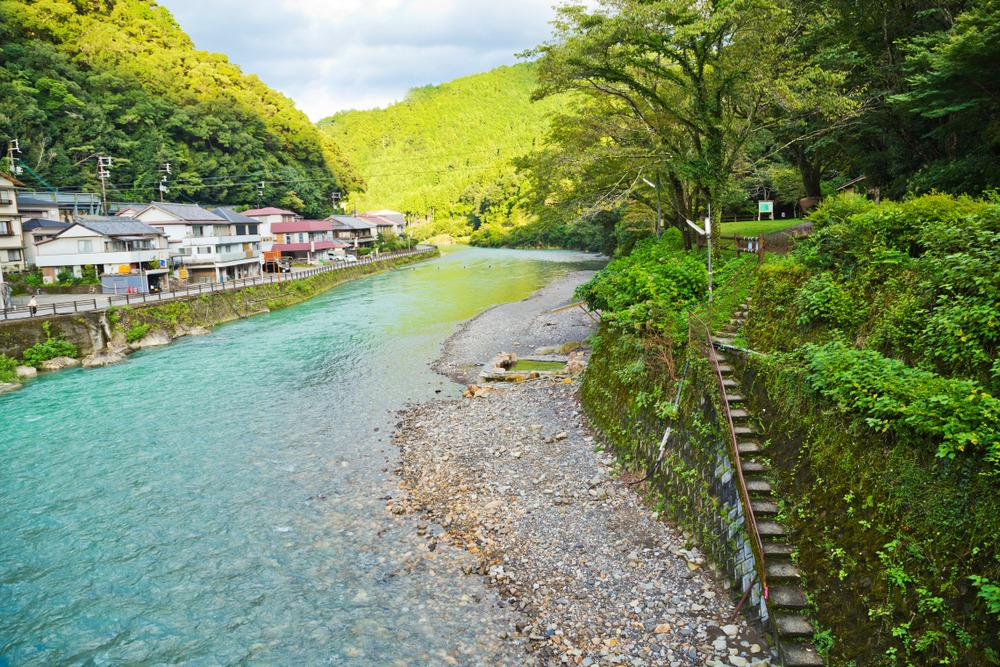
The first cliché English-speaking travelers might hold about Japan is that it's an extremely expensive and polluted country. Regarding cost of living, Tokyo and Osaka certainly rank among the world's most expensive cities, and transportation is far from affordable there, but in the countryside, the story is entirely different—and aside from the major metropolitan areas, the cost of living in Japan is no higher than it is in many Western nations. As for pollution, while Tokyo's capital is indeed marked by heavily saturated air, one cannot deny that proximity to the Pacific does wonders for the country's overall atmosphere.
Is Japan a conformist and disciplined society?
English-speaking visitors also often perceive Japan as a conformist and disciplinary society where everyone is primarily concerned with integration into the group. Admittedly, through the eyes of the individualistic Westerner, all Japanese people seem alike and act in consensus. However, this apparent uniformity, governed by very particular codes of honor and courtesy, is merely a façade that allows them to coexist while avoiding inconvenience to others. The Japanese have become masters at implicitly aligning themselves with current trends or skillfully and politely—sometimes by bending the truth—sidestepping issues when facing interlocutors they do not wish to disappoint. A sense of insularity and cultural identity means Japanese people are occasionally accused of racism, or at least nationalism. In fact, they do seem to harbor a form of discriminatory wariness toward foreigners—the gaijin—particularly their close neighbors, often without fully realizing it. While attitudes are evolving, there will likely always remain among them a desire to know what people from elsewhere truly think of their country…
Are Japanese people truly workaholics?
The average English-speaking observer, considering the archipelago's perceived flaws, might view the Japanese as ants literally working themselves to death. Lifetime employment and death by overwork—karoshi—are ostensibly attributes of the Japanese corporate world, supposedly having transformed employees into servile slaves within tyrannical enterprises operating at infernal paces and under inhumane conditions. While this assertion shouldn't be entirely validated, one can certainly acknowledge that for a long time, Japanese society and the family life of its citizens revolved essentially around work, with priority given to group harmony and company development at the expense of the worker's personal fulfillment, who was expected to make substantial sacrifices.
Today, things are shifting and offering greater freedom to employees: smaller enterprises are overtaking large companies with overly rigid hierarchies, and younger generations, unenthusiastic about accepting just anything, have become adept at juggling multiple part-time jobs (known as arubaito) or unemployment benefits while seeking proper work. Consequently, when English-speaking audiences are asked to identify another Japanese problem, they allude in hushed tones to the country's elevated suicide rates. A tragic reality that unfortunately persists despite the profound changes affecting society in recent years.
Do Japanese people live in cramped apartments and eat nothing but rice and sushi?
When examining the Japanese lifestyle, one's mind typically turns first to the supposedly diminutive size of Japanese dwellings—incorrectly, since aside from some functional, compact rooms chosen for their practicality or lower rent by students or young workers, the living spaces allocated to houses and apartments remain quite generous—a typical Tokyo apartment averages 28 m² and the habitable surface per inhabitant is 33 m² in Japan compared to 37 m² in Western countries!
Described more lightheartedly, Japanese people are consistently portrayed in the English-speaking world as inveterate consumers of rice and fish. A partially verified point of view, given that rice, the national equivalent of our bread, features in most meals, but one that remains reductive, overlooking the numerous vegetables and meats prepared and the recipes imported and adapted to Japanese tastes. While English-speaking people somehow drag behind them a reputation as "unclean" folk who bathe only episodically, the Japanese, for their part, are regarded as a hygienic people mindful of cleanliness—something verified daily, if only through their long, relaxing bath sessions and residents' obsession with sorting waste.
Are Japanese people perverts?
This is not to say that the Japanese escape the "pervert" image that is often affixed to them. Erotic imagination and the sex industry are indeed particularly developed in the country: Love Hotels—sometimes startling establishments where couples, legitimate or otherwise, can find the intimacy their homes no longer offer—have now become fixtures, and pornographic magazines and videos, even those obscured by censorship masking pubic hair, can be found readily, with some specimens even displayed on the shelves of convenience stores open 24/7. From the curious appeal that some gentlemen have for uniforms—school-related or otherwise—worn by young ladies, to enjo kosai, a phenomenon akin to the prostitution of underage girls, to the resale in obscure shops of undergarments worn by women—a striking phenomenon years ago, marginal now—numerous Japanese fantasies shamelessly scratch the image of a country too often viewed soberly through an economic or political lens.
Are Japanese people insatiable lovers of France?
The final characteristic trait associated with Japanese people: their immoderate love for France, its romanticism (?), and of course its culinary products and luxury accessories. As evidence, trendy shops over there no longer hesitate to display in their signage terms straight from our own culture, utterly incoherent to English speakers and in any case incomprehensible to the Japanese.
As long as they don't imagine us with a baguette under one arm and a beret on our head, we'll be fine…
Frequently asked questions
It depends on the region. Tokyo and Osaka rank among the world's most expensive cities, particularly for transportation and accommodation. Conversely, in rural areas and mid-sized cities, the cost of living is comparable to that of Western countries, or even lower. A trip to Japan can therefore be affordable with good planning.
Rice is indeed a staple food in Japan, present in most meals, much like bread in Western countries. But Japanese cuisine is far more diverse: ramen, udon, tempura, yakitori, Japanese curry, and numerous imported and adapted recipes are part of daily life. Sushi, often associated with Japan abroad, represents only a tiny fraction of Japanese gastronomy.
Historically, work culture in Japan was intensely demanding, with the concept of 'karoshi' (death by overwork). Today, society is evolving: younger generations prioritize work-life balance, smaller enterprises are developing, and labor laws regarding working hours are progressively being reformed. The suicide rate, partially linked to professional pressure, remains a national concern, however.
This is a partially inaccurate cliché. While some very compact functional dwellings exist (particularly for students), the average surface area of a Tokyo apartment is approximately 28 m², and the habitable surface per inhabitant is 33 m² in Japan compared to 37 m² in Western countries. The difference is therefore minimal, contrary to what popular imagination suggests.
Yes, France enjoys a very positive image in Japan, associated with romanticism, luxury, and gastronomy. Many Japanese retailers use French words in their store names, often with little coherence to a native speaker. French luxury products, pastries, and Parisian fashion are particularly prized by Japanese consumers.