Counting from 1 to 10 in Japanese: method and examples!
Being able to count in Japanese and recognize numbers is essential during a trip to Japan. Indeed, while all transport signs (bus lines, metro)
Being able to count in Japanese and recognize numbers is essential during a trip to Japan. Indeed, while all transport signs (bus lines, metro) are now displayed in Arabic numerals, the same is not necessarily true for prices announced in restaurants, convenience stores, and shops. That's why it's best to know how to count from 1 to 10 in Japanese...
How do you count from 1 to 10 in Japanese?
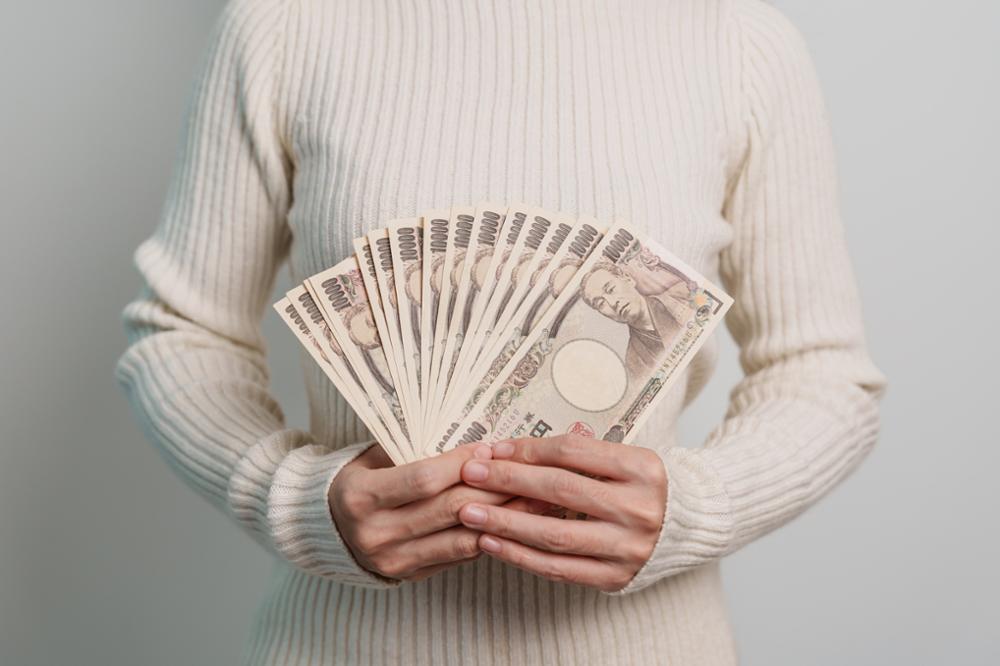
In the land of the Rising Sun, numerals are written in different ways. Before traveling to Japan, it's important to know the main writing systems, namely kanji and romaji.
Kanji
Kanji are sinograms (symbols) derived from Chinese characters. Why is that? For a long time, Japanese was only a spoken language! Around the 5th century, the locals began to use these characters, which were imported from China.
Romaji
Romaji refers to the system of transcribing Japanese words into Latin letters. This form of writing is often used to transcribe proper names in foreign languages (names of stations, etc.). It's also a foundation for anyone wishing to learn to speak Japanese, as it facilitates learning and pronunciation.
Numeral | Kanji | Romaji | Pronunciation |
0 | 零 | rei | reye |
1 | 一 | ichi / itsu | itchi / itsu |
2 | 二 | ni | ni |
3 | 三 | san | sanne |
4 | 四 | shi / yon | chi / yonne |
5 | 五 | go | go |
6 | 六 | roku | rokou |
7 | 七 | shichi / nana | chitchi / nana |
8 | 八 | hachi | hatchi |
9 | 九 | kyū / ku | kyou / kou |
10 | 十 | jū | jû |
With this table, you won't have any trouble paying the bill in one of the many izakayas (traditional bars)! A tip? The most renowned ones are located in Tokyo's neighborhoods…
Writing in hiragana and daiji Japanese numerals can also be written in kana characters (hiragana). This is, in a sense, a simplified version of kanji, used by Japanese children at the beginning of their writing education. For example, the numeral 4 is not written as 四 but as し / よん On the other hand, daiji characters are meant to complexify Japanese writing, in order to prevent fraud. In this case, the numeral 1 is not simply written as 一 but in a much more complex stroke: 壱 Daiji can be found in particular on banknotes and official documents, to prevent forgery. |
How do you count from 11 to 99 in Japanese?
Once you know how to count up to 10 in Japanese, counting beyond that is quite simple. All you have to do is combine two or more kanji to create any number from 11 to 99.
For example:
● the number 11 is written 十一 (10-1),
● the number 34 is written 三十四 (3-10-4),
● the number 48 is written 四十八 (4-10-8),
● the number 99 is written 九十九 (9-10-9)
● etc.
How do you count beyond 100?
To count beyond 100, the same principle as kanji applies. You just need to know the symbols for each unit:
Number | Kanji | Pronunciation |
100 | 百 | hyaku |
1,000 | 千 | sen |
10,000 | 万 | man |
100,000 | 十万 | jūman |
1 million | 百万 | hyakuman |
10 million | 千万 | senman |
If you want to say 102, you must combine the symbols for 100 and 2, which gives: 百二. Another example? 100,004 is written 十万四 (the 100,000 symbol + the 4 symbol).
Note that large numbers are written numerically in groups of 4 digits in Japanese (3 digits in English). For example, we write one hundred million as 100,000,000, while the Japanese write 1 0000 0000.
How do you count objects in Japanese?
You should also know that "things" are counted in a distinctive way in Japanese. There are many specific counters, that is, symbols dedicated to various shapes.
In fact, depending on whether you're referring to a thin, small, cylindrical, technological object, etc., you'll need to use a specific sinogram (in this case, rote learning is the only way!). Here are a few that might be useful to you:
Thing to quantify | Description |
台 (dai) | Technological objects (television, appliances) |
冊 (satsu) | Bound objects (magazines, books) |
着 (chaku) | Clothing |
本 (hon) | Cylindrical and long objects (umbrellas, trees, pencils) |
枚 (mai) | Flat and thin objects (mats, stamps) |
個 (ko) | Very small objects |
These sinograms must be placed as a suffix, after the number. For example, 3 books is written 三冊
If you can't manage to remember these suffixes to form a combination, don't worry! It's also possible to use only the symbol つ after a number – but this variant is associated with a lack of vocabulary... For example, 五つ simply designates 5 things, without specifying what.
In summary, knowing how to count in Japanese isn't complicated, but it does require a good memory!
FAQ
How do you say numeral in Japanese?
The word numeral is written 数字 in Japanese and pronounced sūji.
How do you write 100 in Japanese?
The symbol 百 indicates the number 100 in Japanese. It is pronounced hyaku.