Japanese anime today
Japanese animated productions place greater emphasis on graphic design, character design and storytelling than on the appeal of movement itself.
Japanese animated productions place greater emphasis on graphic design, character design and storytelling than on the appeal of movement itself. Originally, this stemmed from an economic context of limited budgets, but today these limited-animation productions have won over a new audience of enthusiasts worldwide under the name anime ("Japanese celluloid animation"), and even exert influence on the visual language of Hollywood cinema. Today, this enormous momentum continues, with nearly one hundred titles appearing on television screens each season*, while theatrical films and video releases are produced in quantity and on an ongoing basis.
Animation for adults
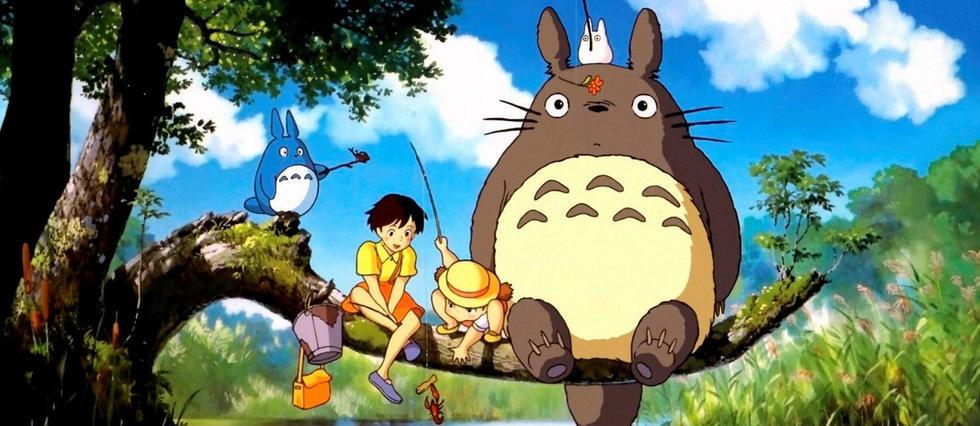
Another characteristic of Japanese anime is the large number of productions aimed not only at children and family audiences, but at varied age groups, from adolescents to adults. Similarly, among creators, many refuse to lower the formal quality of their work under the pretext, for example, that otherwise "children wouldn't understand," and instead strive to genuinely convey a message. Director Hayao Miyazaki, now internationally renowned, is himself a passionate creator who has devoted his entire career to transmitting certain values to his audience. As a result of this spirit of uninterrupted personal investment: for both characters and narratives, creation constantly explores new paths rather than adhering to established formulas. If Japanese anime has what it takes to cross borders, it probably comes from this attitude of creators resolutely focused on their audience. There is often a tendency to emphasize characters, costumes and descriptions of high-tech universes as markers of innovation, but before all that, it is the power of "inner resonance" emitted by the works that deserves attention. For it is through the birth of emotion that all decorative beauty shines in turn.
Animation techniques that remain traditionally grounded
For just over a decade, in the form of a global trend, the world of imagery has entered the digital age. Japanese anime is no exception, and has entered an era of major change, where the production chain now also unfolds on computers. That said, coloring, cinematography and editing are the main stages affected by this transition to digital, while character drawing and backgrounds remain today still executed essentially through manual processes that some refer to as "2D." This is a striking contrast to American animation cinema, where "pure 3D" productions dominate, based on photo-realistic visual information with volume, derived from computer processing and calculation capabilities.
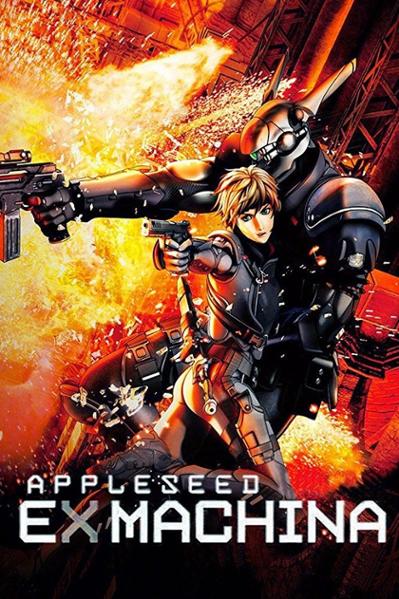
In Japon, "pure 3D" works do not yet constitute the heart of animated production. Even in Appleseed: Ex Machina**, for example, the visual rendering deliberately adopts that of a "traditional Japanese anime drawing, based on the application of flat colors within areas defined by outline strokes." Furthermore, in science-fiction anime, the use of 3D has become more frequent for representing rigid mechanical elements and complex structures based on surface interplay, but even here "hybrid" processes are used to blend these elements with those animated by drawing.
An instantly recognizable graphic style
The graphic style of Japanese anime is often compared to traditional Japon culture of woodblock prints (Ukiyo-é). Some argue that fundamentally, Japanese people perceive the world as a superposition of forms creating flat surfaces, delimited by outline strokes. Based on color as well as timing on reduction into elementary phases, Japanese anime shares a strong affinity with this traditional perceptual capacity, and can be situated as an extension of artistic registers that fully capitalize on reduction into elementary phases, such as Kabuki theater or Bunraku***.
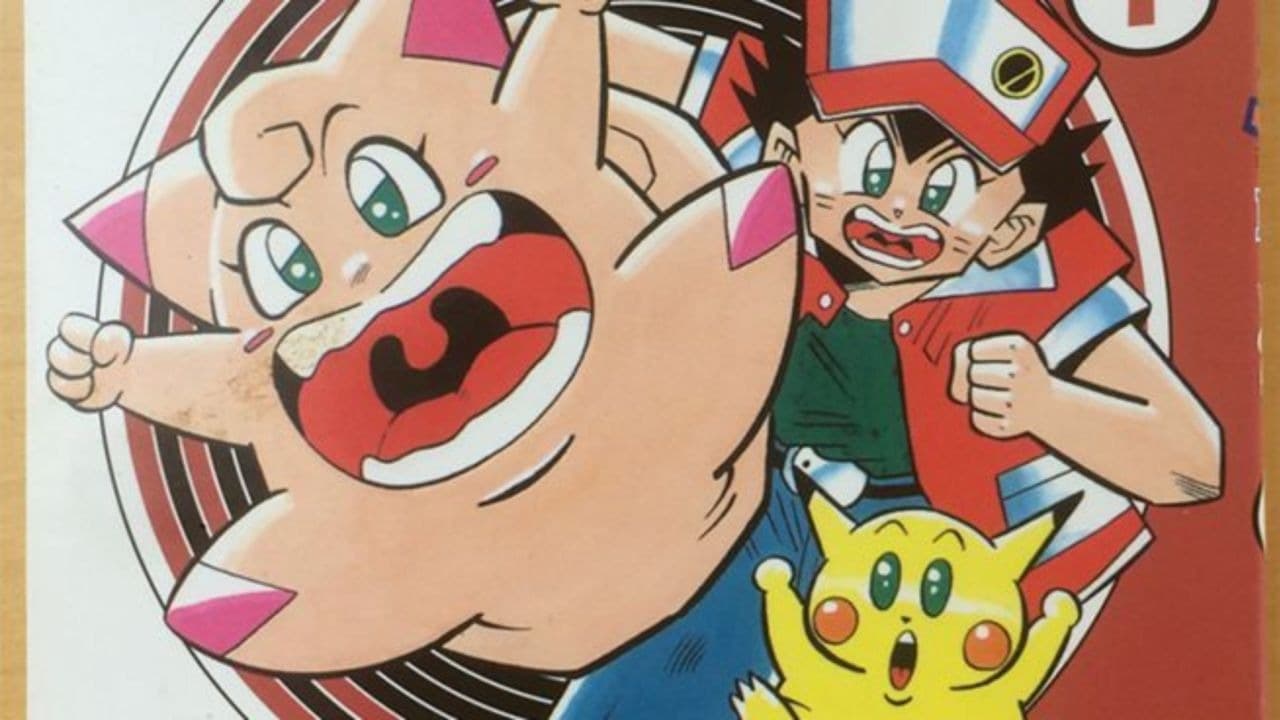
In American computer animation production, there is a dominant inclination toward opulence, fullness, devoting considerable information to cover the body surface of animated beings with hair systems (fur), to create them with speech, and to endow them with extensive gestural language. Conversely, and as evidenced clearly by Pikachu, the hugely popular character from the Pokémon series, Japanese anime places primary importance on reduction into elementary forms. In the inner connection between Pikachu and young Ash (Satoshi), the very special value accorded to a form of non-verbal communication illustrates a distinctly Japon mentality. And it is perhaps precisely because of the sparse and humble nature that serves as its starting point that Japanese anime can find its audience across the entire world.
Refined over the years into a characteristic style, the formal impact of Japanese anime attracts attention today as an art form on a global scale. There is considerable latent potential here for international exchange. And the Japanese, though the primary stakeholders, probably don't fully measure it yet. Let us hope that this boundless potential of Japanese anime finds its full scope in reaching maturity.
* : A season lasts three months. The year is divided into four seasons: April-June, July-September, October-December, and January-March.
** : 3D animated film based on the original Appleseed work by Masamune Shirow, and directed by Shinji Aramaki.
*** : A type of traditional Japon theater performed with large puppets.
Frequently asked questions
Anime refers to Japanese animation productions, characterized by a unique graphic style based on sharp outline strokes, flat color application and particular attention to narrative and character emotions. Unlike American animation which often favors photorealistic 3D and movement, Japanese anime relies on graphic reduction and narrative power.
The global success of anime stems from several factors: deep stories that appeal to all ages (children, adolescents, adults), an immediately recognizable visual style, and the ability of creators like Hayao Miyazaki to convey universal values. The diversity of genres (action, romance, science fiction, fantasy) allows everyone to find something that resonates.
Japanese anime is traditionally produced in 2D, with hand-drawn artwork and digital coloring. 3D is sometimes used for complex mechanical elements, in so-called 'hybrid' productions. Unlike American animation cinema dominated by photorealistic 3D, Japon deliberately preserves the drawn aesthetic as in Appleseed: Ex Machina.
The graphic style of anime is often linked to the traditional Japon woodblock print Ukiyo-e, with a perception of the world in flat surfaces delimited by outlines. This approach of 'reduction into elementary forms' is also shared with traditional arts such as Kabuki theater and Bunraku (puppet theater), testifying to an aesthetic deeply rooted in Japon culture.
Anime production is very intensive in Japon: nearly one hundred new titles appear on television screens each season, or roughly four seasons per year (April-June, July-September, October-December, January-March). To which must be added theatrical films and productions released directly to video.
Hayao Miyazaki is one of the most celebrated Japanese animation directors in the world and co-founder of Studio Ghibli. His works such as My Neighbor Totoro, Princess Mononoke and Spirited Away are recognized internationally for their narrative depth, humanistic and ecological values, and unique visual style. He has contributed to making anime a recognized art form on a global scale.