Mount Tsukuba
Mount Tsukuba
Sacred mountain with twin peaks approximately 70 km northeast of Tokyo: Shinto shrine, ridge trails, cable car and views over the Kanto Plain.
Mount Tsukuba: the sacred mountain with twin peaks
Mount Tsukuba (Tsukuba-san 筑波山) rises approximately 70 km northeast of Tokyo, in Ibaraki prefecture. With its two twin peaks reaching around 870 metres — the Nantai-san 男体山 (the "male" peak) and the Nyotai-san 女体山 (the "female" peak) — it is among Japan's oldest venerated mountains. The site is easily accessible from the science city of Tsukuba, making it a popular day trip for Tokyo residents.
Why visit Mount Tsukuba
- A sacred mountain mentioned in the Man'yōshū, Japan's oldest collection of poetry.
- Two gendered twin peaks, connected by a short ridge trail.
- An ancient Shinto shrine at the foot and summit of the mountain.
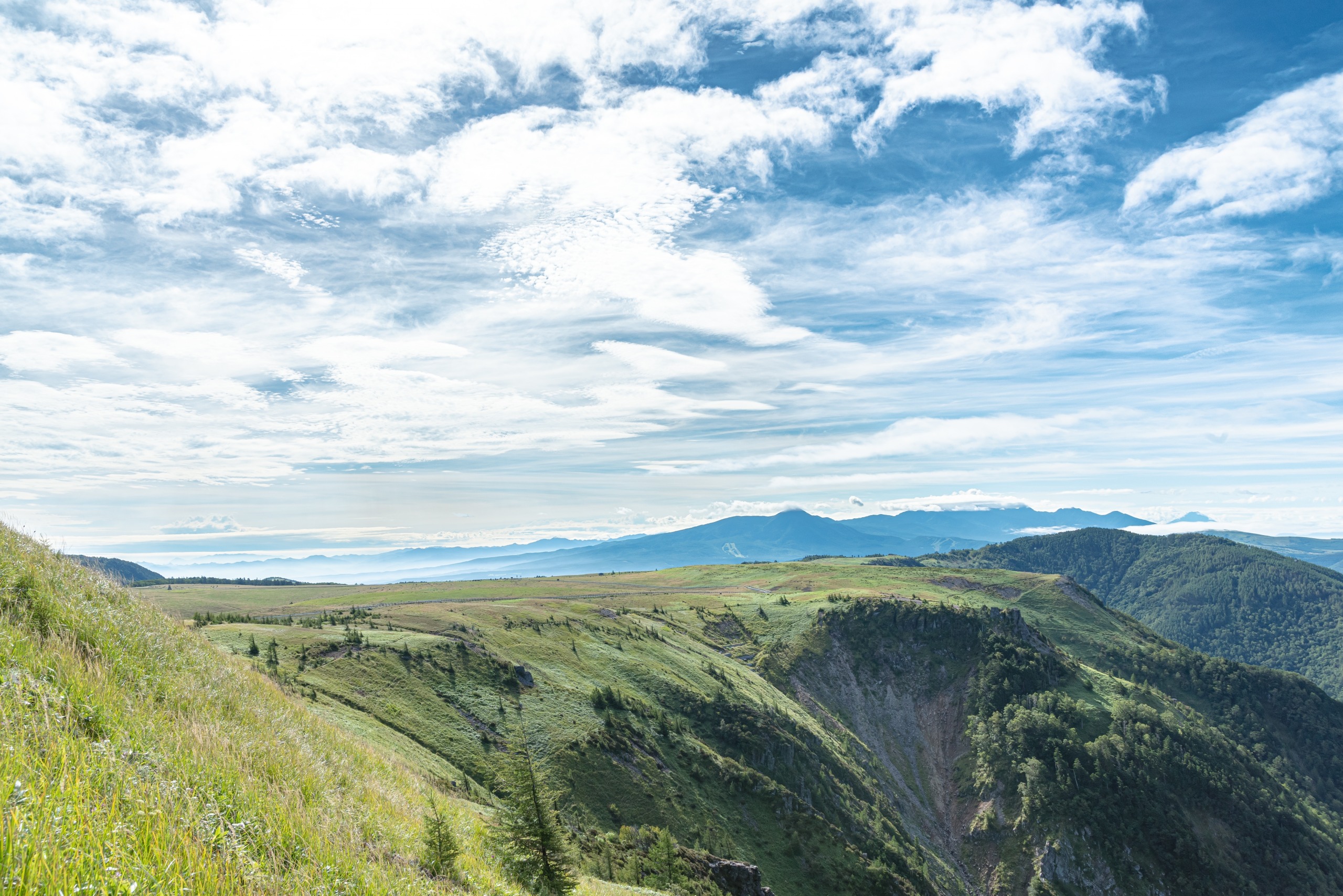
- Unobstructed views over the Kanto Plain, Mount Fuji on clear days, and even Tokyo on the horizon.
- Easy access from Tokyo, requiring no special equipment or hiking experience.
History and mythology
In Shinto tradition, Mount Tsukuba is associated with a divine couple: Izanagi, the male god linked to the Nantai peak, and Izanami, the female goddess linked to the Nyotai peak. This duality explains the gendered naming of the two summits, a rarity in Japan. The mountain appears in several poems from the Man'yōshū (8th century), where it features as a site of ritual gatherings called utagaki, combining songs and romantic encounters.
At the foot of the mountain, the Tsukuba-jinja shrine has perpetuated this cult for over a thousand years. Like all venerated Japanese mountains, a small shrine also crowns the summit, reflecting the divine presence throughout nature.
The modern city of Tsukuba, built around the Tsukuba Daïgaku 筑波大学 (University of Tsukuba) from the 1960s-70s onwards, contrasts sharply with this ancient past: today it is one of the country's leading scientific hubs.
What to see and do
Tsukuba-jinja shrine
Located at the foot of the mountain, this is the traditional starting point for the ascent. Its forested grounds, torii gates and historic buildings are well worth exploring before heading up.
The two peaks and the ridge
The Nantai-san (male peak) and Nyotai-san (female peak, slightly higher) are connected by a ridge trail. Allow around twenty minutes of walking to traverse from one to the other. Each summit has a small auxiliary shrine.
The revolving refreshment stand
Between the two peaks, a refreshment stand features a rooftop terrace that slowly rotates on its axis: settle in to admire the Kanto Plain from every angle without moving. A local curiosity, perfect for a break.
Cable car and funicular
For those preferring not to hike the entire way up, two cable systems serve the mountain: a funicular railway on the Nantai side (from Miyawaki) and a cable car on the Nyotai side (from Tsutsujigaoka). You can take one up and the other down while walking the ridge between the two summits.
When to visit
Mount Tsukuba can be visited year-round, but two seasons stand out:
- Spring (late March - April): cherry blossoms bloom around the shrine and on the lower slopes.
- Autumn (mid-November): kōyō, maples turn brilliant red and orange, particularly striking along the trails.
- Winter: crisp air and clear visibility, sometimes extending to Mount Fuji.
- Summer: lush greenery but intense heat and humidity in the plains below.
Avoid peak season weekends if you prefer to escape crowds: the mountain attracts many Tokyo day-trippers.
How to get there
From Tokyo, access is straightforward:
- Take the Tsukuba Express line from Akihabara Station to its terminus, Tsukuba Station (approximately 45 minutes on the rapid train).
- From Tsukuba, board the Tsukuba-san Shuttle bus to Tsukuba-jinja-iri (at the shrine) or Tsutsujigaoka (cable car starting point). Allow 40 to 50 minutes by bus.
A same-day round trip from Tokyo is entirely feasible.
Practical information
- Altitude: approximately 870 m (Nyotai-san: 877 m; Nantai-san: 871 m).
- Duration: allow a half-day to a full day depending on your chosen route.
- Difficulty: the hike is accessible to regular walkers (2 to 3 hours uphill via main trails). Good hiking boots recommended.
- Costs: mountain entry is free; cable car and funicular are paid (moderate fares for round-trip or one-way).
- Equipment: water, snacks and a windproof jacket—the summit can be considerably cooler and windier than the plains below.
Nearby attractions
- Tsukuba and its science city, featuring several technical museums and the JAXA space centre.
- The historic Nakasendō route, to extend your discovery of traditional Japanese landscapes.
- The Nachi Taisha shrine, another major mountain Shinto site in the Kansai region.
- Mount Inasa, another renowned panoramic peak in Japan.
Planning your trip
Mount Tsukuba integrates easily into an itinerary from Tokyo, particularly for travellers wishing to alternate between city and nature without straying far from the Kanto region. To build a bespoke journey including this excursion, explore our Japan travel ideas.
Interested in this visit?
We can include it in your personalised itinerary.