Rinno Temple
Rinno Temple
Founded in 766 at the foot of Mount Nantai, Rinno-ji houses three monumental golden Buddhas and the mausoleum of shogun Iemitsu Tokugawa, a UNESCO World Heritage site.
Rinno-ji is one of three major sites in the religious complex of Nikko, alongside the Toshogu Shrine and Futarasan-jinja. Founded in the eighth century at the foot of Mount Nantai, it houses three monumental golden Buddhas and the mausoleum of the third shogun Tokugawa. The entire complex is inscribed on the UNESCO World Heritage List and remains today the headquarters of Tendaï Buddhist monks.
Why visit Rinno-ji Temple
Rinno-ji appeals for three main reasons. First, the Sambutsu-Do hall, which displays three golden statues towering over seven metres high, among the most imposing in Japan. Next, the Taiyuin mausoleum, dedicated to shogun Iemitsu Tokugawa, whose vermillion-red lacquer contrasts with the centuries-old cedars of Nikko National Park. Finally, the site illustrates the ancient coexistence of Buddhism and Shintoism, two Japanese traditions long intertwined in the same sacred space before their forced separation in the Meiji era.
History of Rinno-ji
The temple was built in 766 by Buddhist monk Shodo Shonin, a founding figure in Nikko's spiritual heritage. The same Shodo Shonin also established the neighbouring Futarasan-jinja shrine. In its early days, the temple was called Mangan-ji and belonged to the Tendaï sect, a branch of Japanese Buddhism derived from the Chinese Tiantai teachings.
In the seventeenth century, under the impetus of the Tokugawa shogunate, the entire complex was rebuilt and expanded. It then took the name Rinno-ji and comprised fifteen buildings as well as a mausoleum dedicated to the first shogun. The complex became the Buddhist counterpart to the neighbouring Toshogu shrine, in a region entirely reimagined as a sacred necropolis of the Tokugawa.
In 1879, the residence of the high priests, Hon-Bo, temporarily hosted American general Ulysses S. Grant during his world tour, an anecdote testifying to the diplomatic influence of the site in the Meiji era.
What to see on site
The Sambutsu-Do Hall (Hondo)
The architectural heart of the temple, the Sambutsu-Do, or "Hall of Three Buddhas", houses three large golden statues: Amida Nyorai, Senju Kannon (sometimes spelled Joichimen, the Thousand-Armed Kannon) and Bato Kannon, recognizable by the horse's head that crowns his brow and makes him the protector of animals. These three figures represent the tutelary deities of the three sacred peaks of Nikko.
The Taiyuin Mausoleum
The tomb of shogun Iemitsu Tokugawa, grandson of the shogunate's founder, this mausoleum is distinguished by its red lacquers and gilded sculptures. Access is through the Nio Gate and then the Niten-mon, which displays portraits of the celestial guardians Komokuten and Jikokuten. An intermediate courtyard houses a belfry and the Drum Tower.
The Hon-Bo Residence and Shôyô-en Garden
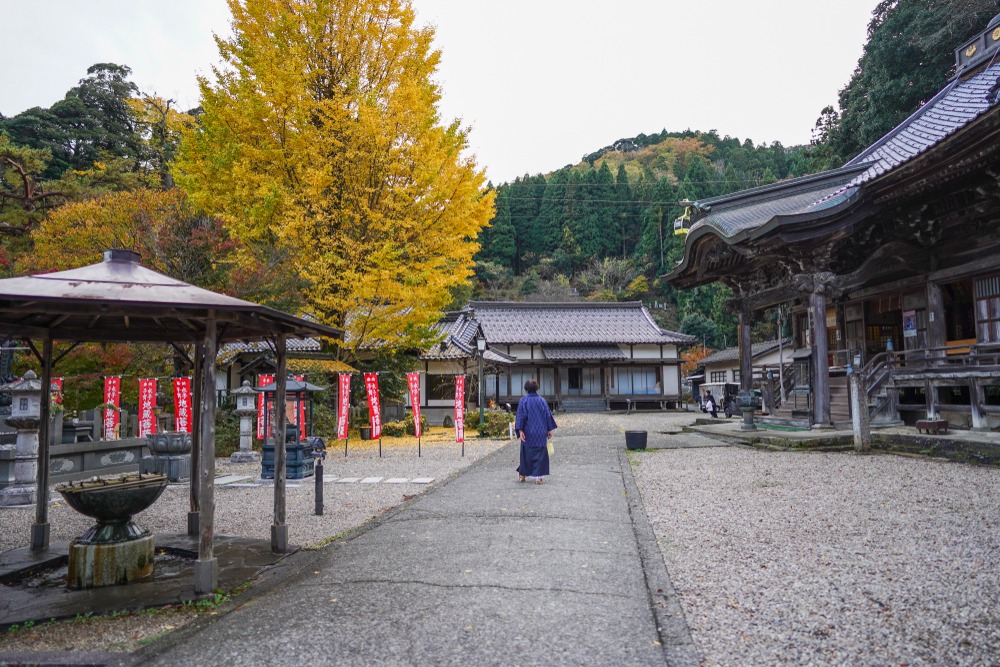
The Hon-Bo preserves stelae from the imperial family and a lacquered altar covered in gold leaf. Just opposite extends the Shôyô-en landscape garden, particularly remarkable in autumn when the maples blaze with colour. The adjacent Hômotsu-den Treasury Hall displays objects related to Tendaï Buddhism and the Tokugawa family.
Other buildings
- Gohoten-Do: statues of Bishamon, Benzaiten and Daikoku, three of the seven deities of good fortune.
- Sorin-tô: metal column replicating an element from Enryaku-ji temple in Kyoto, historic seat of the Tendaï sect.
- Ancillary buildings: Jogyedo, Hokkedo, Sanjunoto (three-storey pagoda) and Kaizando.
Practical information
Rinno-ji is open year-round. Plan for approximately 1 to 1.5 hours for an overall visit, and 2 to 2.5 hours if you include the Taiyuin mausoleum, Shôyô-en garden and Treasury Hall, each of which generally requires a separate ticket. A combined ticket allowing access to the main buildings is available on site.
Dress code is unrestricted, but shoe removal is requested at the entrance to the main buildings. Photography is prohibited inside the Sambutsu-Do.
When to visit
The site is open year-round, but two periods stand out. Autumn, from mid-October to mid-November, transforms the Shôyô-en garden and surrounding cedars into a gradient of reds and golds. Spring, between late April and May, offers more subtle blooms but pleasant temperatures. Summer remains accessible despite the rainy season showers, while winter, sometimes snowy, gives the Taiyuin mausoleum a more contemplative atmosphere in the absence of crowds.
How to get there
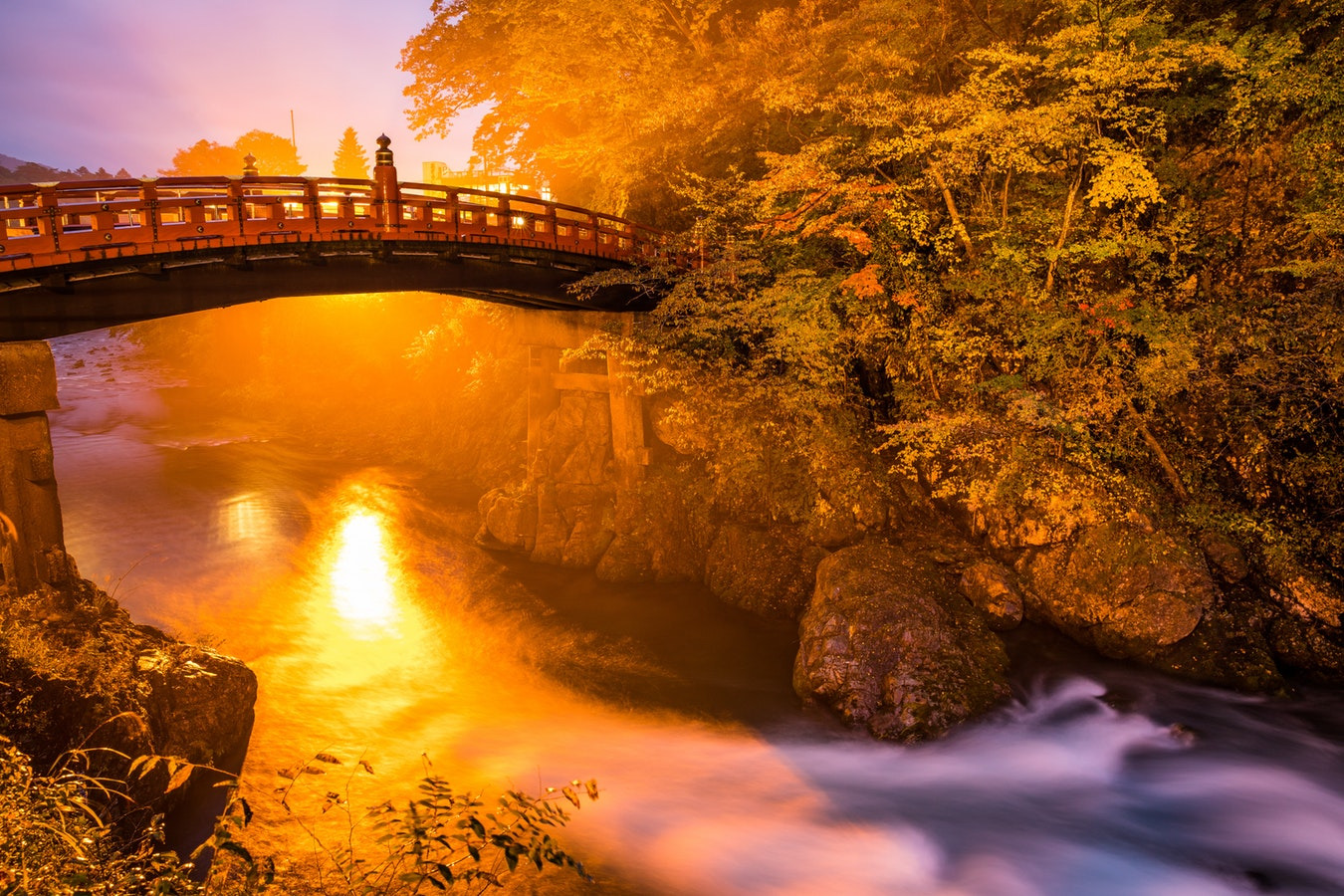
Rinno-ji is approximately 45 minutes' walk from JR Nikko Station or Tobu-Nikko Station, passing through the sacred Shinkyo Bridge which marks the entrance to the religious complex. The route is a gentle uphill walk dotted with shops.
The World Heritage Tour sightseeing bus, which serves all of Nikko's UNESCO-listed sites, reaches the temple grounds in about fifteen minutes from both stations at a moderate fare. This is the most convenient option in rainy weather or to combine a visit with Toshogu and Futarasan-jinja.
By car, the Nikko IC exit of the Tohoku Expressway is about ten minutes from the site.
Nearby
Rinno-ji is part of a cluster of sites walkable on foot:
- Toshogu Shrine, mausoleum of founding shogun Ieyasu Tokugawa, five minutes away.
- Futarasan-jinja, Shinto shrine founded by the same Shodo Shonin.
- Shinkyo Bridge, the symbolic entrance to the complex.
- Lake Chuzenji and Kegon Falls, about thirty minutes by bus, to extend your day at altitude.
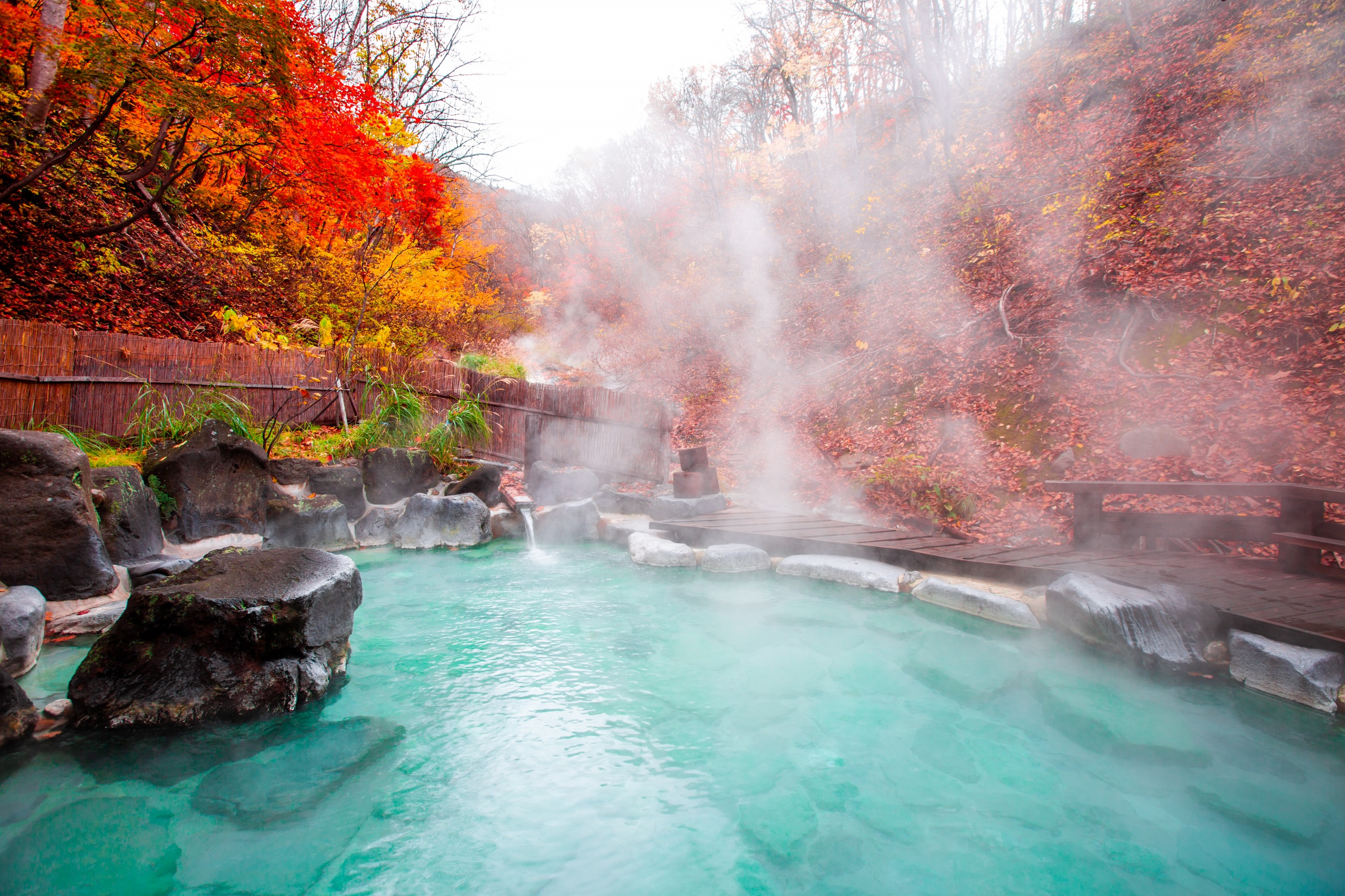
To extend your itinerary, the traditional hot spring of Shibu Onsen or the Hase-dera Temple in Kamakura are complementary stops on a circuit around Tokyo.
Frequently asked questions
Frequently asked questions
Plan for 1 to 1.5 hours for the Sambutsu-Do and Hon-Bo residence, and 2 to 2.5 hours to include the Taiyuin mausoleum, Shôyô-en garden and Treasury Hall.
No. Rinno-ji, Toshogu and Futarasan-jinja each sell their own tickets. A combined ticket exists within Rinno-ji to bundle Sambutsu-Do, Taiyuin and the garden.
No. Photography is prohibited inside the Sambutsu-Do and most halls. It remains permitted in the gardens and on exterior facades.
Yes. Rinno-ji is open year-round. Snow may fall between December and February; bring suitable footwear and warm clothing.
Yes. Nikko is accessible in approximately 2 hours from Tokyo via the Tobu line or Shinkansen to Utsunomiya. A day trip allows you to cover Rinno-ji, Toshogu and Shinkyo.
Including Rinno-ji in your trip
The temple fits naturally into a circuit combining Tokyo, Nikko and the Japanese Alps region. To build a bespoke itinerary including this site and other UNESCO-listed locations across the country, consult our Japan tours.
Interested in this visit?
We can include it in your personalised itinerary.