Aomori
Aomori
Head to the north of Honshu: Aomori reveals its giant Nebuta floats, its bold art museum and its marine flavors, at the gateway to Hokkaido.
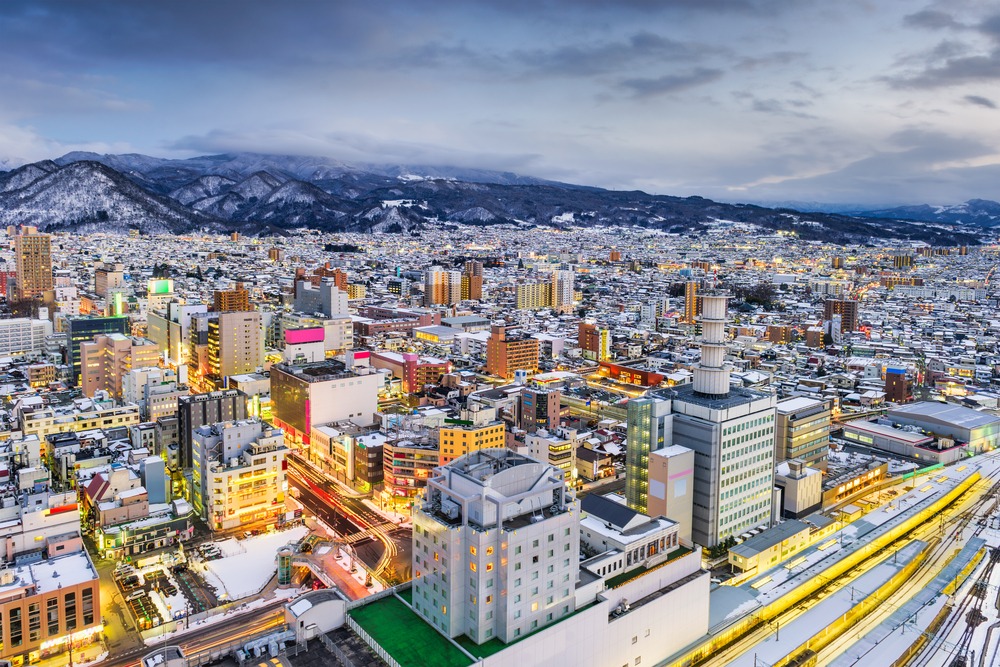
Its maritime heritage and traditional festivals contrast with forward-thinking development efforts. An economic and cultural hub of the Tohoku region, Aomori also emerges as a pleasant seaside destination in Mutsu Bay, at the northern tip of Honshu island.
History
Human presence in Aomori dates back to the Jomon era, several centuries before our time, as evidenced by the Sannai Maruyama archaeological site located southwest of the city. Before the Edo period (1603–1868), the place was little more than a small fishing village called Uto. It received the name Aomori after General Yashichiro Moriyama expanded its port in 1612. The city then developed as a commercial center, though it never surpassed Hirosaki, the capital of the Tsugaru clan in Mutsu Province.
Following the Meiji Restoration and the end of feudalism in Japan, Aomori joined Hirosaki Prefecture, renamed Aomori Prefecture in 1871 following a merger. The 8th Division of the Japanese Imperial Army established its 5th Regiment there. The harsh climate in the region made it ideal training ground for the military in preparation for the Russo-Japanese War.
Moreover, its status as capital and maritime connection with Hakodate on Hokkaido island greatly contributed to Aomori's development. After American air raids in July 1945, Aomori's reconstruction prioritized performance over aesthetics.
Aomori Today
Although not the most beautiful city in Japan, Aomori offers no shortage of attractions, including shopping districts, cultural venues and gastronomic offerings. You'll enjoy strolling along its rehabilitated waterfront.
Cultural Life in Aomori
Aomori is home to an art museum: Aomori Kenritsu Bijutsukan. The establishment stands out for its underground exhibition spaces reminiscent of the trenches of an archaeological site. The main building, painted white, resembles a tent hanging over the galleries. Three immense Marc Chagall paintings form the centerpieces of the museum's permanent collection. Other renowned works are featured, including paintings by Munakata Shiko and a gigantic dog statue (8.5 m) by Nara Yoshitomo. Near the museum, the Sannai Maruyama archaeological site contains the remains of a village dating from the Jomon period. Hundreds of hunter-gatherer dwellings have been cataloged at the location.
Aomori reaches peak visitation in early August during the Nebuta Matsuri. Each year, over 3 million tourists come to the city to witness the Nebuta float procession. Locals recreate these characteristic vehicles using bamboo and stretched paper. Measuring up to 5 meters in height, the Nebuta floats evoke mythical figures, historical episodes, flowers or animals, with fascinating displays of color and light.
Your Shopping Cart Will Be Well-Stocked in Aomori
The main shopping districts in Aomori cluster around the train station. In the A-Factory complex, workshops showcase various apple-based products. After a tour of the cider house, settle into a café to sip a local beverage while contemplating the famous Aomori Bay Bridge. Another popular attraction, ASPAM Tower, known for its "A" shape, houses a shopping section with all manner of apples, sake, hiba woodwork pieces, Kanayama-yaki ceramics, Kokeshi dolls, embroideries and seafood products. Open to visitors, its observation deck is an excellent spot to photograph the sweeping panorama of the city and Mutsu Bay.
Near ASPAM Tower, you can relax at Aoi Umi Waterfront Park and let the sea breeze refresh you. Then visit the Furukawa Fish Market in the Aomori Gyosai Center, just across from the station. It's the best place to enjoy local seafood. Try nokkedon, a bowl of rice with your choice of toppings in exchange for tickets purchased at the entrance. Have fun personalizing your plate with the fishmongers. Afterward, you can continue shopping in Aomori on Shinmachi Street, passing through Nakasan and Sakurano shopping centers, as well as craft boutiques.
Climate
Generally speaking, Aomori enjoys a warm, temperate climate, classified as Cfa on the Köppen–Geiger map. Annual rainfall averages 1,285 mm of precipitation. Over the year, the average temperature is 10 °C.
Cold and snow characterize Aomori's winter weather. It's one of Japan's snowiest cities. In summer, easterly winds bring coolness to the climate, but also fog that can disrupt flight schedules at airports.
Aomori is connected to Hakodate on Hokkaido island by a conventional railway line that passes through the Seikan Tunnel. The latter is known as the world's longest undersea tunnel (53.85 km). From Tokyo, you can take the Shinkansen to reach Shin-Aomori Station.
The Aomori bus terminal is served by most conventional routes in the Tohoku region. The city also has an airport connected to major Japanese cities, as well as international destinations such as Taiwan and South Korea.
Aomori Port operates ferries connecting coastal cities on Hokkaido island, including Hakodate.
Aomori boasts a good bus network. The Nebutan-go shuttle loops through the city, passing through Aomori and Shin-Aomori stations, the art museum and many other tourist attractions. Taxis are available around the clock at the railway station. The Shinmachi downtown area can be explored on foot.
What to Do in Aomori?
- Climb to the ASPAM Tower observation deck to admire Mutsu Bay
- Try nokkedon at Furukawa Fish Market
- Discover the whimsical works of Nara Yoshitomo at Aomori Kenritsu Bijutsukan art museum
- Visit the Sannai Maruyama archaeological site
- Attend Nebuta Matsuri in August, and more
Want to discover this destination?
Our local advisors design your tailor-made trip.