The History of Japanese Tea
Tea is believed to have originated somewhere in the mountainous regions between China and India, though there is no archaeological evidence to confirm this.
The History of Japanese Tea
June 13, 2019
Tea is believed to have originated somewhere in the mountainous regions between China and India, though there is no archaeological evidence to confirm this.
In Japan, therefore, several questions arise: when and by whom was tea introduced to Japan? Or were there indigenous tea species in Japan? The mystery of Japanese tea's origins has been particularly studied, yet we still have no definitive answer today. Making a reasonable assumption, it seems plausible that tea was introduced to Japan through cultural influence from the continent, much like rice cultivation and Buddhism. In particular, explaining tea's introduction seems difficult without looking to Buddhism. In the past, many Japanese elites traveled to the continent in search of new knowledge, and Buddhist priests brought many new ideas as well as Buddhism itself to Japan. Among these new things may have been tea. Because it was used for Zen ascetic practices, it is believed to have spread alongside the religion.
The Origins of Tea
Professor Matsushita from Aichi University tells us about the origins of tea, following his research on tree varieties in Japan and the various cultures and lifestyles related to them.
The professor summarizes the evidence—in fact, similarities between practices that emerged in Japan and those of the continent—which led to reconstructing this tea route:
A new method of steaming and roasting tea leaves is used in Japanese tea
Similarity in the way of preparing a porridge with tea or adding salt to tea
Custom of using tea as a wedding gift
Concordance between the appearance of Buddhism and tea
The Effects of Tea
As mentioned at the beginning of this page, the Japanese pay considerable attention to their health, and this attitude contributes to reinforcing tea consumption.
Tea contains several beneficial ingredients, depending on its type, and it has been proven to effectively combat the onset of cancer.
Furthermore, it is recognized that tea polyphenols limit the rise in cholesterol levels. This is why tea is particularly recommended as a dietary beverage.
For these same reasons, other products are designed with tea extracts, such as cosmetics or detergents, and are popular among consumers.
Frequently asked questions
Historians believe that tea was introduced to Japan from the Asian continent, likely via China, in connection with the spread of Buddhism. The earliest traces date back to the Nara period (710-794), when Buddhist monks brought continental practices, including tea consumption used during Zen meditative exercises.
Tea and Zen Buddhism are closely linked in Japan. Monks used tea to stay awake and focused during their long meditation sessions. The practice then spread through monasteries before extending to the Japanese elite, and eventually to the rest of the population.
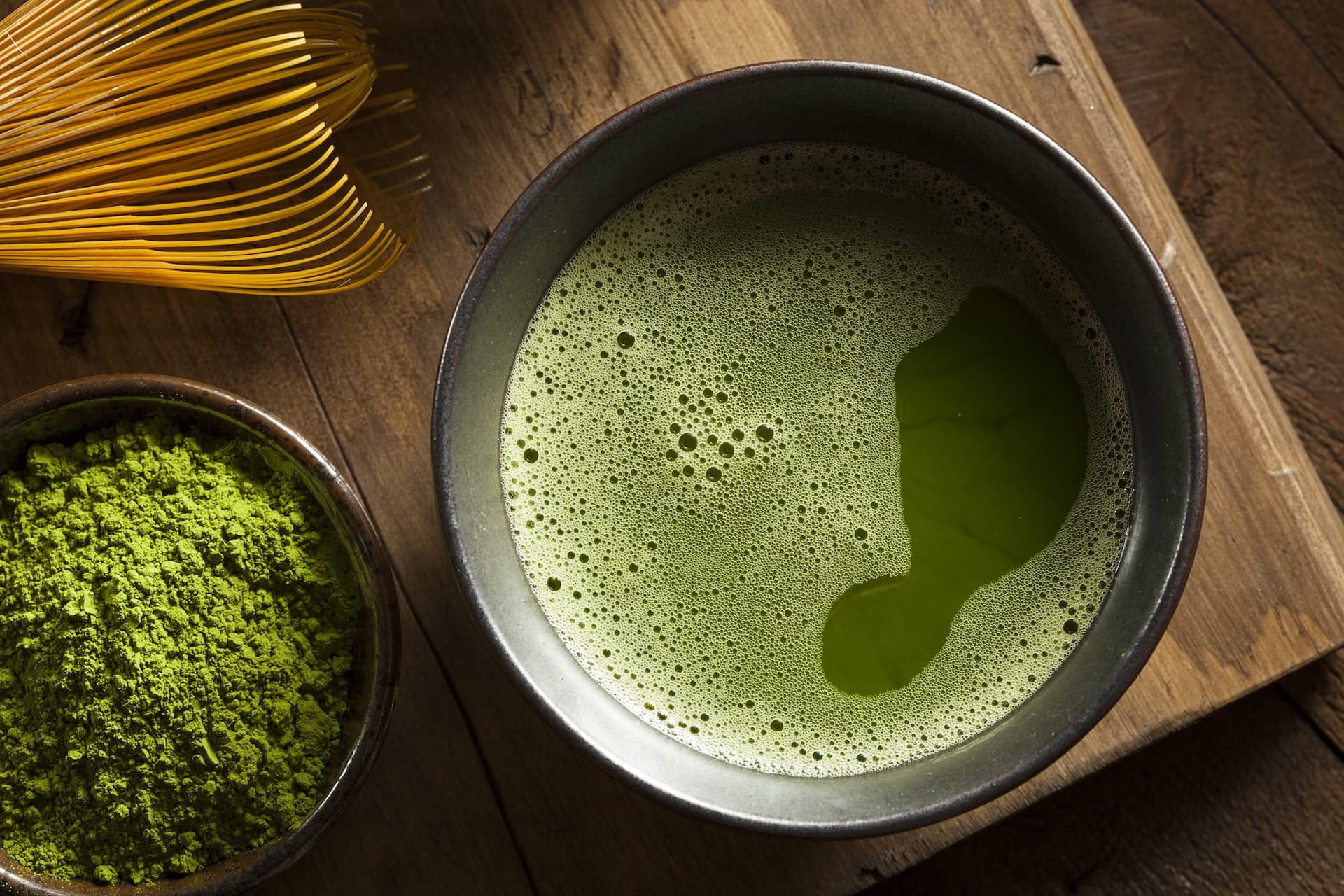
Japan produces many renowned green tea varieties: matcha (powdered tea used in the tea ceremony), sencha (the most consumed), gyokuro (shade-grown for intense umami flavor), hojicha (roasted at high temperature), and genmaicha (blended with puffed rice). Each variety has its own aromatic profile and specific benefits.
Japanese tea is recognized for its numerous benefits: rich in polyphenols and catechins, it helps reduce cholesterol levels, protects cells against oxidative stress, and strengthens the immune system. Some studies also suggest a preventive effect against certain cancers. Matcha, in particular, is notably concentrated in antioxidants.
The tea ceremony, called chanoyu or chado (the 'way of tea'), is a ritualized Japanese practice codified in the 16th century, notably by master Sen no Rikyū. It stages the preparation and tasting of matcha within a precise aesthetic and philosophical setting, founded on the principles of harmony, respect, purity, and tranquility.