Shikoku Pilgrimage: The Way of 88 Temples
Known as Japan's Camino de Santiago, the Shikoku pilgrimage is the most renowned pilgrimage in Japan. For over 1200 years
Known as Japan's Camino de Santiago, the Shikoku pilgrimage is the most renowned pilgrimage in Japan. For over 1200 years, countless pilgrims have come to discover the 88 temples that compose it, following in the footsteps of the founder of Shingon Buddhism. Discover the essence of this extraordinary pilgrimage, which offers a genuine immersion into Japan's history and its Buddhist culture.
The Shikoku pilgrimage, retracing the steps of the founder of Shingon Buddhism
Known as the "Camino de Santiago of Japan," the Shikoku pilgrimage takes place on the island of the same name (Shikoku), which forms the smallest of Japan's main islands. A historic pilgrimage, the Shikoku trails are believed to have been established in the 9th century when the famous Buddhist monk Kobo Daishi (also known as Kukai) circumambulated the island in search of spiritual awakening. For reference, this great religious figure, scholar, philosopher, poet and calligrapher is the founding saint of the Shingon school of Buddhism. Moreover, he remains a defining figure in Japan's history. Undertaking the Shikoku pilgrimage means walking in the footsteps of Monk Kukai as you traverse the 88 temples and sacred sites that make it up.
The Way of 88 Temples, a circular pilgrimage
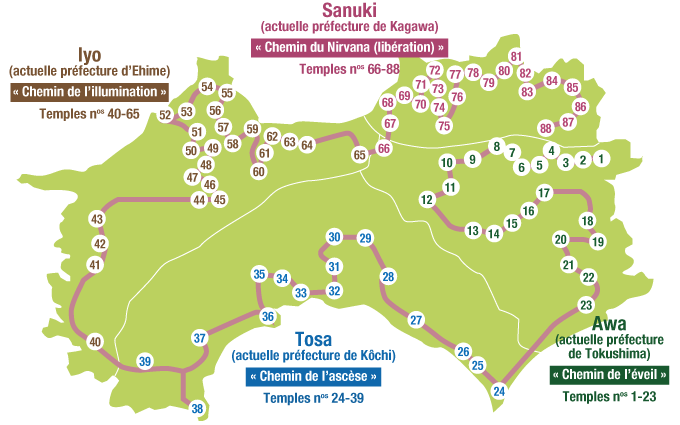
The Shikoku pilgrimage route is one of the rare circular pilgrimages in the world. It has neither beginning nor end. Indeed, while most pilgrims undertake it in a clockwise direction, others travel it counter-clockwise. The 88 temples that compose it are all numbered and correspond to stages in a symbolic journey toward enlightenment. The sites numbered 1 to 23 are located in Tokushima Prefecture and are defined as the path of awakening. The temples numbered 24 to 39 are found in Kôchi and correspond to the path of discipline. The temples numbered 45 to 65 are situated in Ehime and represent the path of illumination. Finally, the temples numbered 66 to 88 are located in Kagawa and correspond to the path to nirvana. Throughout their journey, pilgrims (called henros) will have the opportunity to climb mountains, traverse forests, villages, rice paddies and cosmos fields, persimmon or citrus orchards.
A pilgrimage to undertake on foot, by bus or by car
Traditionally, pilgrims wishing to follow most closely the philosophy of Master Kukai undertake the Shikoku pilgrimage on foot. In total, the pilgrimage trails extend approximately 1200 kilometers and require between forty and fifty days of walking, or between 24 and 30 km per day. While cycling is also an option, many pilgrims explore the Shikoku trails by car or tour bus in order to save time. In the first case, expect approximately 10 days to complete the entire Way of 88 Temples, and in the second case, plan for between 9 and 12 days of travel. In any case, we recommend undertaking the Shikoku pilgrimage between March and May or from October to November to enjoy more favorable weather conditions.
Discover other pilgrimage trails to hike in Japan :
Frequently asked questions
The Shikoku pilgrimage covers approximately 1200 km. On foot, it takes between 40 and 50 days of walking, or about 24 to 30 km per day. By car, the circuit can be completed in approximately 10 days, and by tour bus between 9 and 12 days.
The best times to undertake the Shikoku pilgrimage are spring (March to May) and autumn (October to November). These seasons offer milder and more pleasant weather for exploring the 88 temples, whether on foot, by bicycle or by car.
Kobo Daishi, also known as Kukai, was a 9th-century Japanese Buddhist monk. A great religious figure, philosopher, poet and calligrapher, he is the founder of the Shingon school of Buddhism. It was while circumambulating the island of Shikoku in search of spiritual awakening that he inspired this pilgrimage of 88 temples.
Yes, the Shikoku pilgrimage can be undertaken by car (approximately 10 days) or tour bus (9 to 12 days), in addition to walking on foot (40 to 50 days). Cycling is also an option. Each mode of transportation allows you to visit the 88 temples, but walking remains the most traditional way to follow in the footsteps of Monk Kukai.
The term 'henro' designates the pilgrims who traverse the Way of 88 Temples of Shikoku. Traditionally, henros wear white clothing, a bamboo hat and a pilgrim's staff, symbolizing the presence of Kobo Daishi accompanying them throughout their journey.