Japanese Fermented Products
"What smells bad is good!" In Japan, "smelly dishes" or fermented food products attract all the attention. The reason: their health benefits.
"What smells bad is good!"
In Japan, "smelly dishes" or fermented food products attract all the attention. The reason: their health benefits. But what exactly are these products?
The Japanese Table or Paradise of Pungent Dishes
When one speaks of Japan to English speakers, it's not necessarily the image of a kingdom of world-class fermented products that comes to mind.
When hearing Japanese cuisine, one thinks spontaneously of sushi, tempura, or yakitori at most. But this picture is merely a surface view. Indeed, much like French cuisine, Japanese cuisine is distinguished by its restraint. For the main course, grilled fish with white rice. As side dishes, various fermented dishes arranged neatly—tsukemono, natto and other misoshiru. This is what a typical Japanese breakfast looks like.
Thanks to their distinctive flavor, various fermented dishes are also employed as condiments. Among them, we note shoyu (sauce made from fermented soybean seeds), mirin (very sweet sake made from glutinous rice), miso (paste made from fermented soybean seeds), or saké (fermented and filtered rice alcohol). Throughout the world, countries using fermented products are very rare.
In fact, there is a climatic reason for this. Japan is an archipelago entirely surrounded by sea. Compared to Europe, rainfall and humidity levels are much higher there, which favors the proliferation of microorganisms and molds that are the basis of fermentation. Moreover, the climate (which plays a role in the fermentation process) and agricultural products differ by region, and there are as many fermented products as there are regions.
We invite you to discover 3 representative examples.
Japanese Fermented Products
Foods Using Molds (saké, miso, shoyu, mirin,… )
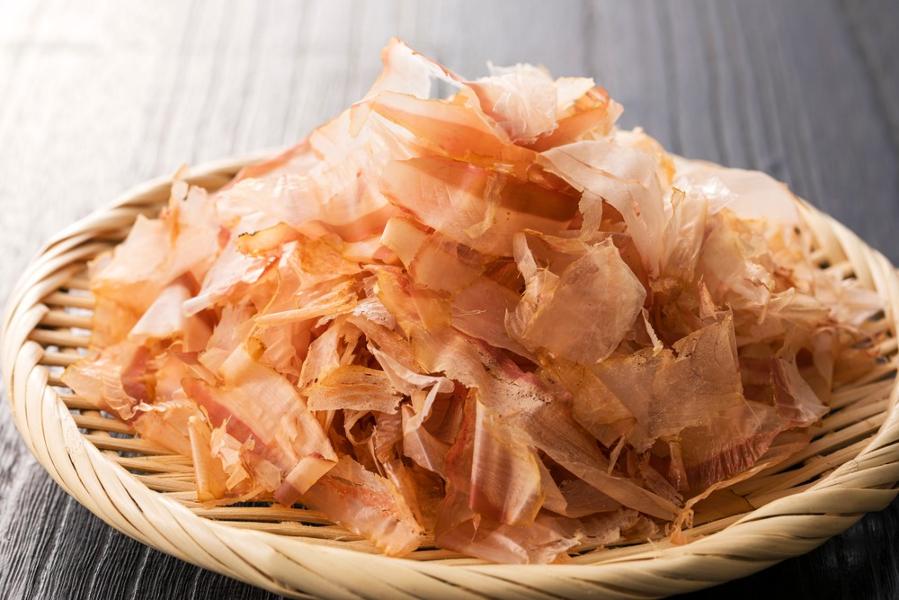
These are products using a mold unique to Japan, Aspergillus. In English-speaking countries, only a few products like Camembert or blue cheese use mold in their composition, while Japan is rich in variety: saké, shoyu, miso, shochu (distilled fermented rice alcohol), mirin, or even katsuobushi (preparation of dried, fermented, and smoked bonito). Products using Aspergillus, combining notably vitamins and amino acids, have recently begun to attract attention for their action in facilitating proper stomach and intestinal function.
Microorganism Used
Aspergillus (a type of mold whose colony appears in a fuzzy form).
Aromatic Power
A combination of fruity and acidic notes
Health Effect
Beneficial action on the stomach and intestines, prevention against the multiplication of cancer cells.
Tsukemono (Daikon Radish, Carrot, Cucumbers, Eggplants…)
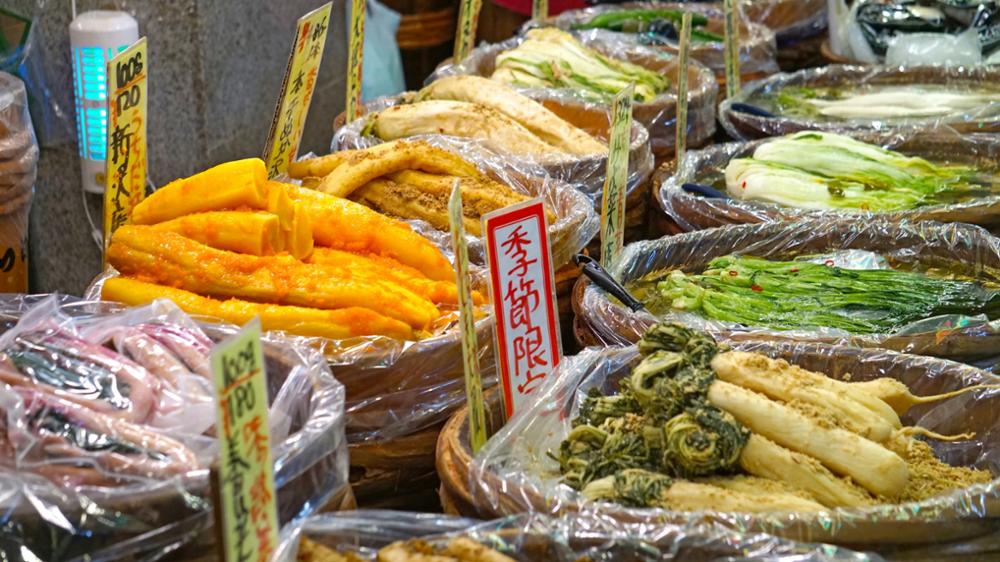
Tsukemono is an essential assortment in Japanese cuisine. There are approximately 600 varieties throughout the entire country. The most traditional is certainly nukazuke. For its preparation, salt must be added to rice bran, then allowed to ferment by adding water. It is then necessary to create a tsukedoko (a container intended for the fermentation of tsukemono) to marinate seasonal vegetables (daikon radishes, cucumbers, eggplants, …). An entire day is necessary. When ready, they are cut to bite size and consumed with hot rice. Tsukemono are not about to disappear from Japanese meals!
Microorganism Used
Yeast (unicellular fungus) and lactobacillus (a bacterium that can convert lactose into lactic acid).
Aromatic Power
Acidity combined with the freshness of vegetables
Health Effect
Action on intestinal function.
Natto
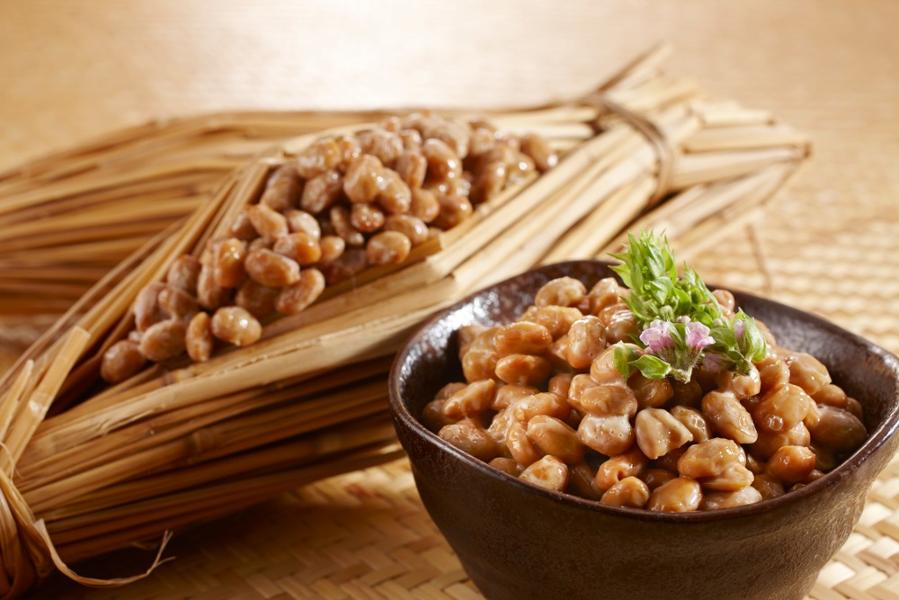
Sticky and emitting a very strong odor, natto is an unfamiliar food to many English speakers. It involves proliferating Bacillus subtilis bacteria in soybeans, and the result is a traditional source of protein in Japan. A flavor appreciated by the people, Japan produces 600,000 tons per year. It is enjoyed mainly with hot rice, after mixing it with chopsticks and seasoning with shoyu. This action is said to enhance its flavor and nutritional value. Japanese people particularly enjoy introducing natto to foreigners staying in Japan, because for them, natto is the taste of their country.
Microorganism Used
Bacillus subtilis (a catalase-positive bacterium commonly found in soil).
Aromatic Power
Caution! Stronger than a well-ripened French Camembert
Health Effect
Action on intestinal function, reduction in blood pressure.
The Benefits of Fermented Products
1. Very Long Shelf Life:
The fermentation of a food product promotes the development of beneficial microbes, which slows the multiplication of putrefactive bacteria and allows for longer preservation.
2. High Nutritional Value:
Thanks to the fermentation process, microorganisms produce nutritional components that accumulate in the foods. This is how they can become enriched with new nutrients not originally present.
3. Strong Flavor:
As written in the subject, fermented food products possess a characteristic odor. This varies more or less depending on the foods. It comes from the byproducts produced by the microorganisms involved in the fermentation process.
Frequently asked questions
The main Japanese fermented products include natto (fermented soybeans), miso (fermented soybean paste), shoyu (soy sauce), saké (fermented rice alcohol), mirin, and tsukemono (fermented marinated vegetables). There are approximately 600 varieties of tsukemono throughout Japan alone.
Japanese fermented foods offer several benefits: they promote better food preservation, improve intestinal and stomach function, can help reduce blood pressure (notably natto), and some may have preventive effects on the multiplication of cancer cells.
Natto is a traditional Japanese food obtained by fermenting soybean seeds using the Bacillus subtilis bacterium. Sticky and highly aromatic (stronger than Camembert!), it is considered an important source of protein. Japan produces approximately 600,000 tons per year. It is typically enjoyed on hot rice seasoned with soy sauce.
Tsukemono is an assortment of marinated and fermented vegetables, essential in Japanese cuisine. There are approximately 600 varieties. The most traditional, nukazuke, is prepared by fermenting seasonal vegetables (daikon radish, cucumber, eggplant) in a mixture of salted rice bran for approximately an entire day.
Japan benefits from a warm and very humid climate with significant rainfall linked to its nature as an archipelago surrounded by sea. These conditions favor the natural proliferation of microorganisms and molds essential to the fermentation process. Moreover, climate diversity between regions has resulted in a great variety of local fermented products.
Japanese fermented products are found everywhere in Japan: in local supermarkets (natto, miso, tsukemono self-service), traditional markets like Nishiki in Kyoto for tsukemono, and in ryokans (traditional inns) where they are part of a typical Japanese breakfast.