
Stay Connected During Your Trip to Japan with Pocket Wifi
Finding Wifi hotspots in Japan isn't always easy. So, if you absolutely need an internet connection during your trip to Japan
Finding Wifi hotspots in Japan isn't always easy. So, if you absolutely need an internet connection during your trip to Japan and don't want to deal with the hassle, we have the solution for you: Pocket Wifi. What is it and how does it work? We'll tell you more about this nifty Japanese router that will give you access to unlimited high-speed connectivity throughout all your travels in the Land of the Rising Sun…
What is Pocket Wifi?
There are countless reasons why you'd want internet access while traveling. To access maps and GPS, to find great tips and addresses, to stay in touch with loved ones, to check your emails, to send photos, to make WhatsApp or Facetime calls, to watch movies and series…
In Japan, there's a ready-made solution: Pocket Wifi! It's a portable internet router —comparable to a traditional modem or internet box— that lets you create a secure Wifi network and connect privately. Available 24/7 with unlimited data, Pocket Wifi offers high-speed connectivity across 90% of Japan's internet network! In other words, if you have a Pocket Wifi, there's little chance you'll find yourself without an internet connection during your trip to Japan. For your information, Pocket Wifi rental periods typically range from 5 to 45 days!
The Advantages of Pocket Wifi
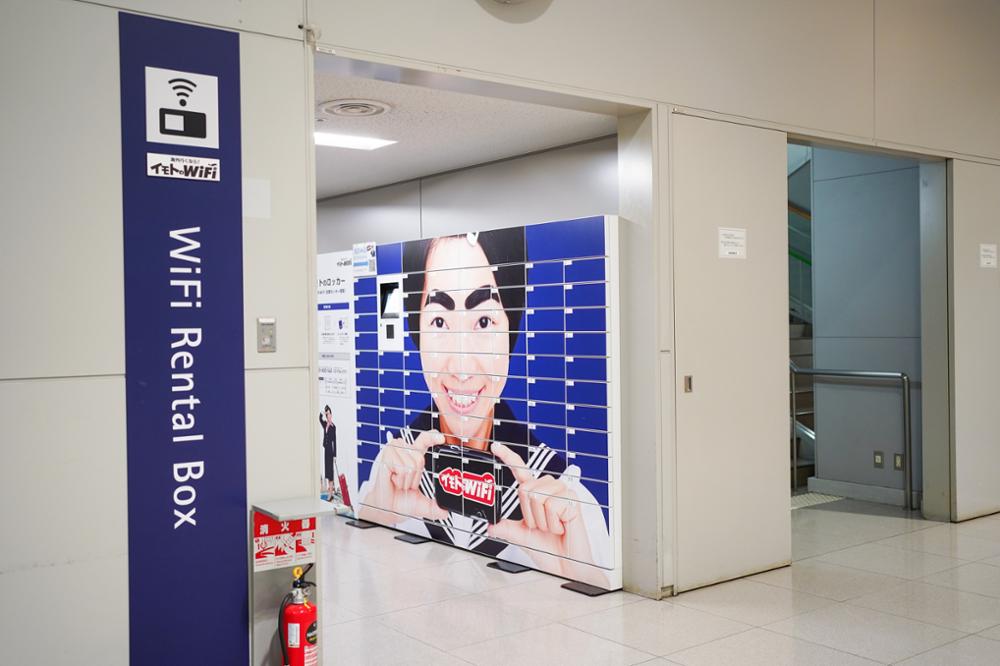
To benefit from Pocket Wifi, you simply need to choose a provider online or on-site. Among them, you can cite for example: Japan Wireless, Pupuru WiFi, Japan Rail Pass, Ninja WiFi, Sakura Mobile, Global Advanced Communication… You can have it delivered directly to your hotel in Japan or pick it up on arrival at one of the country's airports. So Pocket Wifi has a first advantage, and no small one: it's easy to obtain and return (thanks to the pre-paid envelope included in the package). Once you have your Pocket Wifi in hand, you simply need to enter the Wifi code to stay connected throughout your stay.
Another major advantage of Pocket Wifi: it allows you to connect up to 5 devices simultaneously, whether it's a smartphone, tablet, laptop, gaming console, or even a camera! Perfect for sharing it with your traveling companions if you're traveling in a group! Beyond being easy to use, Pocket Wifi also boasts great battery life and automatically goes into standby if no devices are connected. This gives you roughly 12 hours of battery life. Most of the time, Pocket Wifi even comes with an additional battery to make the most of it. Finally, with its compact size and lightweight (barely 150g), it's easy to transport and can even slip into a pocket!
Convinced yet?
Know that with your English-speaking travel agency, Pocket Wifi will be provided as soon as you arrive so you can stay connected throughout your stay!
Frequently asked questions
The price of renting a Pocket Wifi in Japan varies depending on the provider and rental duration. Generally expect between €7 and €15 per day, with reduced rates for longer-term rentals (up to 45 days). Special offers may include hotel delivery.
Pocket Wifi lets you connect up to 5 devices simultaneously, ideal for groups or families. A local SIM card is less bulky but limited to a single device. If you're traveling solo with just a smartphone, a SIM card may suffice; for multiple devices or multiple travelers, Pocket Wifi remains the most practical solution.
Most providers offer two options: either direct delivery to your hotel or accommodation in Japan, or pickup at dedicated counters at international airports such as Narita, Haneda, or Kansai. Remember to specify your pickup location when placing your order.
Pocket Wifi battery life is roughly 12 hours thanks to automatic standby when no devices are connected. Most packages also include an additional external battery to keep you connected all day during your outings.
Pocket Wifi covers approximately 90% of Japan's internet network, which includes major cities and most tourist destinations. In some very rural or mountainous regions, coverage may be more limited. It's advisable to download offline maps as a backup for isolated areas.