Tamagoyaki and dashimaki tamago: here are the 2 recipes for Japanese omelet!
The Japanese omelet is a traditional dish highly popular in the Land of the Rising Sun. Relatively simple to prepare, this dish nonetheless requires genuine expertise! Discover the two recipes
The Japanese omelet is a traditional dish highly popular in the Land of the Rising Sun. Relatively simple to prepare, this dish nonetheless requires genuine expertise! Discover the two recipes, sweet version (tamagoyaki) and savory (dashimaki tamago), as well as the folding technique, to create a rolled Japanese omelet prepared according to all the rules of the art...
What is the recipe for the traditional Japanese omelet (sweet and savory)?
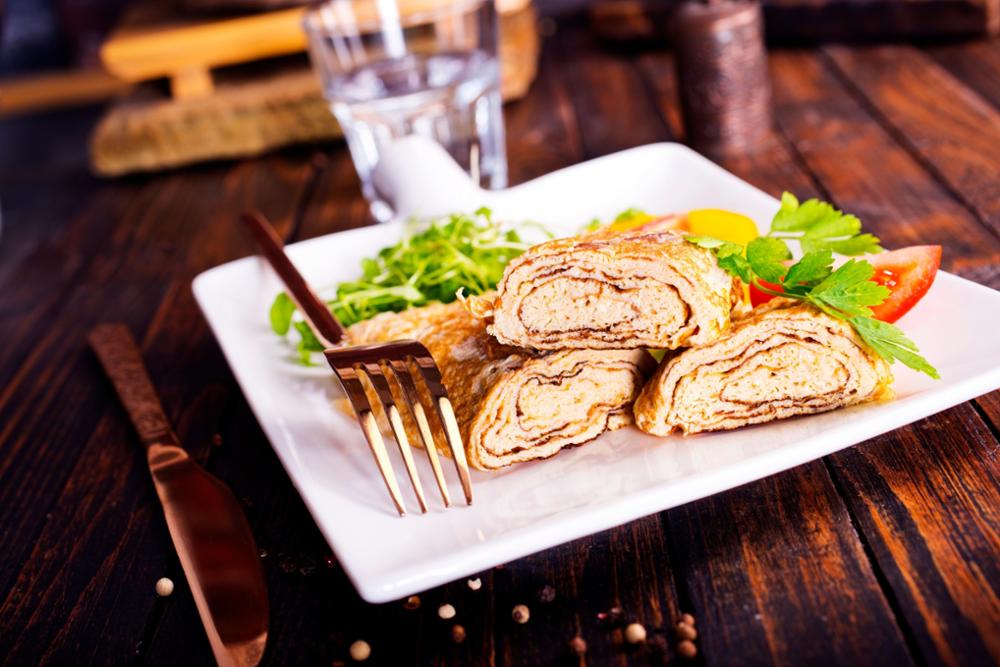
This Japanese specialty features two recipes. Quite similar, they nonetheless allow adaptation to everyone's taste – and enable the creation of tamago nigiri (omelets-based sushi) with varying levels of intensity.
● The tamagoyaki (or "cooked eggs") is the soft and slightly sweet version of the Japanese omelet,
● The dashimaki tamago (or "dashi roll") is the saltier, more robust version, thanks to the presence of dashi in its preparation (a broth made from seaweed and dried bonito). It's worth noting that dashimaki tamago is known for its softer texture, thanks to the broth.
1/ Preparing your workspace
The ingredients for both recipes are, with few exceptions, the same. The preparation is nearly identical, but includes an extra step in the savory version (where it's necessary to add the famous dashi broth).
The utensils
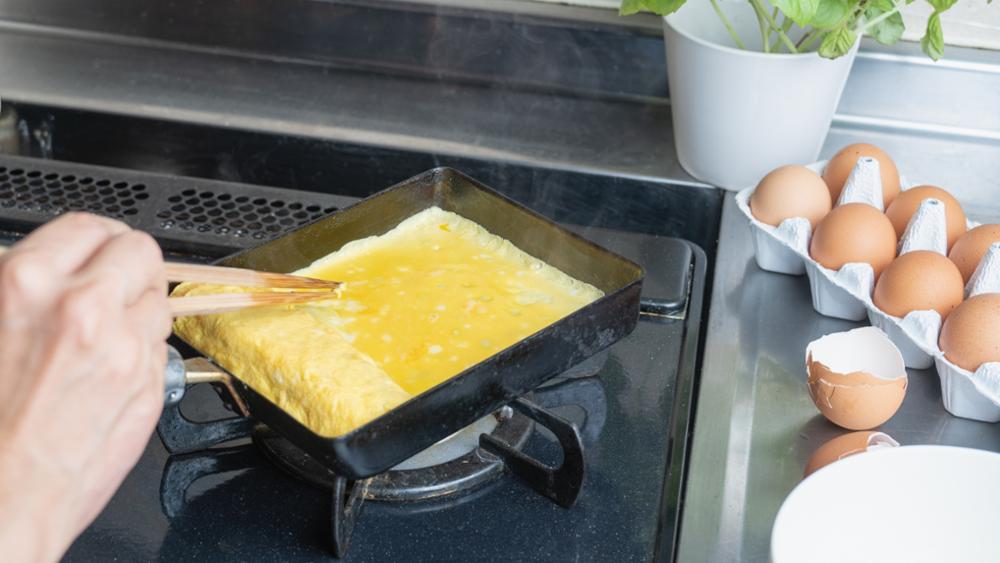
● 1 tamagoyaki pan (also called makiyaki nabe): a rectangular Japanese omelet pan. A round pan can also work, but note that the rectangular shape is important for creating a perfect roll (especially if you want to make omelet sushi or makis).
● 1 teaspoon (for certain ingredient measurements),
● 1 pair of chopsticks (or a flexible spatula, easier to use),
● A small bowl of standard oil (and paper towel), both for greasing the pan.
The ingredients for tamagoyaki omelet (sweet version)
● 3 eggs,
● ½ tablespoon of sugar,
● 2 teaspoons of mirin (a sauce made from fermented sticky rice, easily available commercially). Also simply called "rice vinegar",
● 1 teaspoon of soy sauce,
● 1 pinch of salt.
The ingredients for dashimaki tamago omelet (savory version)
● 3 eggs,
● 2 teaspoons of mirin,
● 1 teaspoon of soy sauce,
● 4 tablespoons of water (or 60 ml),
● ¾ teaspoon of instant dashi broth powder (or 4 tablespoons of ready-made liquid broth).
2/ The recipe
1. Beat the three eggs in a bowl, then add the above-mentioned ingredients (depending on sweet or savory version) – for dashimaki tamago omelet, incorporate the dashi last, and beat the eggs a second time.
2. Heat the pan over medium heat (be careful not to overheat the makiyaki nabe, as there's a risk the eggs will stick too quickly!).
3. Briefly dip the paper towel into the small bowl of oil, then coat the pan's surface (you can use chopsticks to avoid burning yourself, or a brush – if you already have one).
3/ Cooking and folding technique
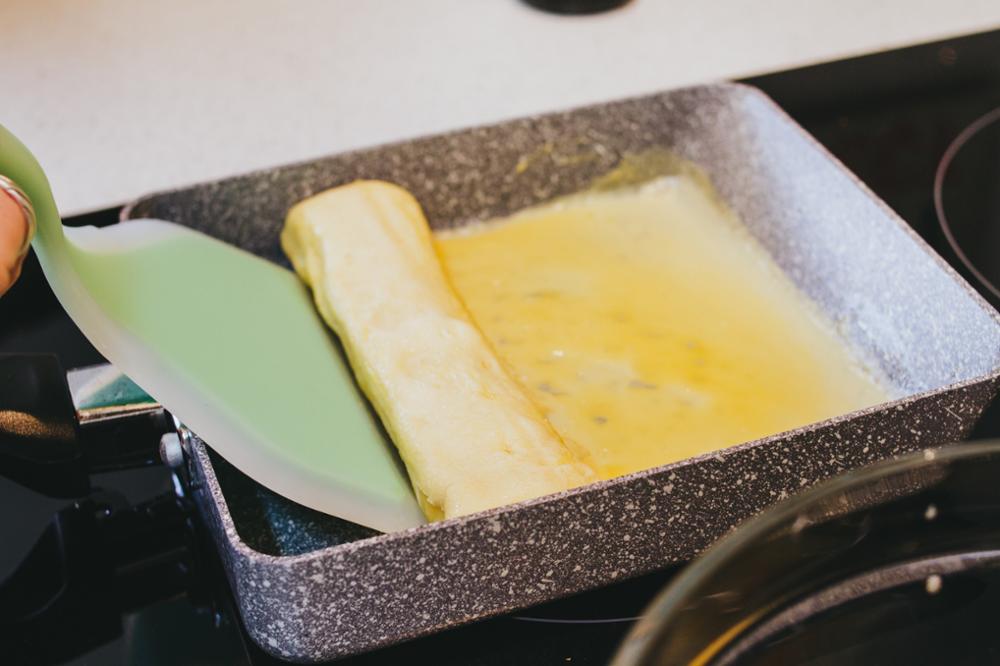
4. When the pan is hot, pour a thin layer of mixture into the pan (about ¼ of the total mixture) – this should cover the entire bottom of the pan. Caution: the omelet should not cook instantly! If it does: absolutely lower the heat to prevent the omelet from browning. If bubbles appear during cooking, gently pop them with chopsticks.
5. Once the first layer of omelet is cooked: push it toward the far end of the pan (away from you) to form a roll. Japanese cooks use chopsticks for this step, but you can also use a flexible spatula – to avoid tearing the omelet.
6. Re-oil the pan's bottom.
7. Place a new layer of mixture across the entire pan surface (making sure it touches the first roll already created).
8. Once the second layer is cooked, roll the first roll onto the new layer and continue rolling, to create a second roll (which will be thicker).
9. Repeat steps 6 and 7 several times, until there's no more mixture in the bowl.
4/ Slicing
10. Once the roll is complete, place it on the bamboo mat, wrap it, and let it rest for 5 minutes inside – so it takes on the proper shape.
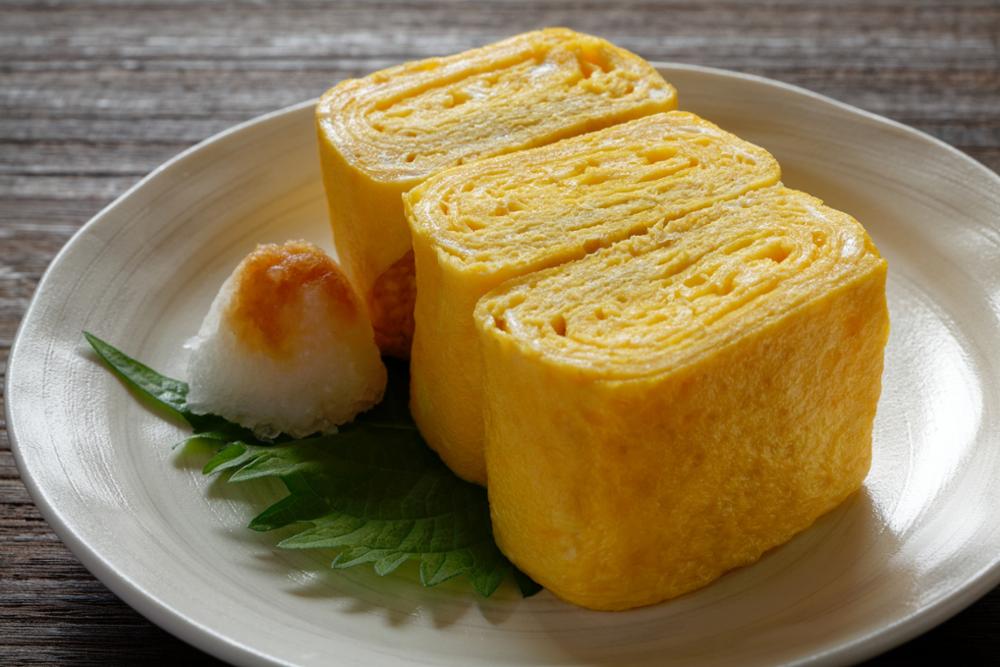
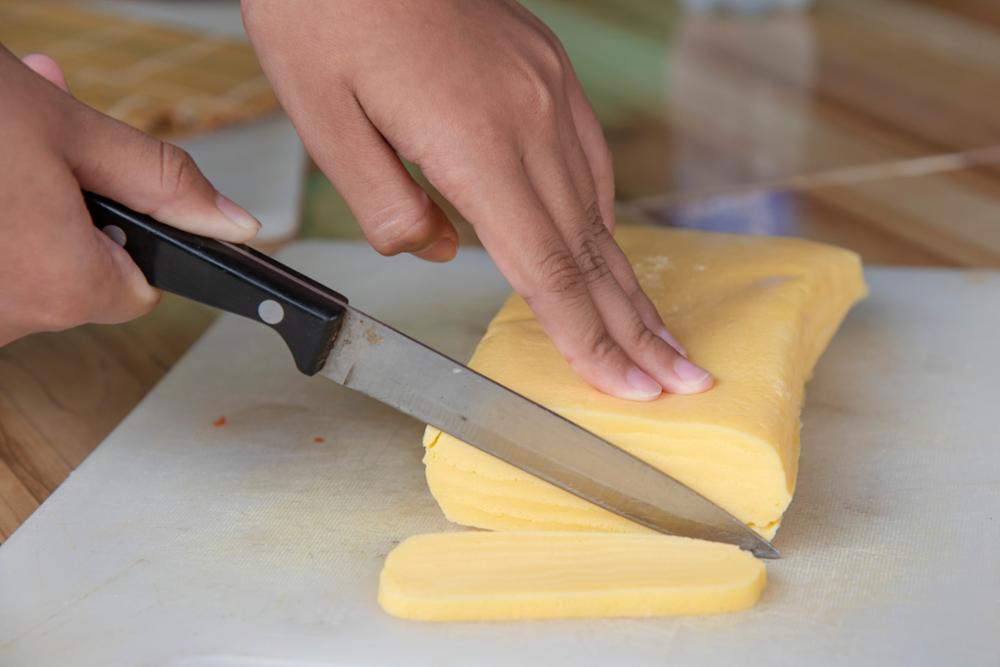
11. Slice the roll into several pieces. The thickness depends on how the omelet will be consumed. To eat it as is, slice into pieces approximately 2 cm thick. If the slices are to be used for tamago nigiri, make thinner slices (about 1 cm) – so you can place them on rice and easily wrap them with a sheet of nori; discover the art of sushi!
How to serve and enjoy Japanese omelet?
Like ramen, the traditional Japanese omelet can be served (hot or cold) at breakfast, lunch or dinner. It's also found in bento; a kind of lunch box containing traditional meals.
The omelet is typically served with pickled ginger (gari) or very thin slices of daikon radish (a white radish highly appreciated in Japan). Both accompaniments highlight the sweet taste of tamagoyaki and the savory taste of dashimaki tamago, while adding a touch of freshness!
FAQ
How do you prevent the omelet from sticking?
To make a non-stick omelet, be sure to oil the pan surface well before cooking. It's also advisable to heat it over medium heat, to avoid excessive temperature and the eggs adhering too quickly.
How do you make an omelet without burning it?
To prevent burning an omelet, its mixture should be poured into a hot pan. Next, cooked portions should be lifted (gently) as cooking progresses, using a spatula – to prevent them from browning too quickly.
Tamagoyaki or Japanese omelet?
The tamagoyaki is the traditional Japanese omelet – slightly sweet. It's also called dashimaki, when referring to the savory version of the recipe.
Frequently asked questions
Tamagoyaki is the sweet version of the Japanese omelet, made with sugar and mirin. Dashimaki tamago is its savory version, enriched with dashi broth (made from seaweed and dried bonito), which gives it a softer texture and more pronounced flavor.
Yes, a round pan can be used, but the rectangular shape of the tamagoyaki pan (makiyaki nabe) greatly facilitates creating a regular roll. If you want to use the slices for tamago nigiri or makis, the rectangular pan is highly recommended.
Japanese omelet keeps for 2 to 3 days in the refrigerator, wrapped in plastic wrap or in an airtight container. It can be enjoyed cold or gently reheated in a pan over low heat.
Instant dashi powder or sachets are found in Asian groceries, world food sections of some supermarkets, or online. There are also vegetarian versions made from kombu seaweed alone, without dried bonito.
Absolutely! Tamagoyaki is actually one of the classic accompaniments of the Japanese bento. You can prepare it the day before, slice it and keep it in the refrigerator. It's eaten cold and maintains its shape and flavor well.