Jozankei
Jozankei
A hot spring resort in Hokkaido just an hour from Sapporo, Jozankei combines traditional onsens, hiking trails, and stunning autumn foliage within Shikotsu-Toya National Park.
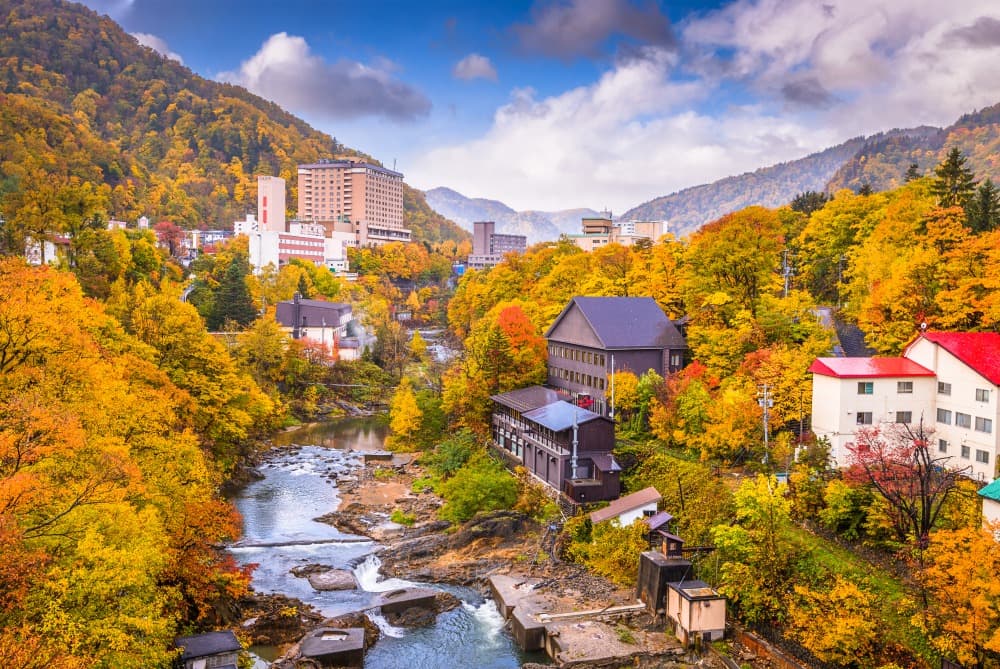
Jozankei is a hot spring resort in Hokkaido situated roughly an hour by bus from Sapporo. The village stretches across a forested valley in the Shikotsu-Toya National Park, nestled between Mount Hakkenzan and the Hoheikyo Dam. Visitors come for its thermal springs, hiking trails, and in autumn, for the vibrant kôyô (autumn foliage) that sets the mountainsides ablaze.
Why visit Jozankei
Jozankei combines several rare advantages for a day trip from Sapporo: a collection of traditional onsens, a mountainous setting perfect for cycling or hiking, local Buddhist heritage, and a scenic dam. Its proximity to the metropolis makes it an easy addition to any Hokkaido itinerary, whether for a half-day excursion or an overnight stay in a ryokan. The landscapes shift dramatically with the seasons, making the timing of your visit an important consideration.
History
Jozankei's thermal springs were discovered roughly 150 years ago (around 1866) by the Buddhist monk Miizumi Jozan. He developed the site to make the baths accessible to the sick and devoted much of his life to maintaining and expanding the onsens. In recognition of his contributions, the village took his name: Jozankei means "Jozan's Valley." The Jozan Gensen Park, at the heart of the village, now houses a statue of the founding monk.
What to see and do
Onsens and foot baths
The village boasts several thermal facilities, most of which are attached to ryokans that also welcome day-trippers. For a free experience, head to Kokoro no Sato Jozan, a public foot bath (ashiyu) lined with smooth stones that massage the soles of your feet. Nearby, Onsen Tamago keeps a local tradition alive: cooking eggs directly in the hot spring water.
Iwato Kannondo
In the center of the village, the Iwato Kannondo temple occupies a carefully arranged cave. It houses 33 statues of Kannon, the Buddhist deity of compassion—a number with deep symbolic meaning in Japanese Buddhism. The visit is brief but memorable for the serene atmosphere.
Shiraito no Taki and Hoheikyo Dam
The Shiraito no Taki waterfall supplies one of Hokkaido's earliest hydroelectric power plants, commissioned in the early 20th century. The site makes for a pleasant short stop, particularly rewarding in early summer and during the autumn foliage season. Further on, the Hoheikyo Dam offers expansive views over the reservoir and surrounding mountains. The Jozankei Dam Museum features models, informational panels, and interactive exhibits about hydroelectric power generation.
Hiking and cycling
From the dam, a trail leads to Mount Kotengu for a half-day hike. The valley is also ideal for cycling: rental shops offer mountain bikes that allow you to connect Koganeyu, Hakkenzan, and Hoheikyo in a single day. Bring a towel to enjoy an onsen on your return.
Ainu culture and local produce
A seasonal tour bus serves the Ainu Culture Promotion Center, dedicated to Hokkaido's indigenous peoples. The same circuit stops in the Tonami district, known for its orchards and regional produce.
When to visit
Jozankei is worth visiting year-round, though each season offers a distinct atmosphere:
- Autumn (mid-October to early November): peak foliage season. Maples set the valley and Hoheikyo Dam ablaze with color. Weekends see heavy crowds.
- Summer (June to September): mild temperatures perfect for hiking, cycling, and water activities near the dam.
- Winter (December to March): abundant snow and outdoor baths (rotenburo) in hot spring water are particularly pleasurable. Some trails may be impassable.
- Spring (April-May): gradual vegetation recovery and moderate visitor numbers.
The climate is cool temperate, with an average annual temperature around 8 °C and consistent precipitation throughout the year.
Practical information
- Duration of visit: half a day for baths and the village center; a full day if you include the dam and a hike.
- Accommodation: wide range of ryokans with onsens; advance booking recommended during peak autumn season.
- Prices: free entry to the village and public foot baths; modest fees for private onsen access.
- What to bring: towel, hiking shoes, water, and snacks for picnics near the dam.
How to get there
From Sapporo Bus Terminal, Jotetsu bus lines 7 and 8 serve Jozankei with regular departures; the journey takes approximately 1 hour 15 minutes. Another option is the Jotetsu No. 12 bus from Makomanai Station, closer to the center, taking around 50 minutes. The nearest airport is Shin-Chitose, which connects to Tokyo, Osaka, Nagoya, and Fukuoka.
Nearby attractions
Jozankei fits seamlessly into a Hokkaido circuit. Nearby, Sapporo offers markets, breweries, and museums of the regional capital. Further south, the caldera lakes of Shikotsu and Toya extend the thermal and volcanic theme. Those seeking wide open spaces can continue toward Daisetsuzan National Park, deeper in the island. For another take on mountain onsens, Ginzan Onsen in Yamagata Prefecture offers a different perspective.
FAQ
Frequently asked questions
Half a day is sufficient for foot baths, Iwato Kannondo temple, and Jozan Gensen Park. Plan a full day if you add the Hoheikyo Dam, the museum, and a hike.
Autumn, particularly from mid-October to early November, is the most sought-after period for foliage. Winter offers a highly appreciated experience of onsens set against snow.
Yes, this is the most common option. Jotetsu buses connect Sapporo to Jozankei in approximately 1 hour 15 minutes, making same-day round trips straightforward.
For public baths and foot baths, no. For an overnight stay in a ryokan with onsen, advance booking is strongly recommended, especially during autumn.
Yes: foot baths, the dam museum with its interactive exhibits, and the tradition of cooking eggs at Onsen Tamago appeal to children.
Plan your trip
Jozankei fits naturally into an itinerary combining Sapporo, Hokkaido, and the major highlights of Japan. To build a custom journey, explore our Japan travel itineraries.
Interested in this visit?
We can include it in your personalised itinerary.