Abashiri
Abashiri
On the frozen coast of the Sea of Okhotsk, Abashiri blends drift ice, a legendary prison-turned-museum, and Arctic cultures. Our complete guide to northeast Hokkaido.
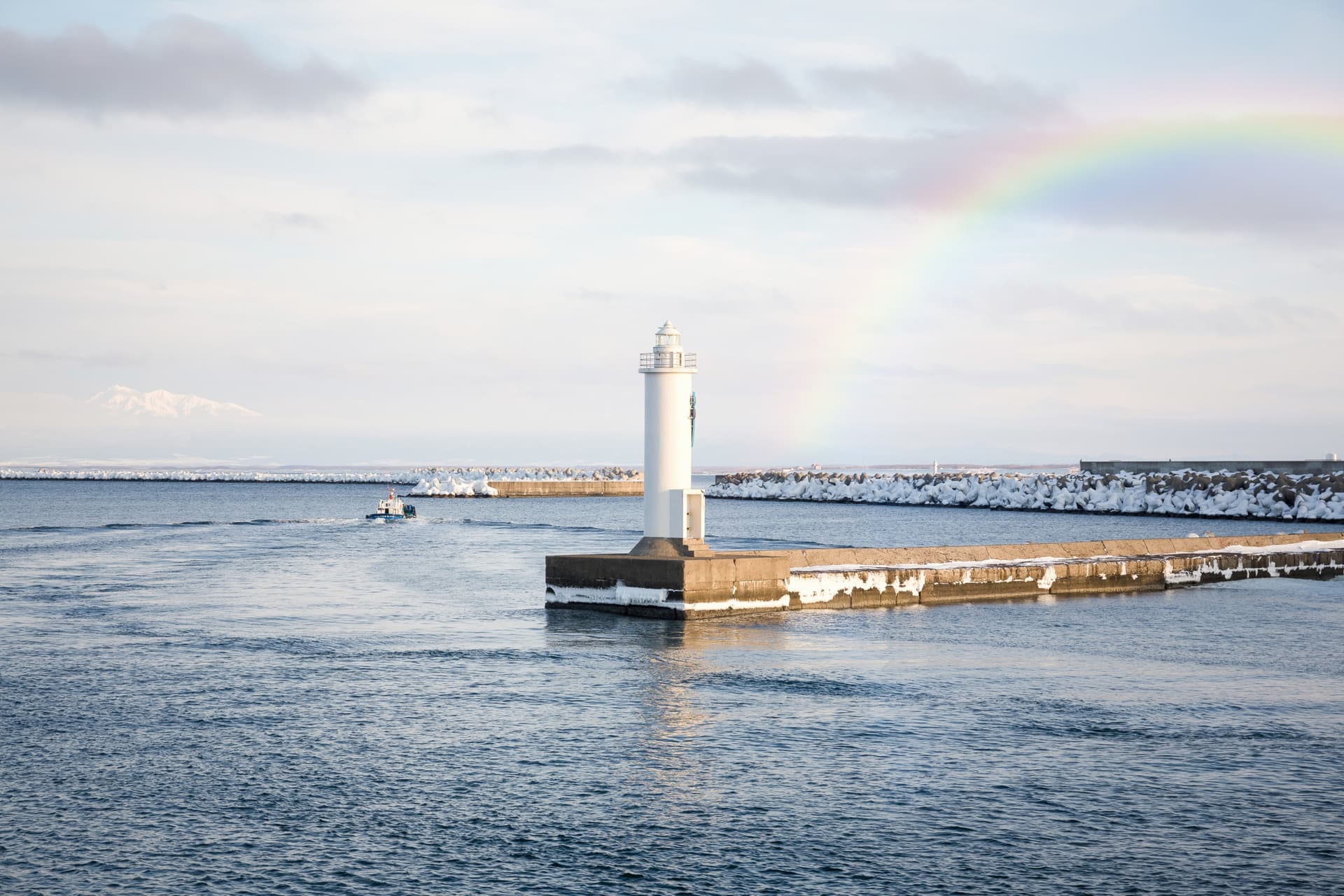
Abashiri is a coastal city on the Sea of Okhotsk, approximately 350 km northeast of Sapporo in Hokkaido. Known for hosting Japon's first maximum-security penitentiary, a winter visit to Abashiri offers the chance to observe drift ice floating across the bay.
History
During the Meiji era's colonization of Hokkaido, then called Ezo, the island developed under government direction to protect the empire from Russian incursions. Yet the distance between the Sea of Okhotsk coast and the imperial capital constrained central intervention. This remote location also prompted the administration to establish prisons in the bay.
At the time, the small fishing village of Abashiri was nearly isolated from the world due to its frozen winter seas. It was chosen as the site of Japon's first maximum-security penitentiary. The inmates themselves undertook the prison's construction and the town's development around 1890. They also participated in building the road connecting Abashiri to Asahikawa.
Etymologically, the name Abashiri means "the land we found."
Today
Abashiri sits approximately 350 km northeast of Sapporo. It is primarily a fishing town, drawing its famous pink salmon and kinki rockfish from the Sea of Okhotsk. In both summer and winter, the bay offers spectacular natural displays, including whale migrations and the parade of drift ice.
From January to March, board the Aurora icebreaker ship for an unforgettable journey through the ice floes. Don't forget your camera to capture seals and seabirds. After this unique experience, visit the Okhotsk Ryu-hyo Science Museum, adjacent to the Tentozan Observatory, which displays actual drift ice blocks year-round. A gallery regularly screens large-format projections of this picturesque natural phenomenon.
From February to March, the Ryuhyo Norokko tourist train connects Abashiri to Shiretoko. Disembark at Kitahama Station and head to the observation tower for panoramic views over the bay. During your station stop, leave a photo or message on the walls as a memento of your visit.
A must-see attraction in Abashiri: the former prison converted into a museum after 69 years of operation (1912–1981). It preserves the penitentiary and town's history. The building's architecture mirrors the Louvain Prison in Belgium, based on the Ducpétiaux model. Museum exhibits feature prisoner testimonies recounting the harsh living conditions on site. For a unique experience, enjoy an authentic prisoner meal in the facility's restaurant.
Another museum worth discovering is the Moyoro Kaizuka Kan, dedicated to the Moyoro archaeological site. Its collections tell the story of the Okhotsk people and their settlement in Abashiri in the 5th century.
Opened in 1993, the Museum of Northern Peoples is located a fifteen-minute bus ride from Abashiri JR Station. It traces the epic of peoples from the frozen northern regions and the Arctic Circle. Ainu, Inuit, Sámi, and other Siberian and northern Canadian communities feature in the museum's exhibitions. Collections include ancient objects, video sequences, and audio recordings reconstructing their way of life during long winters. You'll also find the traditional clothing of each people.
One hour by bus from Abashiri JR Station, Lake Saroma offers an excellent vantage point for sunset viewing. It is Japon's third-largest lake. Abashiri borders a quasi-national park spanning 37,000 hectares across northeast Hokkaido. This park is home to seven other lakes and wetlands worth exploring, including Lake Tofutsuko and Lake Abashiri. This natural paradise, nestled between sea, grasslands, hills, and sand dunes, makes a perfect escape destination.
Climate
Abashiri enjoys a cold temperate climate, Köppen–Geiger type Dfb, and is relatively mild compared to the rest of Hokkaido. Precipitation is modest, averaging 820 mm annually. The mean annual temperature is around 7°C.
You can reach Abashiri by plane, train, or bus.
By Air:
Memanbetsu Airport is located about fifteen kilometers south of Abashiri. It operates connecting flights to and from Sapporo and Tokyo. Buses to Abashiri Station are available on-site.
By Train
The JR Sekihoku Line connects Abashiri Station to Asahikawa. The Senmo Line, which leads to Kushiro via Akan National Park, also serves this station.
By Coach
Affordable overnight buses operate between Sapporo and Abashiri.
The city maintains a reliable bus network departing from Abashiri JR Station. Car rental services are also available in town for added convenience. Taxis are readily accessible.
Want to discover this destination?
Our local advisors design your tailor-made trip.