Intimate Japan
Discover authentic Japon, between iconic cities, mountains, traditional villages, centuries-old temples and local experiences in the heart of exceptional landscapes.
Duration
16 days
From
€3,890/pers.
The spirit of travel
Traveling to Japon means crossing a country of contrasts where futuristic megacities, preserved villages and natural landscapes constantly dialogue. This itinerary immerses you in genuine cultural immersion, between thousand-year-old traditions and assumed modernity.
From Tokyo, vibrant and boundless, to Kyoto, guardian of classical arts, passing through Nara, Takayama or Kanazawa, you discover a plural Japon, made of temples, historic neighborhoods, local markets and ancestral expertise.
The Japanese Alps, Mont Fuji, classified villages and hot spring resorts offer a nature and relaxation interlude, while ryokan, onsen and regional gastronomy provide a deeply local experience.
Between gentle adventure, heritage, spirituality and everyday life scenes, this trip to Japon invites you to feel the country from within, closest to its soul.
The stages of your journey
Highlights
Day-by-day itinerary

Yokoso! Welcome to Japan!
Upon your arrival in Tokyo, you clear customs and collect your luggage. An English-speaking assistant welcomes you at the airport and accompanies you by public transport, then by taxi, to your hotel. During this journey of approximately one hour, they provide you with your travel documents and give you the necessary information for a smooth stay in Japon.
Along the way, Tokyo gradually reveals itself. It is the world's largest megacity, bringing together more than 42 million inhabitants within its urban area. Capital of Japon and prefecture in its own right, the city impresses with the extent of its urban fabric.
At the heart of this dense urban area, you discover different Tokyo's neighborhoods, each marked by its own identity and atmosphere.

Tokyo, the titan of Japan
You begin your discovery of Japon with an immersion in the heart of Tokyo. From the morning, the city familiarizes you with its public transportation network, a central element of local life. Exploring Tokyo naturally involves one of its metros.
You take The Yamanote circular line, which crosses several emblematic areas. The journey offers views of the glass buildings and steel structures, while running along some of the most well-known neighborhoods: Shinjuku, the skyscraper district, Shibuya, with its famous crossing, shops and bustling atmosphere, as well as Akihabara the electronics enthusiasts' district, associated with the world of electronics and manga.
At the end of the day, you head to The artificial island of Odaiba, known for its leisure spaces and viewpoints overlooking the bay. As night falls, you observe the illuminated city from this waterfront area.
The day concludes in a traditional local restaurant, an opportunity to taste sushi and discover a specialty of Japanese cuisine.

The Origins of Tokyo, the Edo Period
At the origin of Tokyo was the fishing village of Edo. Becoming the capital of the Tokugawa shogunate in 1603, the site experienced strong expansion and established itself, from the 18th century onwards, as one of the great cities of the world. The Edo period, which extended until 1868, thus largely contributed to shaping the organization and identity of present-day Tokyo.
Several places allow you to evoke this historical period, such as the Edo Museum, located in the sumo district of Ryogoku, the Ameyoko Market, a vast lively market, or the Senso-ji Temple, in the heart of the Asakusa District.
To enjoy a panoramic view, you can head to the south of the city, towards the World Trade Center, whose observation deck located on the 40th floor offers a viewpoint over the lights of the megacity.
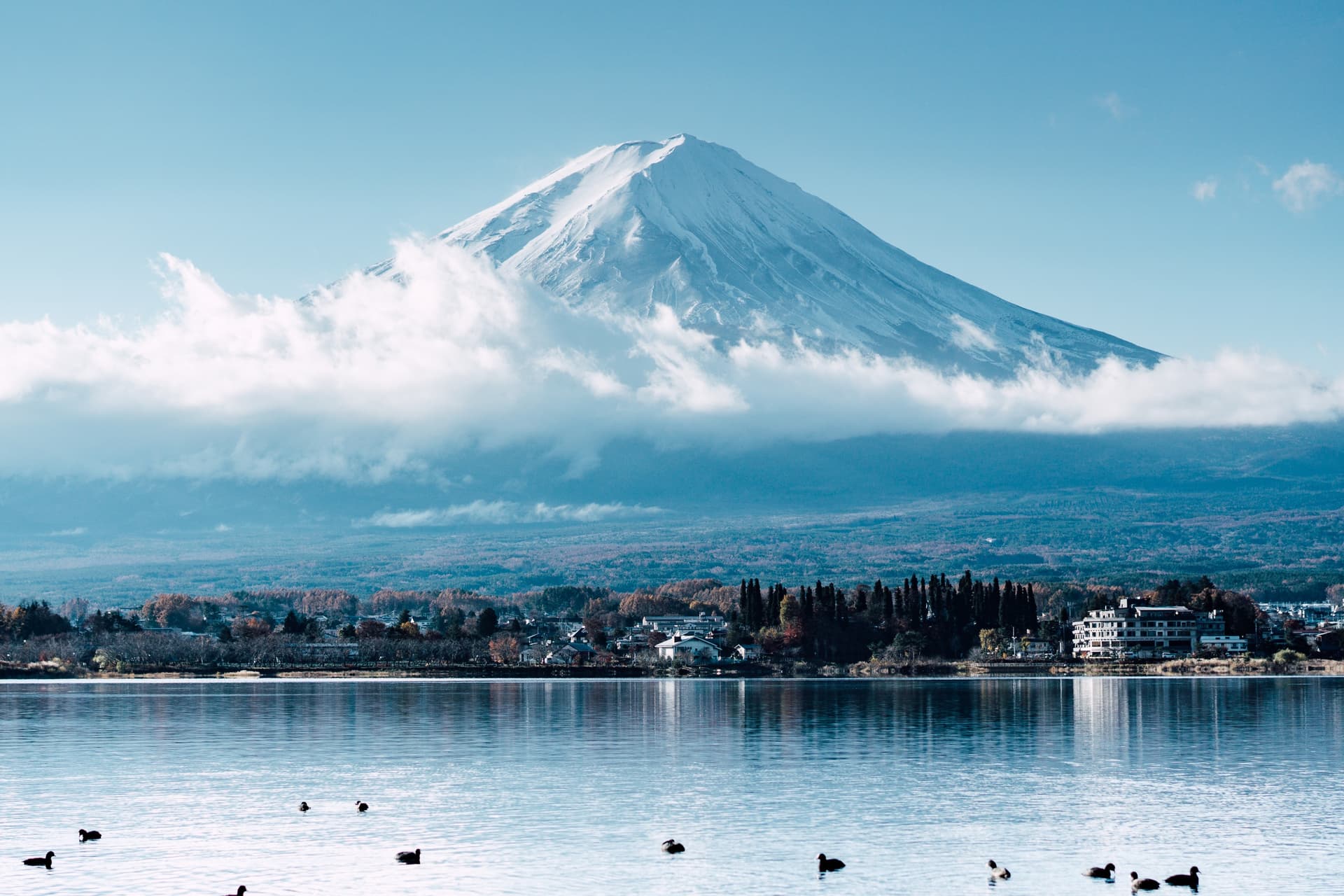
On the shores of Lake Kawaguchiko, Mt Fuji gazes down upon us
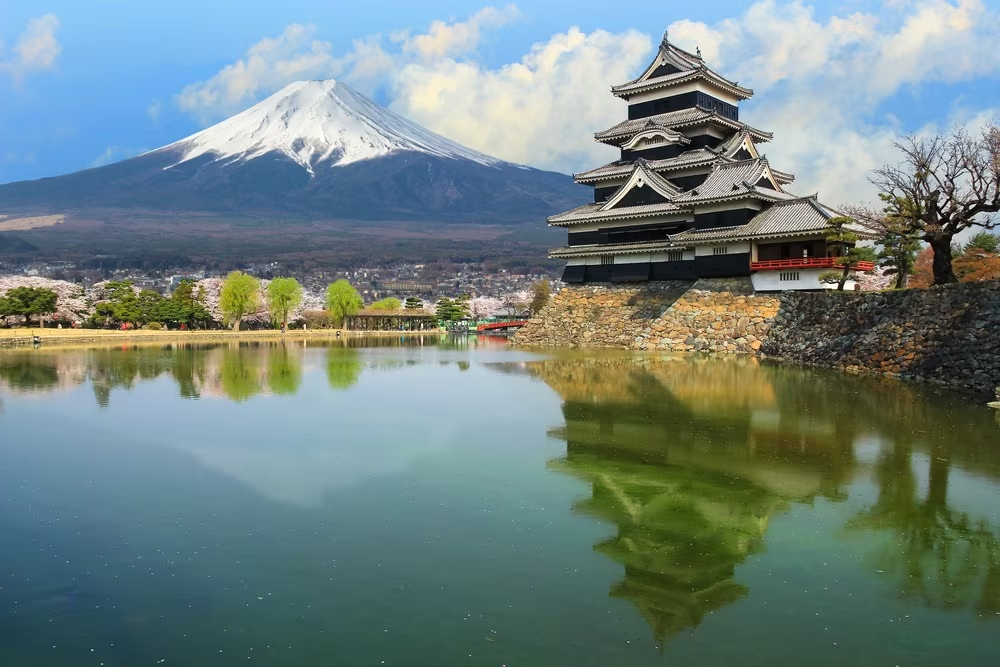
Heading towards Mount Fuji. You board a coach heading towards the shores of Lake Kawaguchiko, located approximately one hundred kilometers west of Tokyo. This area is a recognized observation point for the volcano, symbol of Japon, identifiable by its conical silhouette often covered in snow.
Several options are available to you to observe the volcano, depending on your energy level. You can for example rent a bike to go around the lake, or climb the 400 steps leading to the Chureito pagoda, a recognized viewpoint over the surroundings.
A more relaxing option is to take the cable car to reach the heights of Mount Kachi-Kachi and enjoy a panorama of the region.
Another site to discover in the area: The Ichiku Kubota Art Kimono Museum. This creator devoted his life to reviving the traditional kimono dyeing technique called Tsujigahana. The museum is set in a carefully maintained natural environment, complemented by distinctive architecture that contributes to the identity of the place.
Nearby, the village of Oshino presents an atmosphere marked by its rural heritage. You can observe traditional houses displaying agricultural tools and samurai armor, with Mt Fuji in the background.
Back to Tokyo, where you can enjoy a night stroll through the illuminated city and discover another culinary specialty, Monja-yaki, a preparation served on a heated plate and shared in a convivial atmosphere.

Obuse and Shibu Onsen, Art and Hot Spring Resorts
This morning, you take the train towards Nagano, a city surrounded by peaks exceeding 3000 m, located in a natural environment marked by the presence of several national parks.
A few kilometers to the north, the small town of Obuse held a place on the commercial and cultural routes during the Edo period. Supported by patrons, it welcomed several artists, including the painter Hokusai. You can discover his works there, in particular prints, at The Hokusai Museum in Obuse.
You continue by local train (payment on site) to the thermal resort of Shibu Onsen. The village stretches along the Yokoyugawa River, in a small valley, and retains a traditional atmosphere. The region is known for its onsen, frequented for a long time for their hot spring waters.
In the streets, many visitors move from one bathing establishment to another, dressed in yukata and wearing geta sandals, according to local customs.
One of the peculiarities of the region is the presence of Japanese macaques, also called snow monkeys, observable in the Jigokudani park. They are known for bathing in the hot springs of the area. This scene can be observed depending on weather conditions, particularly in winter when the landscape is covered with snow.
In this environment, you stay in a ryokan, a traditional Japanese inn, where you dine before spending the night in the local way, on futons laid out on tatami mats.
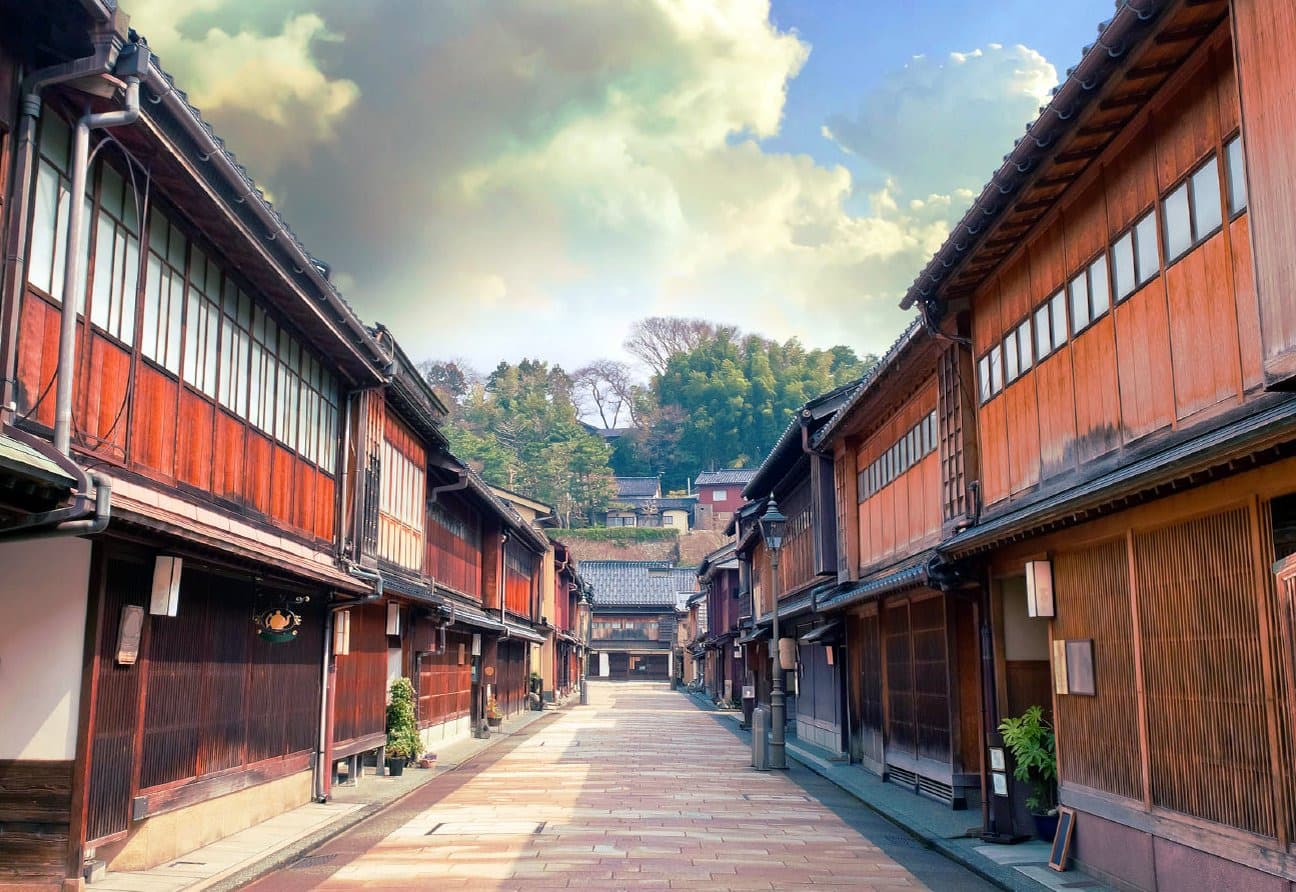
Kanazawa, the Land of Samurai and Craftsmanship
This morning, you leave Shibu Onsen and take a local train heading towards Nagano.
In Nagano, you board the Shinkansen for a journey of approximately 1 hour 45 minutes towards Kanazawa, a city facing the Sea of Japon.
This ancient city stands out for its artisanal heritage. It is recognized for several traditional crafts, among which Kaga-nui embroidery, Yuzen silk dyeing, gold leaf work, Wagasa umbrellas or even local toys.
On site, you discover several major attractions: Nagamachi, known for its samurai district, its alleyways and its ochre-colored earthen walls, as well as the Nomura family house and Kenrokuen garden; Omicho and its fish market; then Higashi Chaya, former geisha district, with its traditional teahouses.
As night falls, you can discover a local specialty by tasting a seafood dish, notably crab, a product associated with the region.
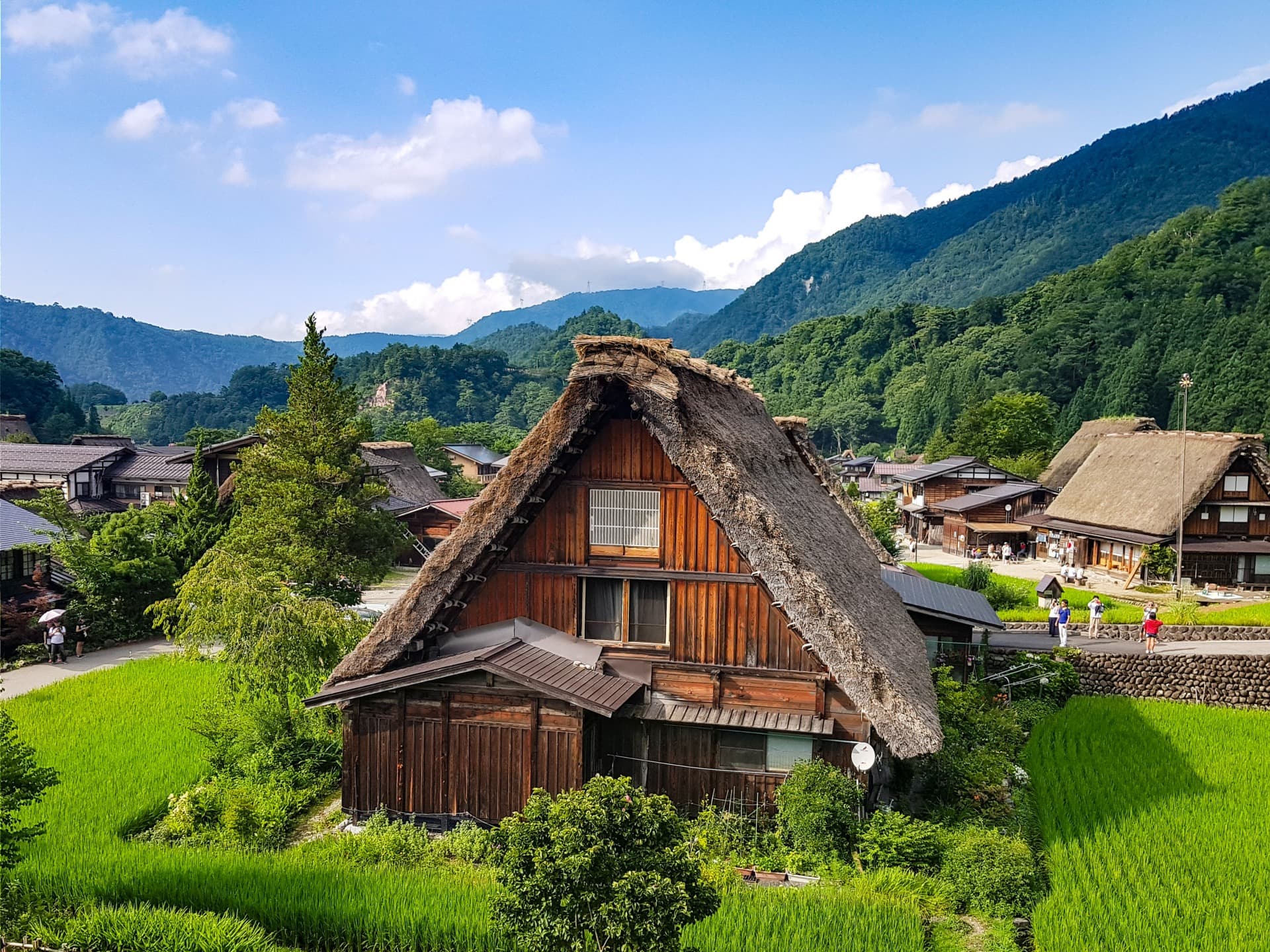
The historic cities of the Japanese Alps
Early in the morning, you join the Kanazawa train station to board a coach heading to the village of Shirakawa, a journey of approximately one hour.
The locality is known for its traditional houses gasshô-zukuri with thatched roofs, designed to withstand heavy snowfall. Located in the heart of the Japanese Alps, these ancient dwellings are inscribed on the UNESCO World Heritage list.
You get back on the coach to continue towards Takayama or Hida.
After approximately one hour of driving at altitude, you arrive in this small carpenter town with wooden houses. The walk allows you to discover a town at a peaceful pace, set in a mountain environment.
You finish this stage at altitude in a ryokan and enjoy the onsen again for a moment of relaxation.
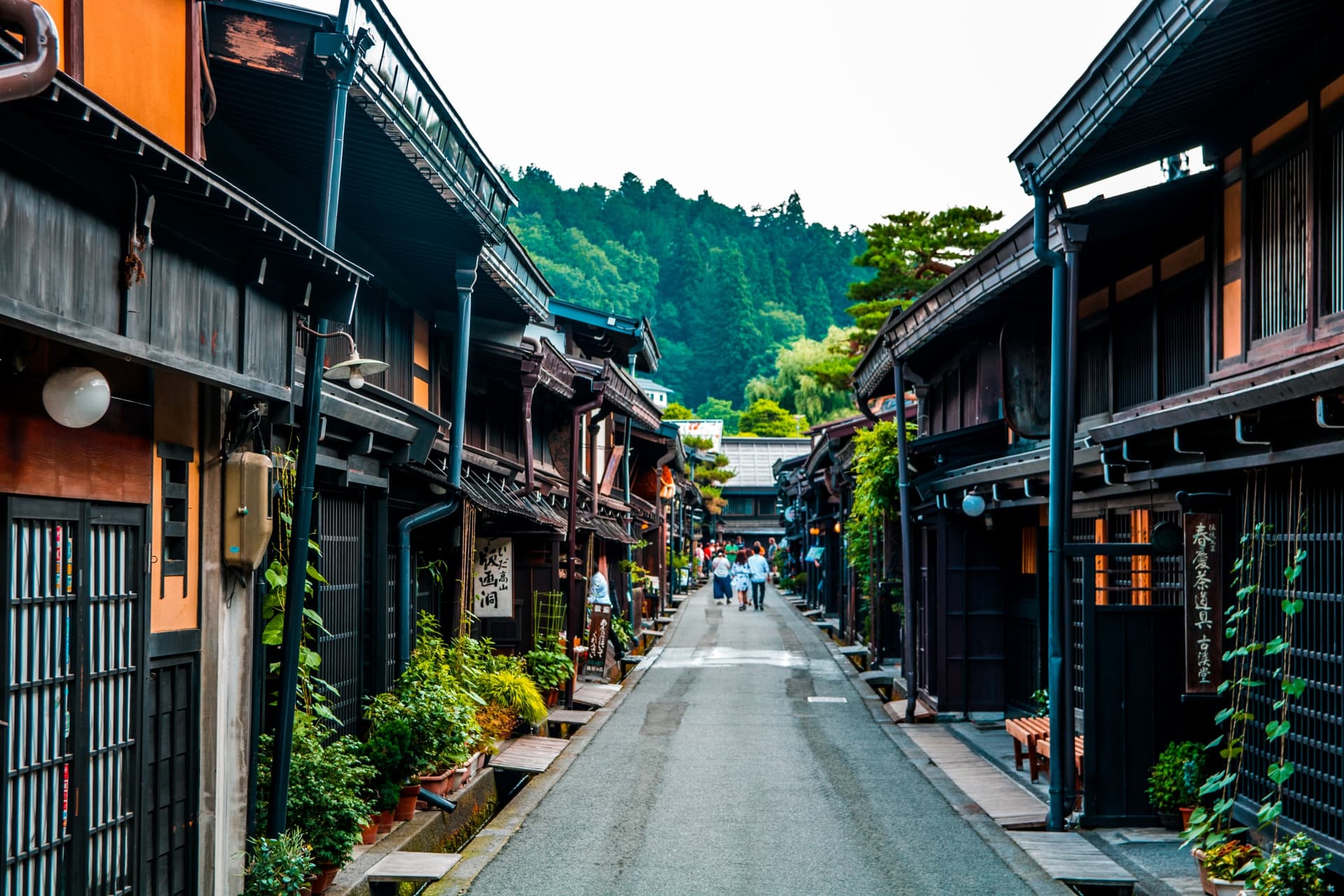
Pastoral escape in Takayama
Today, you discover the old feudal and historic city of Takayama or Hida and local life. You can visit the Jinyamae morning market, located opposite the residence of the same name, or stroll around the Miyagawa market, along the river.
You continue into the historic center, where buildings from the Edo period remain. The district is home to former administrative residences, merchants' houses as well as an exhibition hall dedicated to festival floats.
It is also possible to discover the surrounding area by heading to the neighboring town of Hida-Furukawa. A short train ride of approximately fifteen minutes will get you there. Once there, you can rent bicycles to explore the surrounding countryside.
At the end of the day, you can discover several local specialties, including Hida beef, accompanied by craft sake produced in the region.

Kyoto, la ville des traditions millénaires
This morning, you take the train to Kyoto, a city recognized for its major role in the history and culture of Japon.
Once there, you discover this former imperial capital and visit several sites linked to the history of the city: Kiyomizu Temple, a temple of pure water situated on a hillside, The Higashiyama district and its shops, as well as the traditional streets of The Gion district.
You then continue to Fushimi Inari Shrine, known for its thousands of red torii forming a marked path across the mountain.
In the evening, we head to Pontocho Street in Kyoto to find a good traditional restaurant. Along the way, we enjoy the view of the Kamo River. With a bit of luck, we may cross paths with maikos, apprentice geishas.
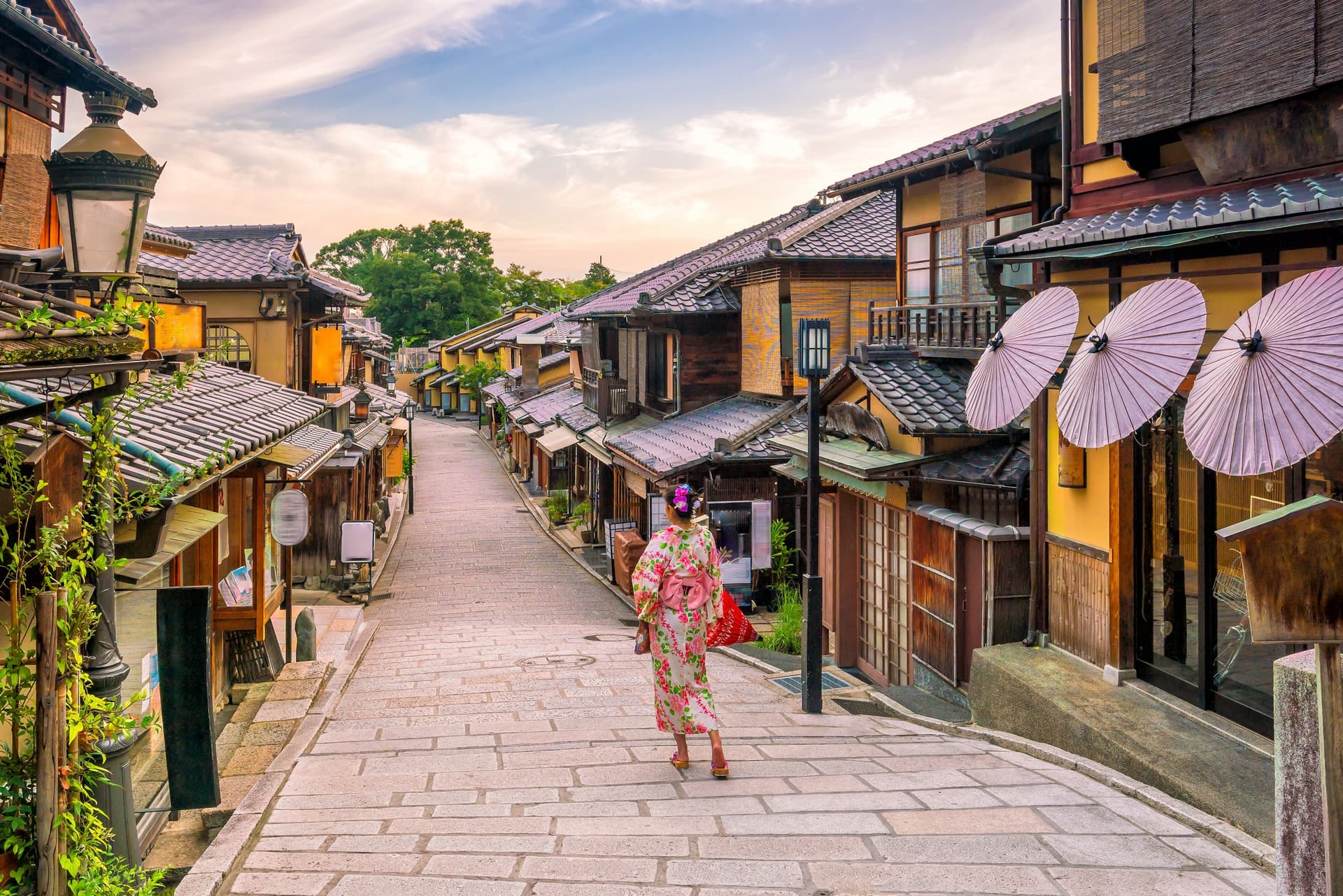
Kyoto, Between Temples and Gardens
The thousand-year-old city of Kyoto brings together a rich cultural heritage, marked by the presence of numerous religious buildings. The city indeed has nearly 2,000 shrines and temples, witnesses to its spiritual and artistic history.
During your stay, it will not be possible to discover all of them, but you will have the opportunity to visit several emblematic sites, including The Golden Pavilion Kinkaku, the garden of Ryoan-ji temple and The Silver Pavilion (Ginkaku temple.
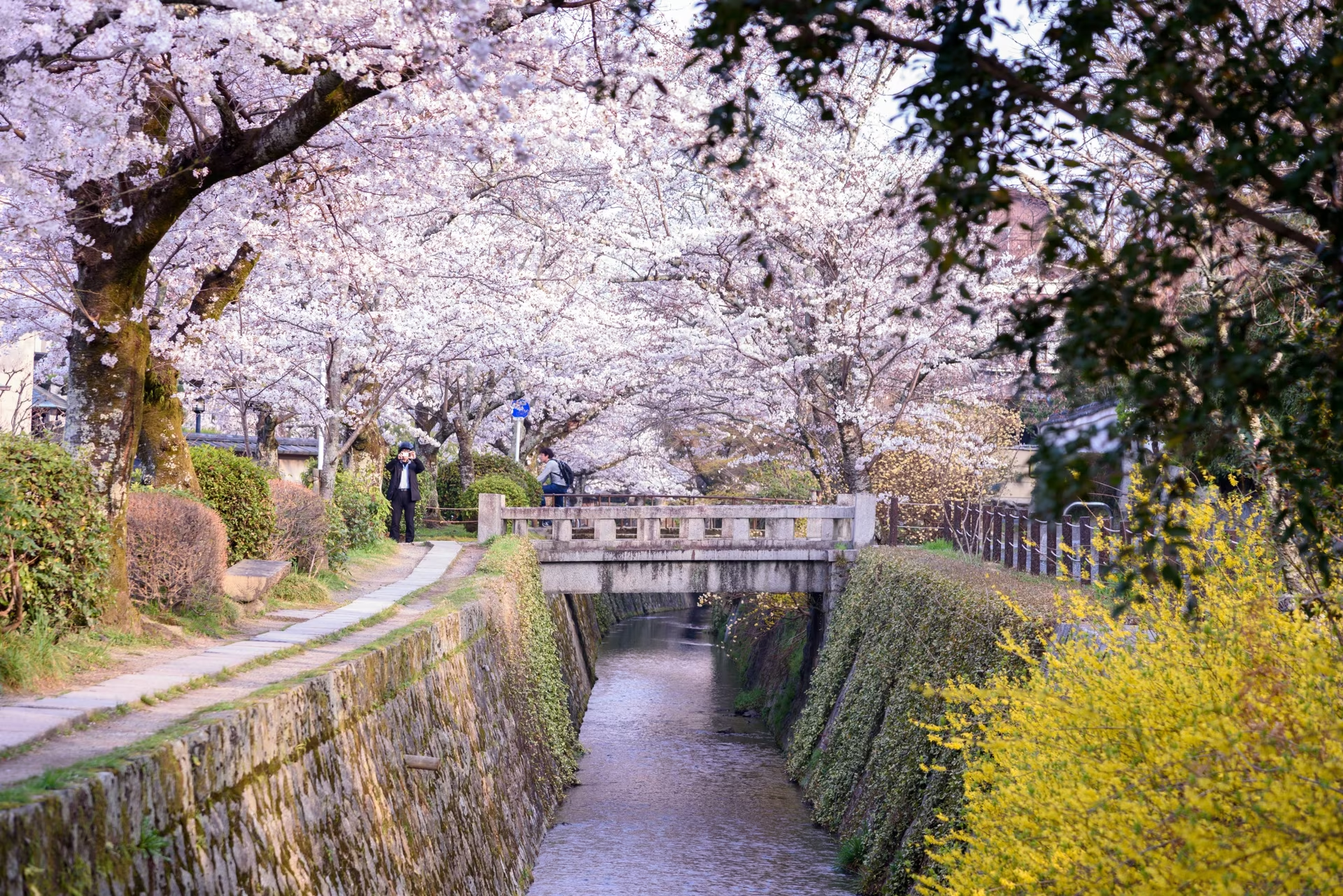
Depending on how much time you have, more free moments can also enrich your experience in Kyoto. If weather permits, you can for example rent bicycles and ride along the banks of the Kamo river, a pleasant way to observe local daily life. Otherwise, a walk along the philosopher's path gradually leads you to Nanzen-ji temple, a major site of Rinzai Buddhism.
In the evening, you can discover shabu-shabu, a dish often offered at dinner time in Japon. This specialty consists of a Japanese fondue where thin slices of meat are dipped in different broths based on vegetables. This convivial meal is part of the local culinary tradition and offers a simple approach to Japanese gastronomy.

The Jewels of Nara
Today, you enjoy a day in Nara, located approximately 40 minutes from Kyoto. This city, which was one of the first Japanese capitals in the 8th century, preserves significant historical heritage, with several monuments listed as UNESCO World Heritage sites.
On site, you stop notably at the imposing Tōdai Temple, built in the heart of a vast park where many semi-wild deer roam.
The visit continues then, at your own pace, with a possible stop at the Isuien Japanese garden, appreciated for its landscape design, or at the sanctuary-mausoleum of the Fujiwara family, Kasuga Taisha Nara, a place associated with the city's religious and aristocratic history.
Train return to Kyoto.
As dusk falls, you can discover teppanyaki. This type of dinner is based on cooking performed by the chef directly on a heated griddle, where various ingredients are grilled and sautéed, including Kobe beef. This culinary experience combines technical skill and tasting, in a convivial atmosphere.

Feudal Castle and Ancient Trading Town
You leave Kyoto and head towards the coast, which you follow westwards.
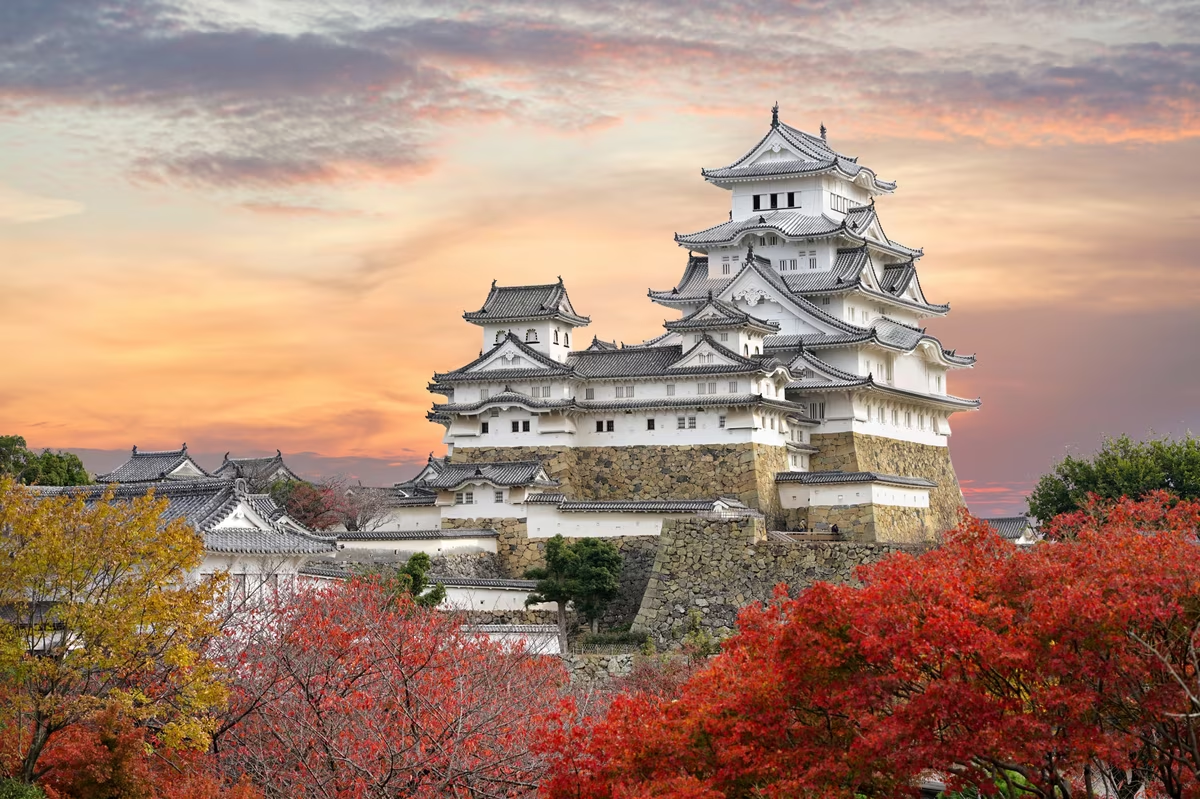
On the way, you stop in Himeji, a city known for its Himeji Castle from medieval Japon, often called the white heron and inscribed on the UNESCO World Heritage List. The building dates back to the era of the Ashikaga shoguns (14th–16th centuries) and illustrates Japanese castle architecture from this period.
You continue your journey by train along the coast and reach the old merchant town of Kurashiki. It is known for its historic district of traditional houses, the Bikan District, which testifies to its commercial past.
The Bikan is discovered through a network of alleys lined with white-painted wooden houses, former rice warehouses now partly converted into museums. The whole area offers a pleasant setting for strolling and allows you to grasp the atmosphere of bygone days.
Among the historic buildings, you can observe in particular the house of the wealthy merchant family Ohashi, whose architecture is inspired by samurai style.

Matsue, the City of Water
You head towards the north coast and make a stop on the shores of Lake Shinji, in the city of Matsue. Often called the "City of Water," Matsue developed around its castle, considered one of the last authentic Japanese castles, built in the early 16th century.
Its founder, the lord Horio Yoshiharu, received these lands from the shogun Tokugawa as a reward for his bravery. He designed the city according to an organization focused on both commerce and defense, with features such as moats, canals and zigzagging alleys, designed to structure the space and limit the risks of external attacks.
Matsue has a rich cultural and tourist heritage. Among the sites of interest in the city, you can notably take a boat ride in a Japanese gondola on the canals, discover the samurai quarter and its Buke-Yashiki house, stop at the tea house Meimei-an, visit the Yushien garden or the Adachi museum.

Japan's oldest Shinto shrine
Today, you can travel across the lake to the town of Izumo, where you will find the oldest Shinto shrine in Japon, built in the 7th century.
According to tradition, all the gods of the country gather there in the month of October. This belief explains why this period is called the "month without gods" (kaminashizuki) in the rest of Japon, while it is referred to as the "month of present gods" (kamiarizuki) in the Izumo region.
You can take time to stroll through the streets of this small town marked by its ancient heritage, particularly along the cotton street Momen Kaido, where traditional houses and artisan workshops succeed one another.
You can also discover the Ishibashi residence, nearly three centuries old, which houses a stone garden.
For a quieter moment, Inasa-no-Hama beach is also a popular stop.

Osaka, welcome to merry Japan
This morning, you join Osaka city, capital of the Kansai region. The journey is by express train from Matsue to Okayama (approximately 2 hours 40 minutes), then by Shinkansen from Okayama to Osaka (approximately 45 minutes).
Upon arrival, you perceive a contrast with other major Japanese cities. This western part of the country is often associated with a cheerful, festive and playful atmosphere, which contributes to its urban identity.
Among the notable sites is Osaka Castle, recognizable by its distinctive appearance. Beyond its exterior, it can be visited for its museum and the park surrounding it. The Umeda district is also among the areas to discover, in the heart of the city, to better understand local dynamism.
As night falls, Osaka changes pace and certain districts gain in activity. You can then explore the entertainment district of The Namba district, crossed by the famous Dotonbori street and its canal, an area associated with outings and neon signs. You can also visit The Shinsekai district, also called "New World".
These two zones reflect a more alternative and lively facet of Osaka's marginal and electric culture, and allow you to experience another urban atmosphere.

Sayonara
Depending on your departure schedule, you can spend the morning doing some last-minute souvenir shopping.
You then take the train to the international airport of Osaka City (approximately 1 hour journey). Your trip then comes to an end, with memories of the experiences you've had throughout this itinerary across the Japanese archipelago.
Price per person
Indicative price per person, based on double room. Each trip is customized according to your preferences.
This trip can be tailored to your preferences
This itinerary provides an excellent foundation for discovery, but it can be fully customized. Our local advisors build each trip tailored to your budget, dates and preferences.
Not included
- International flights and related taxes
- English-speaking guidance or assistance, optional
- English-speaking assistance to the return airport
- Round-trip train rides between Nagano and Shibu-onsen, payment on-site only, plan approximately 4,520 yen per person.
- Tourist site entrance fees
- Meals, with the exception of those mentioned as included, as well as beverages
- Transports other than those mentioned as included, including transfers between city centers and accommodations when there is no assistance (using public transport or taxi, your choice)
- Luggage forwarding by private carrier between different stages (recommended, approximately 2,000 yen/item)
- The tourist accommodation tax, approximately 100 ~ 500 yen per night per person, collected on-site only, for the cities of Tokyo, Kyoto, Osaka, Kanazawa
- The hot spring tax, approximately 150 yen per night per person, collected only on site in cities with official hot spring sources (Hakone, Takayama)
- Your personal expenses
- Tips (guides, assistants)
- Insurance (repatriation, cancellation)
Included
- 4 nights of accommodation in Tokyo, with breakfast
- 1 night accommodation in Shibu-Onsen, with dinner and breakfast
- 1 night accommodation in Kanazawa, with breakfast
- 2 nights accommodation in ryokan in Takayama, with breakfast
- 3 nights accommodation in Kyoto, with breakfast
- 1 night accommodation in Kurashiki, with breakfast
- 2 nights of accommodation in Matsue, with breakfast
- 1 night accommodation in Osaka, with breakfast
- Round-trip airport transfers from airports to city centers, using public transport (tickets)
- Round-trip coach journeys between Tokyo (Shinjuku) and Kawaguchi-ko
- Train and shinkansen journeys between Tokyo – Nagano, Nagano – Kanazawa, Takayama – Kyoto, Kyoto – Himeji – Kurashiki, Kurashiki – Matsue and Matsue – Osaka, in standard class
- The coach trip between Kanazawa, Shirakawa-go and Takayama
- English-speaking reception and assistance upon arrival at Tokyo airport
- The organization and optimization of your tailor-made trip with an advisor based in Japan
- A complete set of travel documents for an independent trip with maximum support, which includes in particular: day-by-day program, detailed transport itinerary, clear presentation of each stage as well as practical advice & Japanese translations of relevant elements.
- The rental of a portable Wi-Fi router for the duration of your stay, so you can stay connected at all times
- 24/7 telephone assistance during your trip, with a real French agency on the ground
Practical Information
Registration is considered firm and final after payment of a deposit of 30% of the total price and acceptance of the specific terms of sale.
The balance must be paid no later than 45 days before the departure date.
See our specific terms of sale for full details.
In the event of cancellation by the traveller, the following fees apply:
- More than 60 days before departure: 40% of the total price (deposit retained)
- Between 60 and 30 days before departure: 50% of the total price
- Less than 30 days before departure: 100% of the total price
We strongly recommend taking out cancellation insurance. See our specific terms of sale for full details.
Entry requirements to Japan depend on your nationality. We recommend verifying the information with the official authorities of your country of residence and with the Japanese embassy or consulate before your departure.
Passport
To enter Japan, your passport must be valid for the entire duration of your planned stay and must contain at least one blank page for immigration stamps.
The document must be in good condition (no damaged, torn or altered pages).
Tourist stay without visa
Entry requirements without a visa depend on your nationality. You must verify the conditions and the duration of stay authorized with the Japanese embassy or consulate of your country of residence.
The authorities may also ask for:
a return ticket or onward travel proof (return flight or continuation),
proof of sufficient financial resources for the duration of your stay,
an accommodation address in Japan for the duration of your trip.
Visit Japan Web
Japanese authorities offer the online service Visit Japan Web, which allows you to register in advance certain information required for entry into the territory and to facilitate procedures upon arrival.
This service allows you to enter:
passport information
flight and stay details
Japanese customs declaration
The use of this service is optional but recommended, as it allows you to speed up passage through controls upon arrival. A QR code is generated at the end of registration and can be presented to the competent authorities.
Health
Verify vaccination requirements with the Japanese embassy or consulate of your country of residence. It is advisable to ensure that routine vaccinations recommended in your country of residence are up to date.
Be sure to purchase travel insurance covering medical expenses, as these can be substantial in Japan.
Travel with children
Minors must have their own valid passport covering the duration of the stay.
In some cases, when a minor travels without one of their parents, an authorization to exit the territory may be required according to the regulations of your country of residence. Check with your country's authorities.
All nationalities
Entry conditions vary depending on your nationality. All travelers must check the specific requirements with the Japanese embassy or consulate of their country of residence.
To participate in our trips, it is strongly recommended to be insured for repatriation assistance and medical expenses abroad.
Your local agency encourages you to review the specific contract developed with our partner CHAPKA ASSURANCES and AXA ASSISTANCE.
To subscribe to insurance, learn about coverage and rates, follow the link below.
CAP EXPLORER: The comprehensive insurance solution designed to enjoy your trip with peace of mind!
Choose the plan that best suits you:
Explorer'Multirisque
Explorer'Annulation
Explorer'Assistance
Explorer' Complémentaire Carte Bancaire
Specific to our trips, we strongly recommend subscribing to them.
If you choose to subscribe to one of these plans, the agreement detailing all coverage and the procedures for declaring a claim are available on the insurer's website.
Your local agency will be aware of it, but only the participant is responsible for complying with the claim notification procedures. The participant must therefore keep this agreement with them throughout their trip.
Chapka — Cap Explorer
Our insurance partnerTravel with peace of mind with our partner Chapka. Cancellation, repatriation, medical expenses, baggage… All the coverage for a worry-free trip.
Travel with peace of mind — I'll handle the insuranceFrequently asked questions
No, French nationals can stay up to 90 days in Japan without a visa. A valid passport for the duration of your stay is sufficient. For a longer stay or to work, a specific visa is required from the Japanese consulate.
Go to the My Trips section to find all your projects.
You can send a message to your host directly from the Tea Lounge.
For a quality tailor-made trip, budget between 220 and 350 euros per day and per person, including accommodation, meals, internal transportation and activities. International flights (700-1200 euros return) are additional. Japan remains more affordable than one might think thanks to its unbeatable value for money.
Your documents are accessible in the Documents tab of your trip.
Absolutely. We adapt each itinerary to suit your travel profile. For families, we prioritize relaxed pacing, family-friendly accommodations, engaging and educational activities, and comfortable private transfers. Our English-speaking local guides know how to capture children's attention with age-appropriate anecdotes.
It's simple. You exchange with our local team to define your wishes, budget and dates. You receive a detailed itinerary proposal within 48 hours. Together you refine every detail until it's perfect. You confirm and travel with peace of mind. Your local agency remains available 7 days a week throughout your trip.
In case of emergency, contact your local agency immediately.
Payment is generally made in two installments.
Our agency is part of the Nomadays network, registered in France. You benefit from APST (Association Professionnelle de Solidarité du Tourisme) guarantee, which covers 100% of your funds. Secure payment, repatriation insurance included, and English-speaking assistance 24/7 on the ground throughout your stay.

Let's talk about your next trip to Japan
Adventure traveler based in the heart of Japan, based in Tokyo
Japan often impresses at first sight, but it quickly becomes more familiar once you know where to start. My role is to help travelers find their own thread in this fascinating country.
— Agence